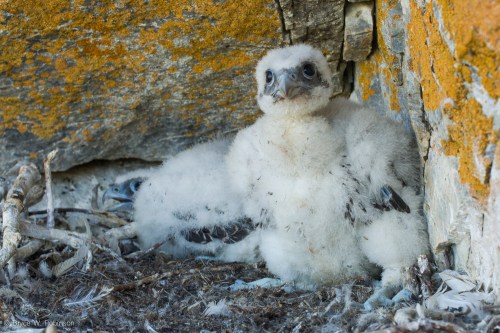
Photo 1. Gyrfalcon nestlings just after seeing their very first human being. One nestling is attempting to hide, while the other looks boldly into the eyes of the onlooking researcher.
The best part of working on a project focused on nesting Gyrfalcons is interacting with the nestlings. I can’t help but spend a moment or two to admire them each time I get one in my hands. They are young, yet full of personality and intelligence. I lose the ability to articulate the experience of dropping into a nest, and being the first human these nestlings have ever seen. Their response is remarkable, as they recognize me as an intruder and prepare to fight. There is, however, a certain degree of curiosity in their eyes. What impresses me most is their confidence, seen in their posture and stare.

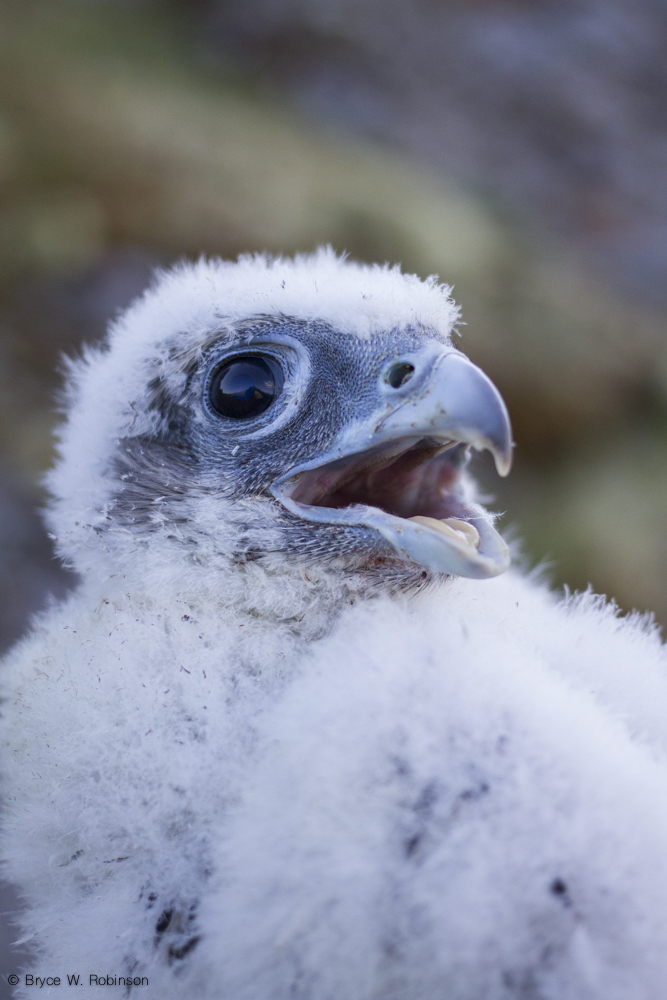
Photo 2. A tenacious young female Gyrfalcon, age 25 days. She is full of fight and intelligence. This attitude will serve her well after she leaves the nest and needs to learn to hunt and kill to survive.
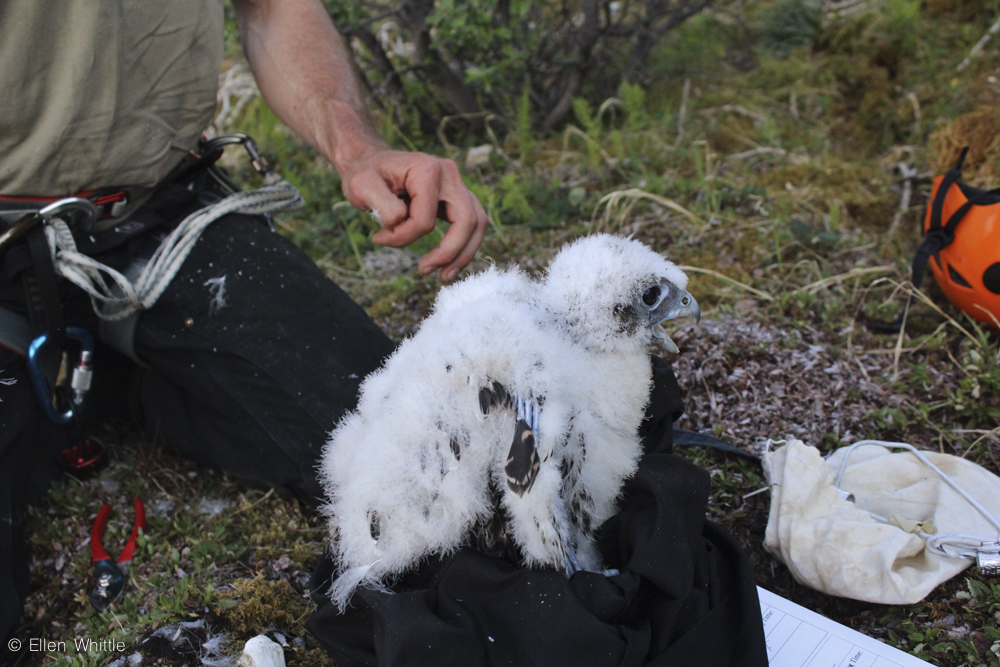
We schedule our second round of nest entries when the nestlings are 25 days old. At this point their legs have fully developed, so we can outfit them with aluminum USGS leg bands. These bands give them a unique identification number, so that if the bird is caught or found researchers can tell where the bird came from, and where it went.

Photo 3. Crimping the “lock-on” band. Most Gyrfalcons take band size 7B. We put bands on the right leg, and crimp a metal fold-over to ensure this piece of leg jewelry stays with the bird for its entire life.
As the nestlings grow, they begin to realize the tools that evolution has provided them to hunt, kill, and defend themselves. When we enter the nests to band, the nestlings have developed into fighters. They bite, rip, and use their talons to lash at intruding researchers. Because of this newly developed tenacity, working with them takes its toll.

Photo 4. A hand weathered by tenacious Gyrfalcon nestlings. This is part of the work. The young are held in a way that they are unable to bite the hands of the researcher, but they are intelligent and talented. Often, they figure a way to make us pay for the important data we collect.
It’s great to see youngsters that have so much fight. This aggressiveness will translate into behaviors necessary for their survival. Although the most aggressive young are not the most enjoyable to handle, it means the birds have what it takes to be a large falcon in the Arctic.

Photo 5. Weighing a young Gyrfalcon. We weigh the nestlings to help calculate a general age, if unknown. Weight also helps us determine the health of the nestling.
Apart from banding, we have a number of other tasks to complete while handling the young. We take DNA samples, weights, wing and tail measurements to estimate age, and check for parasites. After each nestling receives its treatment, we switch out batteries and memory card in the nest camera. We will not come back to the nest until the young have left, so it’s important to make sure the camera continues taking data until the end.
So far, we’ve been to three of our twelve nests. Our hands have a lot more abuse ahead of them, but we are excited to continue nonetheless. More pictures and stories to come.
Thanks to Ellen Whittle for the photos of the work




 ornithologi.com