
Singing Bluethroat – Luscinia svecica. 11 x 17″ prismacolor on bristol. Image copyright Bryce William Robinson.
On every North American birders “must see” list of Alaskan specialties is the Bluethroat – Luscinia svecica. Not only is this a bird with a restricted North American breeding range, it’s aesthetics and behaviors make it one of the holy grails of an Alaskan bird trip.
I’ve spent a fair amount of time in the habitat that the Bluethroat occupies. I’ve heard many singing males, and on occasion I’ve really listened to them. The Bluethroat sings a compilation song, featuring samples taken from sounds in its surroundings. When I’ve listened and put effort into teasing out each component, I’ve heard the iconic “cricket” chirp which interrupts a mash up of American and Pacific Golden-Plover, Golden-crowned Sparrow, Fox Sparrow, American Tree Sparrow, Gray-cheeked Thrush, Arctic Warbler, and many more. It’s a strange challenge, but a lot of fun. The Bluethroat tends to sing in flight, while doing a flutter like display before descending to a perch. However at times I’ve seen a Bluethroat in an intense song bout, perched atop a willow. It’s these times that I’m able to really watch the Bluethroat, while listening to his repertoire.
It’s no wonder why birders fancy this bird. The male has a multicolored throat that stands out in the brown landscape during their pre-breeding displays. As a mimic, their song fits an old world trend which betrays its natural history. The Bluethroat is an old world species, with a breeding distribution which just leaks into North America. For the birder that goes beyond sight and sound, the distribution adds to the allure.
I don’t get to illustrate much while doing field work here in Alaska. Rarely, poor weather and a break in the work will provide me the opportunity to sit down and draw. I’ve had the Bluethroat on my list for a very long time, so I thought I’d seize the rainy days here in western Alaska. Next I’ll be focusing on more Gyrfalcon illustrations.

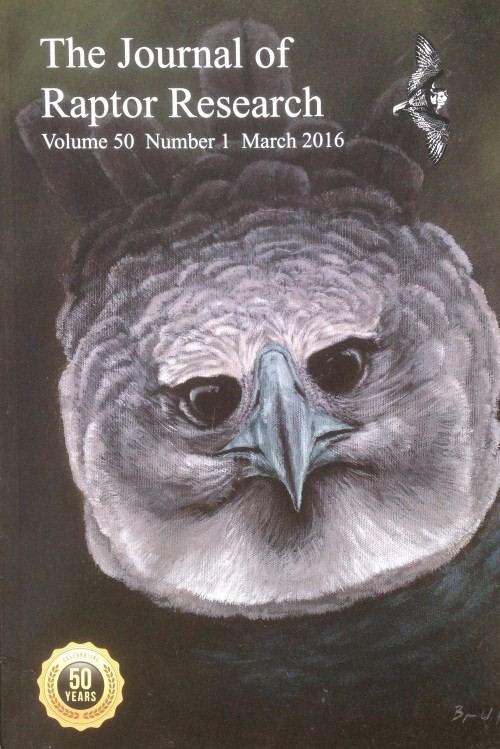 I’m honored and thankful for the opportunity to have painted the cover art for issue 1 of the 50th anniversary of the RRF’s Journal of Raptor Research. The issue features an article from The Peregrine Fund’s Harpy Eagle work, along with an article detailing a friend’s master’s work on Burrowing Owls, an excellent article on Gyrfalcon movement’s, and a lot more. I’m so happy for the opportunity to add to an organization that does such incredible work and carries the tradition of raptor studies forward.

 ornithologi.com