A studio for bird study

Tag: avian

Gyrfalcon Nest Observation

by Bryce W. Robinson

Somewhere between 45-50 days after hatching, young Gyrfalcons take a leap from their nest and fly for the first time. The clip above shows an angsty female preparing herself for that first jump. Her two siblings, both male, had already left the nest. This fact added to her anxiety as they called from outside of the nest.

Last year I put some effort into seeing a Gyrfalcon’s first flight, but was never in the right place at the right time. This year, I’m making another attempt. The clip above – as seen from a tent through our Zeiss Diascope – is as close as I’ve come to seeing a first flight. I spent hours with my field partner Ellen in a tent outside of the eyrie waiting for the bird to make the leap. The clip shows the closest she came. After this intense flapping bout, she sat down and went to sleep. We had to leave before the bird left the nest, but the time spent watching her was worthwhile.

B_Fieldnotes

First hand study is invaluable. We live in an interesting world where technology gives us so much, so fast, so often. We are able to learn at such a high pace, and research is no exception. For instance, I’m gaining insight into multiple nests using motion-sensor cameras. This provides me an in-depth exposure to Gyrfalcon nests at a higher rate than ever before . This is all due to the camera technology. But I’m missing out on a slow pace digestion of first hand observation. I’m missing out on the whole picture. To get the full perspective, and truly see what it is like in the nest, I need to watch them myself.

B_observation

While I watched, I took notes on behaviors. I also did a bit of field sketching. Field sketches force you to focus, and digest very small details that can heighten your understanding of your subject, but also enhance your observation skills. Besides all that, it is an enjoyable way to pass the time while the nestlings sleep.

Ellen_observation

Ellen and I took turns watching the nest. We were able to see two prey deliveries during our time watching. A male fledgling returned after one of the prey deliveries, hoping to get part of the meal. The female, however, would not oblige. I most enjoyed watching their behaviors. The birds interacted with one another in an endearing manner. They would pick at each other, as if preening. I wasn’t quite sure if this was curiosity, playful, or truly preening. They would also watch flies buzz around the nest, as if they were about to pounce. You could see the predator engineered mind in the way they followed the flies. They were figuring out what they needed to do to survive.

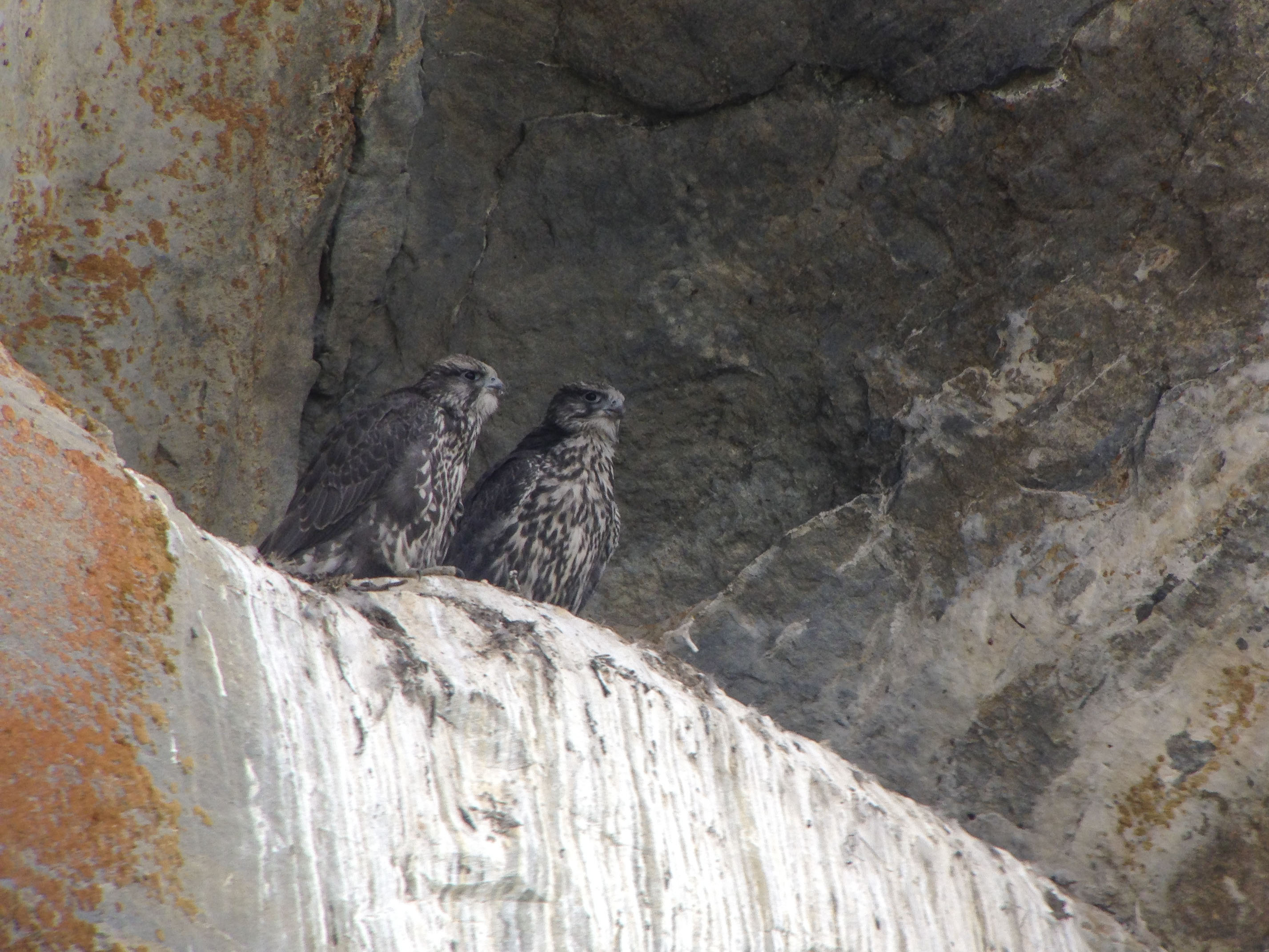
Male (R) and female (L) Gyrfalcon fledglings. Digiscoped with a Zeiss Diascope 65 T* FL

Male (L) and female (R) Gyrfalcon fledglings. Digiscoped with a Zeiss Diascope 65 T* FL

Although we missed the first flight of the female, we’ll have a few more opportunities to try with other nests. This means more hours behind the scope to watch, and more hours to learn.

To find out more about The Peregrine Fund’s Gyrfalcon Program, visit The Tundra Conservation Network and www.peregrinefund.org

Singing Bluethroat

by Bryce W. Robinson

Singing Bluethroat

Singing Bluethroat – Luscinia svecica. 11 x 17″ prismacolor on bristol. Image copyright Bryce William Robinson.

On every North American birders “must see” list of Alaskan specialties is the Bluethroat – Luscinia svecica. Not only is this a bird with a restricted North American breeding range, it’s aesthetics and behaviors make it one of the holy grails of an Alaskan bird trip.

I’ve spent a fair amount of time in the habitat that the Bluethroat occupies. I’ve heard many singing males, and on occasion I’ve really listened to them. The Bluethroat sings a compilation song, featuring samples taken from sounds in its surroundings. When I’ve listened and put effort into teasing out each component, I’ve heard the iconic “cricket” chirp which interrupts a mash up of American and Pacific Golden-Plover, Golden-crowned Sparrow, Fox Sparrow, American Tree Sparrow, Gray-cheeked Thrush, Arctic Warbler, and many more. It’s a strange challenge, but a lot of fun. The Bluethroat tends to sing in flight, while doing a flutter like display before descending to a perch. However at times I’ve seen a Bluethroat in an intense song bout, perched atop a willow. It’s these times that I’m able to really watch the Bluethroat, while listening to his repertoire.

It’s no wonder why birders fancy this bird. The male has a multicolored throat that stands out in the brown landscape during their pre-breeding displays. As a mimic, their song fits an old world trend which betrays its natural history. The Bluethroat is an old world species, with a breeding distribution which just leaks into North America. For the birder that goes beyond sight and sound, the distribution adds to the allure.

I don’t get to illustrate much while doing field work here in Alaska. Rarely, poor weather and a break in the work will provide me the opportunity to sit down and draw. I’ve had the Bluethroat on my list for a very long time, so I thought I’d seize the rainy days here in western Alaska. Next I’ll be focusing on more Gyrfalcon illustrations.

Banding Nestling Gyrfalcons in Western Alaska

by Bryce W. Robinson

Gyrfalcon Nestlings

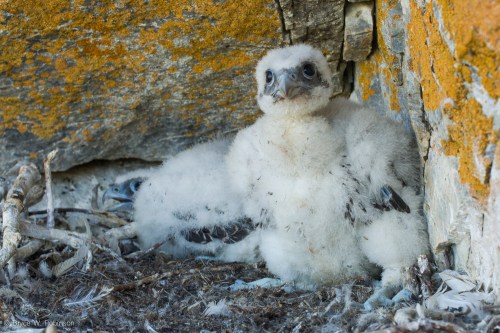
Photo 1. Gyrfalcon nestlings just after seeing their very first human being. One nestling is attempting to hide, while the other looks boldly into the eyes of the onlooking researcher.

The best part of working on a project focused on nesting Gyrfalcons is interacting with the nestlings. I can’t help but spend a moment or two to admire them each time I get one in my hands. They are young, yet full of personality and intelligence. I lose the ability to articulate the experience of dropping into a nest, and being the first human these nestlings have ever seen. Their response is remarkable, as they recognize me as an intruder and prepare to fight. There is, however, a certain degree of curiosity in their eyes. What impresses me most is their confidence, seen in their posture and stare.

Female Gyrfalcon Nestling

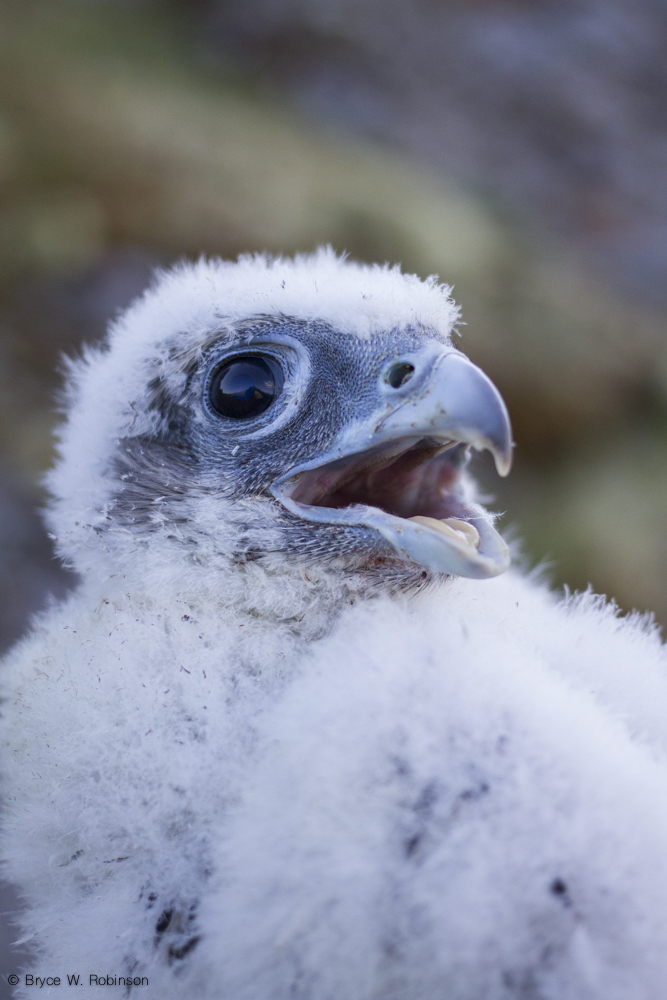
Photo 2. A tenacious young female Gyrfalcon, age 25 days. She is full of fight and intelligence. This attitude will serve her well after she leaves the nest and needs to learn to hunt and kill to survive.

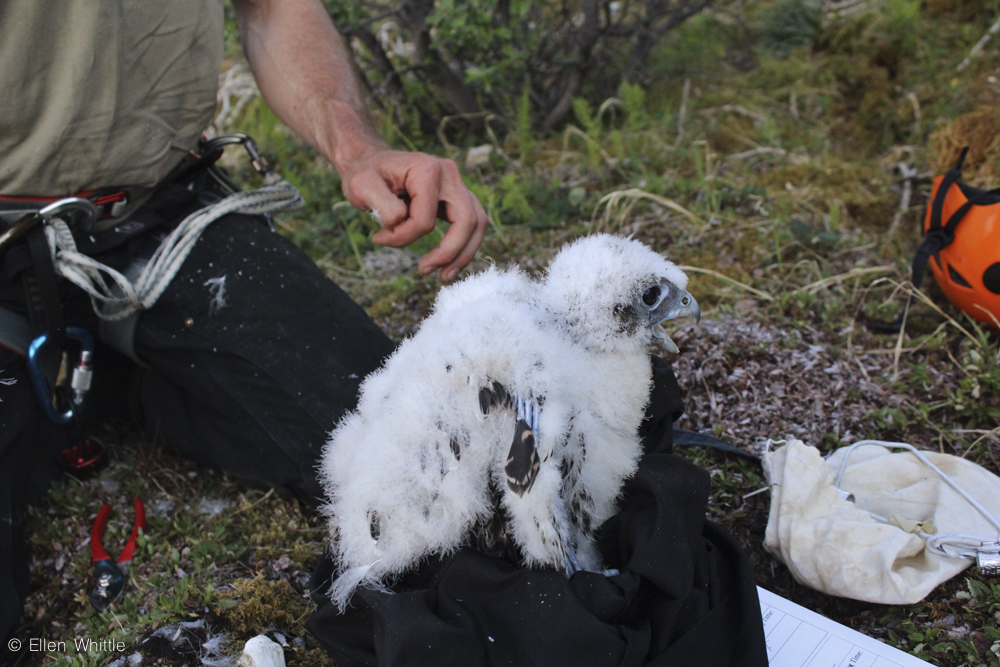
We schedule our second round of nest entries when the nestlings are 25 days old. At this point their legs have fully developed, so we can outfit them with aluminum USGS leg bands. These bands give them a unique identification number, so that if the bird is caught or found researchers can tell where the bird came from, and where it went.

Banding Gyrfalcon Nestlings

Photo 3. Crimping the “lock-on” band. Most Gyrfalcons take band size 7B. We put bands on the right leg, and crimp a metal fold-over to ensure this piece of leg jewelry stays with the bird for its entire life.

As the nestlings grow, they begin to realize the tools that evolution has provided them to hunt, kill, and defend themselves. When we enter the nests to band, the nestlings have developed into fighters. They bite, rip, and use their talons to lash at intruding researchers. Because of this newly developed tenacity, working with them takes its toll.

Part of the Work

Photo 4. A hand weathered by tenacious Gyrfalcon nestlings. This is part of the work. The young are held in a way that they are unable to bite the hands of the researcher, but they are intelligent and talented. Often, they figure a way to make us pay for the important data we collect.

It’s great to see youngsters that have so much fight. This aggressiveness will translate into behaviors necessary for their survival. Although the most aggressive young are not the most enjoyable to handle, it means the birds have what it takes to be a large falcon in the Arctic.

weight

Photo 5. Weighing a young Gyrfalcon. We weigh the nestlings to help calculate a general age, if unknown. Weight also helps us determine the health of the nestling.

Apart from banding, we have a number of other tasks to complete while handling the young. We take DNA samples, weights, wing and tail measurements to estimate age, and check for parasites. After each nestling receives its treatment, we switch out batteries and memory card in the nest camera. We will not come back to the nest until the young have left, so it’s important to make sure the camera continues taking data until the end.

So far, we’ve been to three of our twelve nests. Our hands have a lot more abuse ahead of them, but we are excited to continue nonetheless. More pictures and stories to come.

Thanks to Ellen Whittle for the photos of the work

In Context: Mid-summer Willow Ptarmigan Behavior and Appearance

by Bryce W. Robinson

WIPT_1511

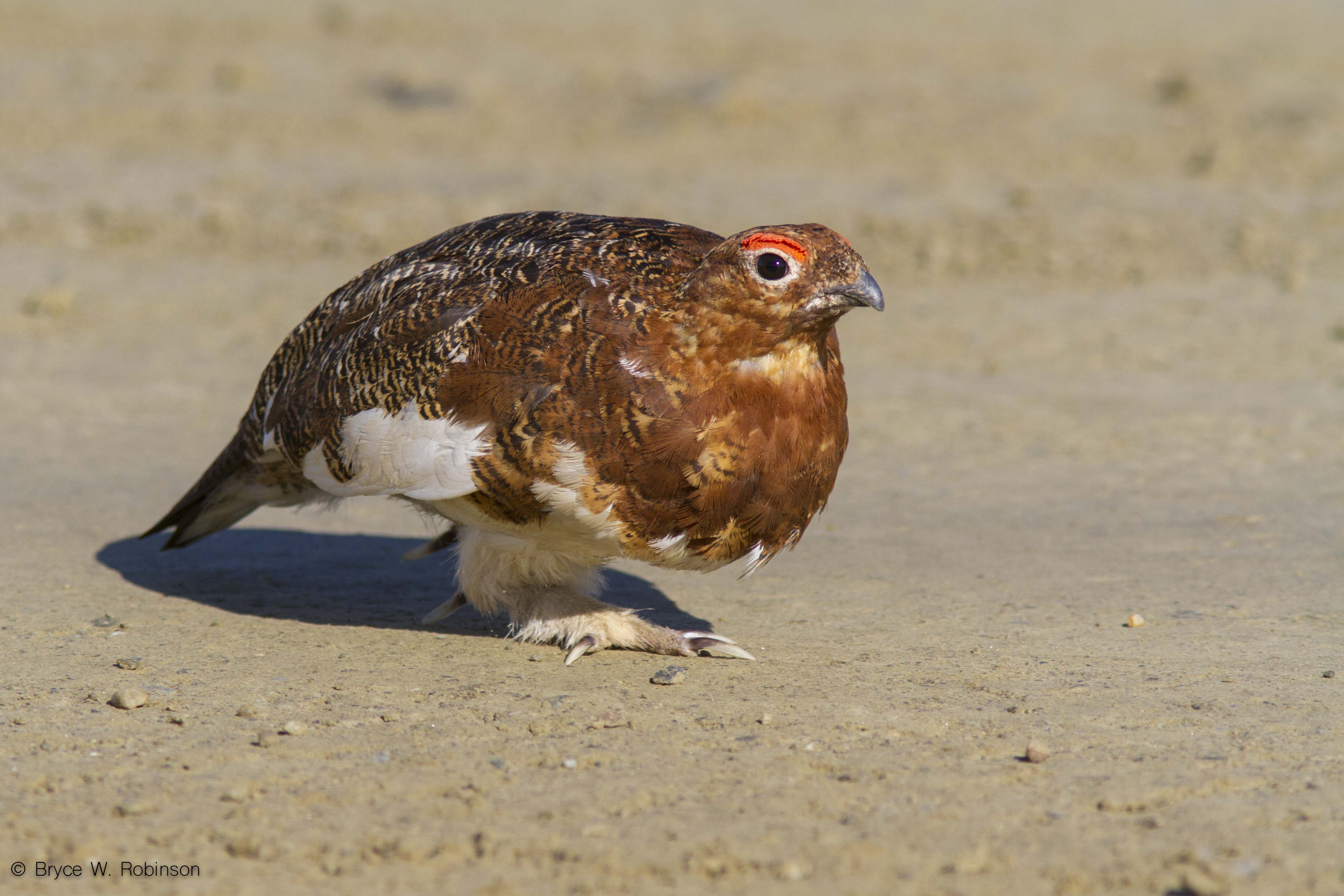
Photo 1. Male Willow Ptarmigan in crouch posture. Note the new patterned neck feathers amidst the rufous feathers of the alternate plumage.

Willow Ptarmigan (Lagopus lagopus) have layers of interesting traits. I’m lucky to spend enough time on the tundra in a given season to see them change in both appearance and behavior. The change in behavior is drastic, and the change in appearance holds loads of context and lessons on the mechanisms and results of evolution.


Appearance

Last summer, sometime in early-mid July, I noticed something odd about the appearance of male Willow Ptarmigan. They seemed to be replacing feathers on their rufous neck. The replacement feathers were patterned much like their new “summer” body feathers. The odd thing is that their “winter” (basic) plumage is entirely white, so these new patterned feathers that were replacing the rufous feathers were a third set of feathers for that year. I was perplexed by the idea of a third body molt.

After reading, I’ve learned that this third molt, which happens in late summer, is a pre-supplemental molt. This is most often a partial molt, but is a third molt supplemental to their pre-basic and pre-alternate molts. It piques my interest because it holds with it an evolutionary story. In fact, the entire molt cycle of the ptarmigan holds a lesson for how natural selection and sexual selection balance to create the appearance of the Willow Ptarmigan we see today.

The yearly plumage cycle of the Male Willow Ptarmigan is as follows:

Winter plumage (entirely white) — pre-alternate molt –> Breeding plumage (begins with rufous neck and white body early during breeding displays with the remainder of the body molt suspended, then continues molt as female begins incubating) —pre-supplemental molt –> fall plumage (rufous neck is replaced with patterned feathers similar to body) — pre-basic molt –> winter plumage (entirely white)

WIPT_1512

This molt pattern reflects the ptarmigan’s place in the ecosystem as a key prey source for many arctic predators. In winter, it inhabits the snow covered arctic and is wholly white, blending in with its surroundings. In early spring the snow melts and the white ptarmigan are then conspicuous against the landscape. Male and female ptarmigan then begin their pre-alternate molt. They both, however, molt in different ways. The male molts the neck feathers into a bold and warm rufous. They then begin flight displays, making themselves known in their surroundings. This behavior and appearance lasts until females begin egg-laying and incubation, when the males shift to cryptic behavior and begin molting the remaining white body feathers. Later in the summer, the rufous neck is replaced by patterned feathers, increasing their camouflage for the remaining snowless months, until they again molt into their wholly white winter plumage. Male Ptarmigan strike a balance between being conspicuous and alluring to females for a short period of time needed to procreate, then molting into a more cryptic plumage to safeguard them against predators. Females on the other hand have a relatively regular pre-alternate molt which puts them in their cryptic summer plumage, ready to lay eggs and incubate. This molt strategy stands as an excellent example of the mechanisms of evolution, and how sexual and natural selection can together shape the appearance of a species. The difference between the molt of male and female ptarmigan reflects their sex specific roles, and again betrays the role natural selection has played in shaping them into what they are today.

Another interesting observation to note: In summer, Willow Ptarmigan appear to molt the feathers that give them their genus and specific epithets, the foot feathers. It appears that they actual “shed” the winter feathers and have somewhat bare feet (Photo1 &3).


Behavior
Willow Ptarmigan

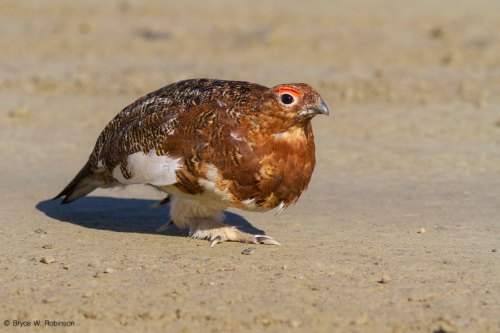
Photo 3. Male Willow Ptarmigan mid-step during his “army crawl” behavior. Note the unfeathered toes.

I happened upon the pictured pair of Willow Ptarmigan the other day while driving down the road. I could see a brood of about eight chicks with them. When I stepped out of the car, the parents began distraction and defense behaviors to protect their brood. I am impressed by their boldness. The female roused, fanned her tail, hissed, and approached me. She did her best to intimidate me. Meanwhile, the male hissed and approached, but also slinked away as if injured or baiting me to follow. He walked in an army crawl fashion, low to the ground. It seemed as though he were trying to be cryptic, so I’m not sure if he was attempting to sneak back to the brood or seem injured. Either way, the two parents employing tactics on me to distract from their brood was almost comical. It worked though. The brood took cover and were quite. They were nowhere to be seen.
WIPT_1513

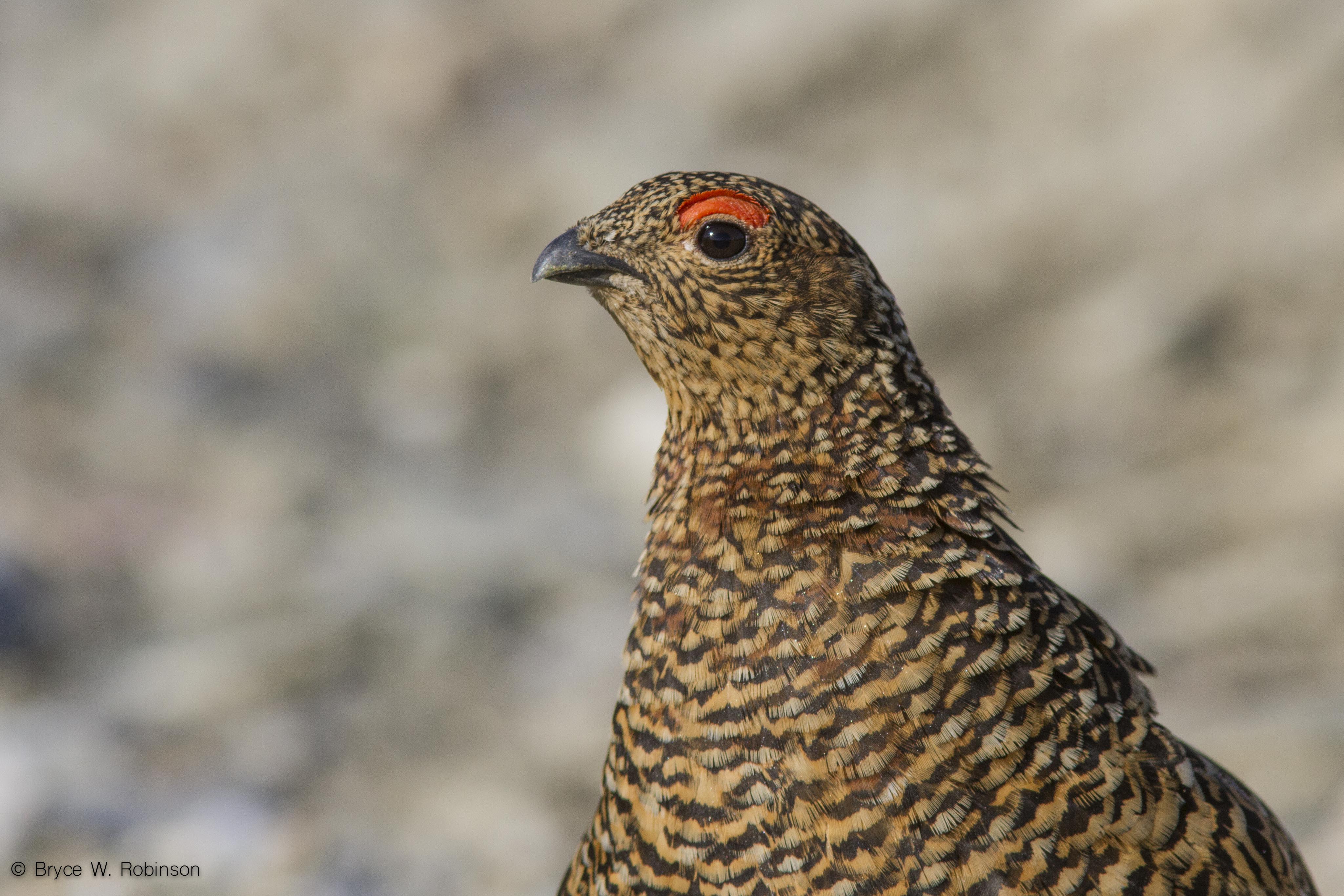
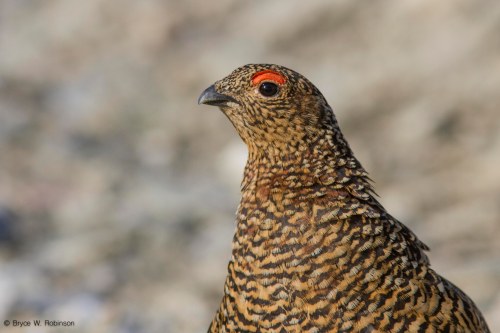
Photo 4. Female Willow Ptarmigan, roused to appear large and intimidate intruders. Note the rufous feathers amidst golden feathers. These may be replaced feathers as part of a partial pre-supplementary molt as seen in the male.

This behavior is a mega change from the timid pair from the month of May. They seem as though they are entirely different birds. When approached in May, a male would hold his ground and act bold. Females would hide and slink away. Still, most birds would flush if approached to closely. With the addition of offspring, the behaviors take a large swing. Now they fight and distract. A change that again betrays the underlying evolutionary mechanisms. Natural selection has resulted in some remarkable behavior. Those that have braved an intruder, distracted from a brood, and so on have raised young successfully, and whatever behavioral cue was present in them was passed on to future generations.


When I recognize a relationship of appearance, behavior, phenology, distribution, etc. to evolution I get excited. It not only supports the theory of evolution, but serves as a clear lesson to communicate how evolution works. Taking a group birding on the tundra and showing them this behavior, coupled with a discussion on the why’s of the parents appearance would be blast. It’s behavior birding with a broader context. It’s a very rewarding type of birding, and something I’d love to share with anyone nerdy or keen enough to appreciate. After all, ptarmigan are a lot more than a tick or a check on a life list, and a lot more than just tundra chickens or Gyrfalcon food. Ptarmigan have layers of interesting aspects to their life history, but I bet that is true of most birds…

Referenced literature:

Hannon, S. J., P. K. Eason and K. Martin. 1998. Willow Ptarmigan (Lagopus lagopus), The Birds of North America Online (A. Poole, Ed.). Ithaca: Cornell Lab of Ornithology; Retrieved from the Birds of North America Online: http://bna.birds.cornell.edu/bna/species/369

doi:10.2173/bna.369