A studio for bird study

Tag: bird

It’s the Most Wonderful Time of the Year- Fall Migration

by Bryce W. Robinson
IMG_2503 copy

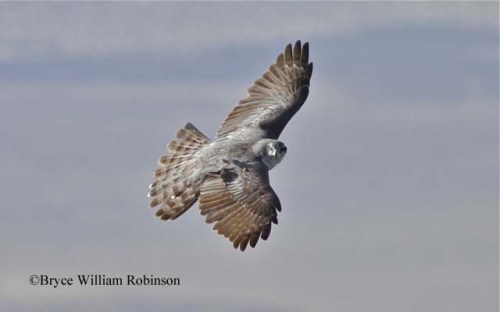
Adult Northern Goshawk- Accipiter gentilis

I’ve landed myself in Boise, Idaho where I’ll be starting graduate school. I wanted to share a photo from last year at the Goshutes, as a reminder that fall migration is beginning. I’ve already spent a few days at Lucky Peak in the trapping blind, and helping with passerine banding. I plan to spend as much time as I can up there this fall, but it is likely that I won’t be able to watch much of the migration. The idea that I won’t be counting raptors at the Goshutes migration sight in eastern Nevada has been very difficult for me to swallow. Especially when my girlfriend is up there trapping and giving me daily updates about the flights. Lucky Peak will help, but it just isn’t the same. I hope all bird people are able to spend loads of time this fall experiencing this phenomenon at their favorite spots. It truly is one of the greatest wonders in life, happening all around us. Lets all pay homage by acknowledging the mass fall movement of the avian world.


New to the World, The Pectoral Sandpiper

by Bryce W. Robinson

IMG_7083 copy

I know I’ve promised photos of the chicks I’ve seen on the tundra, and have yet to share anything. I’ll admit, photographing these little things is a lot more challenging than I had imagined. They seem to never stop moving, and if you don’t keep a keen eye trained to them at all times, they hunker under some grass, no longer to be seen.

I have had a bit of luck, mainly with chicks that are a bit older. One thing I like about looking at lone chicks, is the exercise of identifying the bird. It is a bit tricky, but it forces you to pay attention to certain helpful traits, and ignore body plumage altogether. The first thing I noticed about the young Pectoral Sandpiper pictured above, is the distinctive bill. Pale at the base, dark at the tip, with a slight down curve, thinning at the end. Obviously a Pec!


Alaska Mosquitoes Are the Bane of All Existence, Even for the Willow Ptarmigan

by Bryce W. Robinson

IMG_7047 copy

What is the Alaska State Bird? Well, according to everyone I spoke to before my journey north, the Alaska state bird is the Mosquito. I’ll admit now, I understand their point. If there is no wind on the north slope, and temperatures are fair, the mosquitoes are intolerable. Luckily, one can prepare for the onslaught by bathing in carcinogenic 100% Deet and wearing cumbersome face nets.

One can prepare, if one is human. I saw first hand the other night that all blood carrying life here suffers from the miserable insects. I was watching a Sandhill Crane feeding in the short grass of the tundra. In an instant, the peaceful scene changed as two violent Willow Ptarmigan began a campaign to oust the crane from their area. I assume the behavior was due to the presence of a band of small young ptarmigans, hidden somewhere nearby.

After the crane wisely vacated the area, I took the opportunity to pair the striking summer plumage of the two ptarmigan with the golden evening sun for some spectacular photography. The Ptarmigan were cooperative. I set myself at an appropriate distance from the birds, and laid on the tundra to sit at their level. While I shot the birds, the Alaska state bird conducted its business on all of my vulnerable areas. It’s been three days, and I’m still itching.

What struck me most was the amount of mosquitoes on the head of the male Ptarmigan. The poor bird was constantly shaking the bastards off, but to no avail. He was being mercilessly bitten, and had no defense. I felt for the small feathered creature. In this instance we shared something; the misery of the mosquito, a fact of life in the north country.

IMG_7028 copy


Black-bellied Plover- Pluvialis squatarola

by Bryce W. Robinson

Black-bellied Plover- Pluvialis squatarola. Prismacolor on bristol board

Black-bellied Plover- Pluvialis squatarola. Prismacolor on bristol board

Often, I am impressed by the aesthetic of particular birds. The Black-bellied Plover has always been a visual delight for me, resulting in my ambition to illustrate the bird appropriately. In what little free time I have at the moment, I put together an illustration of a bird I see often, but always celebrate the sight.

Illustrating this bird provided me an opportunity at a study of the depth and texture of layered feathers. Paying attention to such detail really impresses me with the intricacy of each type of bird, and the adapted structure that directly relates to their life history. If you are unsure what I mean, perhaps it is something I need to elaborate upon with further illustrations and detailed description. Perhaps indeed… New project.