A studio for bird study

Tag: birding

A Green Heron GIF to illustrate Tail Flicking Behavior

by Bryce W. Robinson

GRHE.gif

While photographing a vagrant juvenile Green Heron (Butorides virescens anthonyi) along the Boise River in early November, I noticed a behavior I wasn’t aware of for this species. When I would get a bit too close the heron would notice me, stop foraging, and flick it’s tail while it slowly walked away, as if it had a nervous tick.

Tail flicking is a behavior that many species exhibit. A recent study with the Black Phoebe found support for the explanation that tail flicking was a sign of vigilance to predators, a topic I’ve written about here. When the bird flicked its tail, the predator got the cue that the bird was aware of its presence and the predator had lost the advantage of surprise. This seemed to make sense in explaining the behavior of the Green Heron I stalked on the Boise River. Each time it began flicking its tail, I’d let off until it relaxed and continued to forage.

Fork-tailed Storm Petrel (Oceanodrama furcata) Foraging on Tidal Flats: Part 2

by Bryce W. Robinson


I captured too many images from my recent experience with Fork-tailed Storm Petrels (Oceanodrama furcata) along the Bristol Bay coast of the Alaska Peninsula. Given that our observations warrant a full report in a journal, I’ll maintain some brevity for now. However, I think it is helpful in the interim to share supplementary video and images that set the stage for the publication. The rest will come out with the article sometime in the coming year.

2l3a1345

Stuart Fetty walks towards a resting Fork-tailed Storm Petrel as the tide rises.

We had a few days where the birds lent themselves to close proximity photography. They were all around us, and didn’t seem to understand or comprehend the concept of a terrestrial predator. In one instance, we walked as close as a meter or so to a bird sitting on the water with no response. Whether this was an ill or a healthy bird resting, I can’t be sure. We do however have some indication that these birds were healthy, but these are details that will be discussed in publication.

2l3a1170

Fork-tailed Storm Petrel kiting in an onshore wind. Note the fish carcass in the foreground, an attractant for the birds to this location.

The past six months have been full of unique encounters with bird life in Alaska, and have produced a nice list of potential publications that I’ll be working on throughout the winter. I’ve taken a lot of satisfaction in working in a place where the birdlife is still relatively understudied, a place where paying attention, taking good notes, and diligent photography all support the opportunity to add to our basal knowledge of natural history of the less understood species of North America.

Juvenile Whimbrel (Numenius phaeopus) in Flight

by Bryce W. Robinson

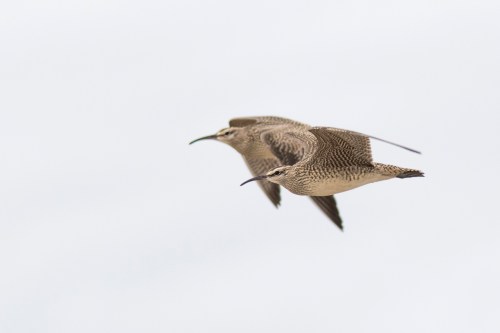
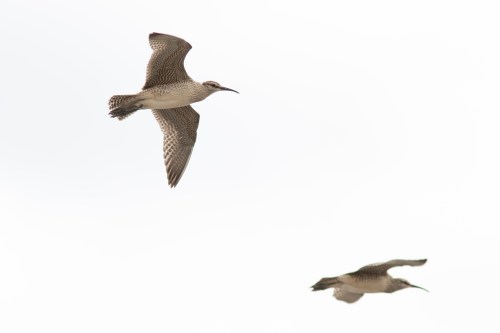
I’ve included two photos of in-flight juvenile Whimbrel that I took in the first week of August 2016. I’m sharing these images for the simple reason of illustrating how a young juvenile differs from an adult. The age of these birds is told by the overall fresh, clean plumage and relatively short bill. It’s that simple in August. In a few months the bills will grow to a length comparable to the adults and determining age will become more difficult.

2l3a8758

2l3a8764


Black Hawk Eagle Painting for Belize Raptor Center

by Bryce W. Robinson

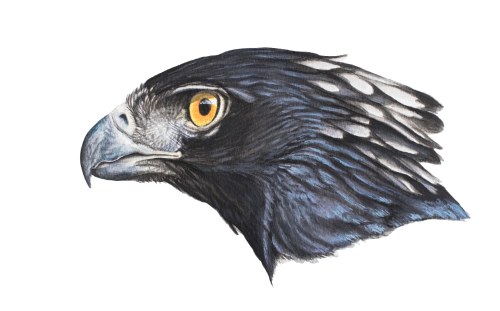
bhea

Black Hawk Eagle (Spizaetus tyrannus). 11 x 15″ Gouache on paper.

My friend Aron came to me recently to ask for a favor; an illustration for a silent auction to benefit a small raptor education center in Belize. The Belize Raptor Center is an organization whose primary focus is to showcase indigenous Belizean species as the most ecologically and economically important class of wildlife in the country.

The benefit will be held in Salt Lake City on 8 October at Church and State from 7-10 PM. There will be a silent auction, live music, and best of all live birds. If you’re in Salt Lake City, be there.

Here are a few details about the Belize Raptor Center from their website:

MISSON: Educate and inspire conservation of birds of prey and their habitat, using permitted non releasable raptors. Rescue and rehabilitate injured and orphaned birds of prey.

SUMMARY: Our mission is important because in Belize, raptors are highly persecuted due to the many myths and misconceptions that surround them. Although they are protected in the United States, the vast majority of them migrate south for the winter and face dangers such as shooting, poisoning, and habitat loss…. Only though proper education can we hope to protect them.

GOAL: We are planning to construct a brand new facility that will serve as the Visitor Center for Belize Raptor Center. Currently the center houses 6 birds of prey that are taken off-site to educate schoolchildren about the importance of raptor conservation. There will be a museum and education center as well as an indoor flight space for a free-flighted bird show – the first of its kind in Belize.

THE FACILITY: The funding will go towards the costs of labor and materials for the Visitor Center. The entire establishment is completely off-grid; solar power and rain/well water keep expenses low. Income from the gift shop and paid programs will help keep our facility self sustaining after the initial costs of building the visitor center.

If you’re interested in the painting to help the Belize Raptor Center reach their goal, but can’t attend the benefit in Salt Lake City, feel free to contact the Belize Raptor Center or me.

Find them on Facebook

Contact: belizeraptorcenterATgmail.com

Our MISSION