A studio for bird study

Tag: lagopus

A Hawk In Flight- Buteo lagopus

by Bryce W. Robinson

Rough-legged Hawk- Buteo lagopus. Watercolor on paper

I absolutely love the look of hawks on the wing. Painting them, as I have stated in the past, is a challenge. With the time I spent in the field this winter photographing raptors, I started to gain an idea for my favorite poses of the birds in the air. This winter was a Rough-legged to say the least. I felt blessed, as I had multiple opportunities to watch these arctic breeders vacation in our warm fields. As I have said in past posts, the majority of the birds I saw this winter were juveniles. The plumage of the juvenile is beautiful, full of creams, brown, black and white. In an attempt to pay homage to the scene of the bird in flight, I painted a head on view of Buteo lagopus, the Rough-legged Hawk. If you prefer the style of my past few posts, no need to worry, plans for a portrait are brewing in my bird infested brain.

Falling Into a Red-tailed Fascination, With a Harlan’s Twist

by Bryce W. Robinson

Juvenile "Harlan's" Red-tailed Hawk- Buteo jamaicensis harlani

I rarely begin a post with a picture, however, I would like to pay tribute to one of the most remarkable creatures to occupy the sky. For reasons truly unexplainable, I find myself fascinated with the varieties of the Red-tailed Hawk, particularly and most intensely, the Harlan’s. The striking plumage and variable tail patterns certainly seem to be the most fascinating aspect of the Harlan’s. Perhaps it is the little known aspects of the birds great north breeding ecology, and the overlap with other Red-tailed strains creating intergrades and even more peculiar and strange forms of this relatively common species. I find the Red-tailed world intriguing on multiple levels, and I have made the goal of a lifetime study of the bird. In my search to specialize for my graduate work, I do at the moment believe I have found my candidate.

I spent the other day photographing birds with Jerry Liguori once again. Of course he lent me his equipment for more photography fun. I still can’t put a finger on why he would be willing to do so, other than his kindness. So I must admit, this entire post is all due to Jerry’s kindness, and I would not have been able to get any images near the quality of what is shown without his help.

Jerry has studied raptors for years. He also has a keen interest in the Red-tailed Hawk. He has written many articles on Red-tailed variants like the Harlan’s and the Krider’s, and has shared a few with me. I have gained much satisfaction in browsing through a number of Harlan’s tail shots that he sent me, illustrating the vast variety that exists among these birds. I actually blame Jerry for feeding my obsession with the bird. Now he has to put up with my endless intrigue as I pick his brain for answers regarding Harlan’s.

On this outing we went to an area of particular popularity due to the high density of wintering raptors. As any Utah birder likely knows, the area I speak of is the basin directly south of the point of the mountain. The birds detailed in this post were all photographed at this basin. Keep in mind that I stayed in place for a few hours, and the amount of birds featured in this post occupy the area around the basin, which is little more than a square mile. Wintering ecology is an amazing thing, as normally territorial birds put up with others, not even of the same species, and share the resources at hand.

This year, multiple reports of Harlan’s Hawks at the point have hit the hotlines. I had visited the area in November, and saw a Harlan’s, but the soaring raptor was much too high for any reasonable photography. On this day with Jerry, my luck changed. We had a Harlan’s fly in close to provide me the opportunity at my first close range photo shoot of my favorite flyer of late.
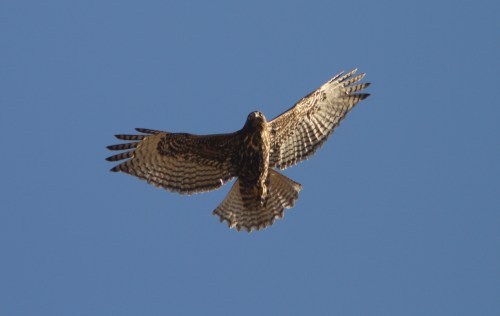
This young Harlan’s is a favorite of another Utah birder. Tim Avery constantly posts his images of the point of the mountain Harlan’s. He met up with us after a while and was right alongside me when the bird came in for the shot. According to Tim, the photos he took were the best Harlan’s he has to date. I must admit, I like his shots better than mine.

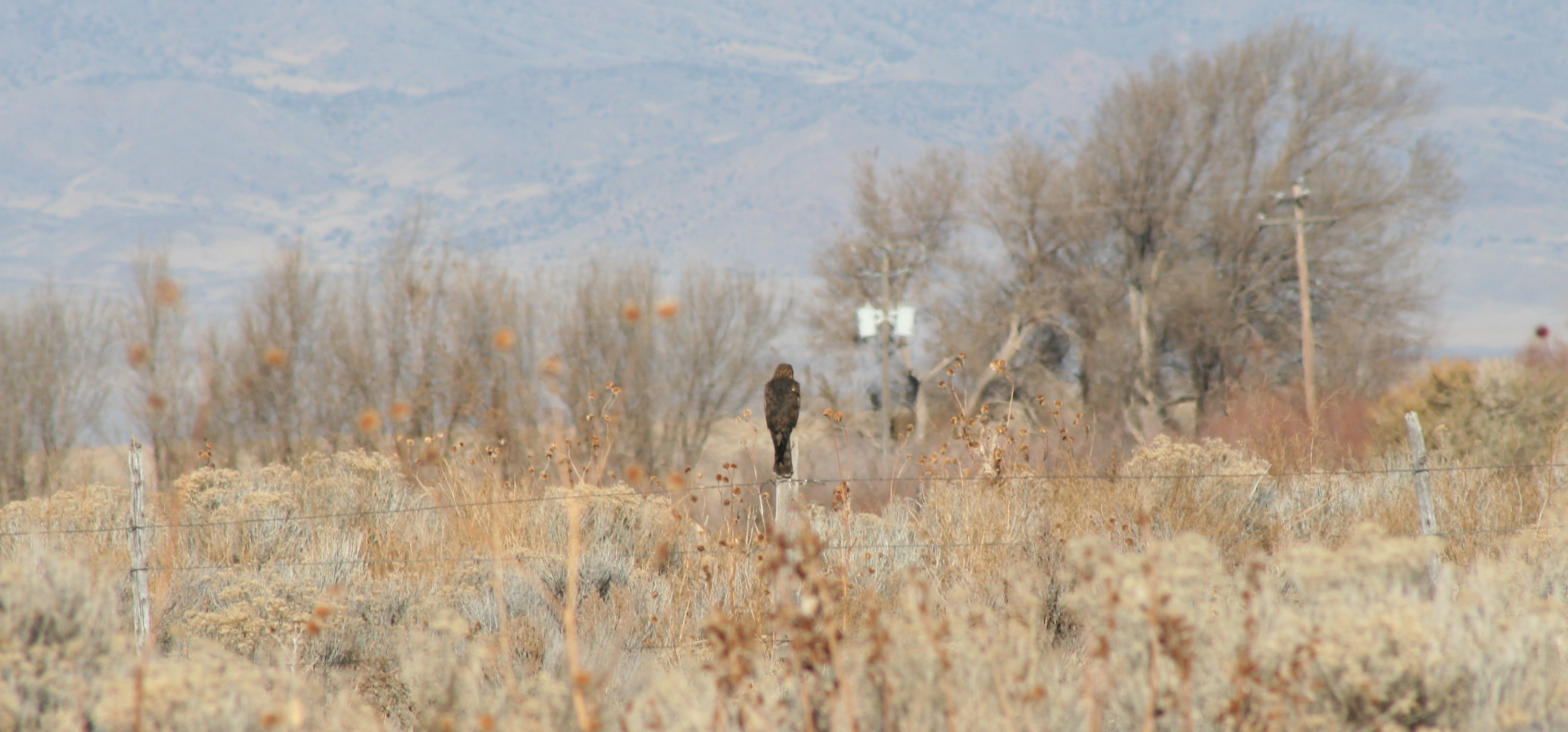
The young Harlan’s was actually not the most exciting bird of the day. As Jerry and I drove south on the freeway before reaching the basin, I told him of my lack in confidence for identifying a light-morph Harlan’s, and how much I would love to see one in the field. I feel that some of Jerry’s self proclaimed luck then rubbed off on me, or perhaps I was just lucky enough to be with him, but one of the first birds we saw as we came to the basin was in fact an adult light-morph Harlan’s. Regrettably our luck only went so far, and I never reached a close distance in order to photograph the bird. Jerry, with his great lens, actually caught the bird from behind as it landed on a post. The tail was perfectly spread, exposing a silver-ish base fading to a nice reddish tone. A few feathers even had some slight banding. A perfect Harlan’s tail, and a beautiful bird.

There were a total of three Harlan’s at the basin that day. I photographed two, both of which were juveniles. The second bird displays perfectly an aspect of my fascination. The white breast is peculiar, and sets it apart from the other young bird we saw later. I love the variation, and I can’t get enough of studying these birds.

Juvenile "Harlan's" Red-tailed Hawk with a white breast

It was delightful to watch the numerous birds interact with each other. Near the peak of the mountain five birds flew, toying with one another. As it appeared, the birds seemed to be enjoying the sun, with full crops and playful spirits. As I watched, I noticed that one of the birds was in fact a Rough-legged Hawk. The interaction did not appear aggressive, which made the sight much more peculiar. Seeing the Buteo’s fly together reminded me of a bird found last year in the mid-west. It appeared to be a hybrid between a Red-tailed Hawk and a Rough-legged. When breeding season comes, and birds have trouble finding a mate, it can happen that two birds of different species pair up in desperation to procreate. I have even heard of Ferruginous Red-tailed Hawk hybrids.

One of the reasons I am so intrigued by Buteo jamaicensis is the variable plumages that exist. The Western Red-tailed Hawks that were present provided a great look at the variety present in even the more common strain. From juvenile to typical adult, all were there. I would have liked close up photos of all of the birds that day, but birds are only so cooperative, or better said, I am only lucky to a point. Still, I came away with great shots of a number of birds.
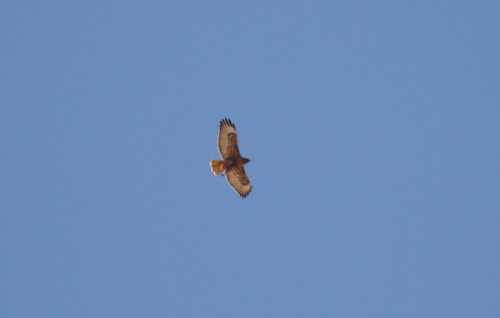
Rufous morph Western Red-tailed Hawk

Adult Western Red-tailed Hawk with a white throat

Typical adult Western Red-tailed Hawk

Jerry mentioned an interesting point after seeing an adult western bird with a white throat. Apparently some years back it was common knowledge that western RT’s lacked a white throat, like the typical bird above. This fact was cited in many guide books for the hawks of America. I found this interesting because it illustrates a point that Jerry has really tried to engrain in me, or so it seems. Facts about birds depend upon research, some research more thorough than others. We as birders, or those enthralled enough to give a damn about the particulars, need to be comfortable with getting things wrong, making mistakes, information changing, and especially saying “I don’t know”, from time to time. I respect Jerry’s humility, and his concern for passing that on to me and others who share his passion.

The fact is that with a bird so diverse in plumage as the Red-tailed Hawk, there is going to be some overlap and interbreeding between regional “subspecies”. What results are birds that show characteristics of one strain, but overall resemble another. I found a bird a few weeks back that was a dark morph western Red-Tailed Hawk, yet it had a heavily banded tail that faded from a cream color at its base to a nice orange at the terminal end. At first glance I was excited at the possibility of a Harlan’s, however when I reviewed my photos, I found the bird to be a nice chocolate brown with rufous highlighting. After consulting Jerry, I learned of the importance of leaving some birds a mystery. The bird could have been an intergrade of some sort, or something else more mysterious and exciting. For now I have no conclusion, but I have come to terms with that and moved along. In the future, I may find another bird that shares the same traits, and may be armed with the knowledge and resources to discover where the bird is from and why it is so peculiar.

Juvenile light morph Western Red-tailed Hawk
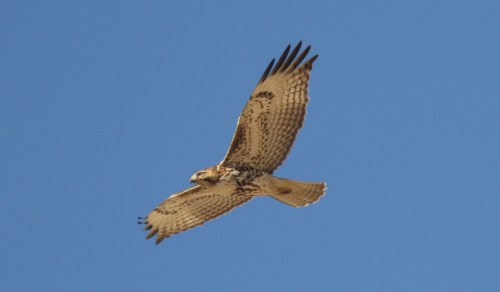
Juvenile light morph Western Red-tailed Hawk. Note the light colored eye typical of a young bird.

Juvenile light morph Western Red-tailed Hawk

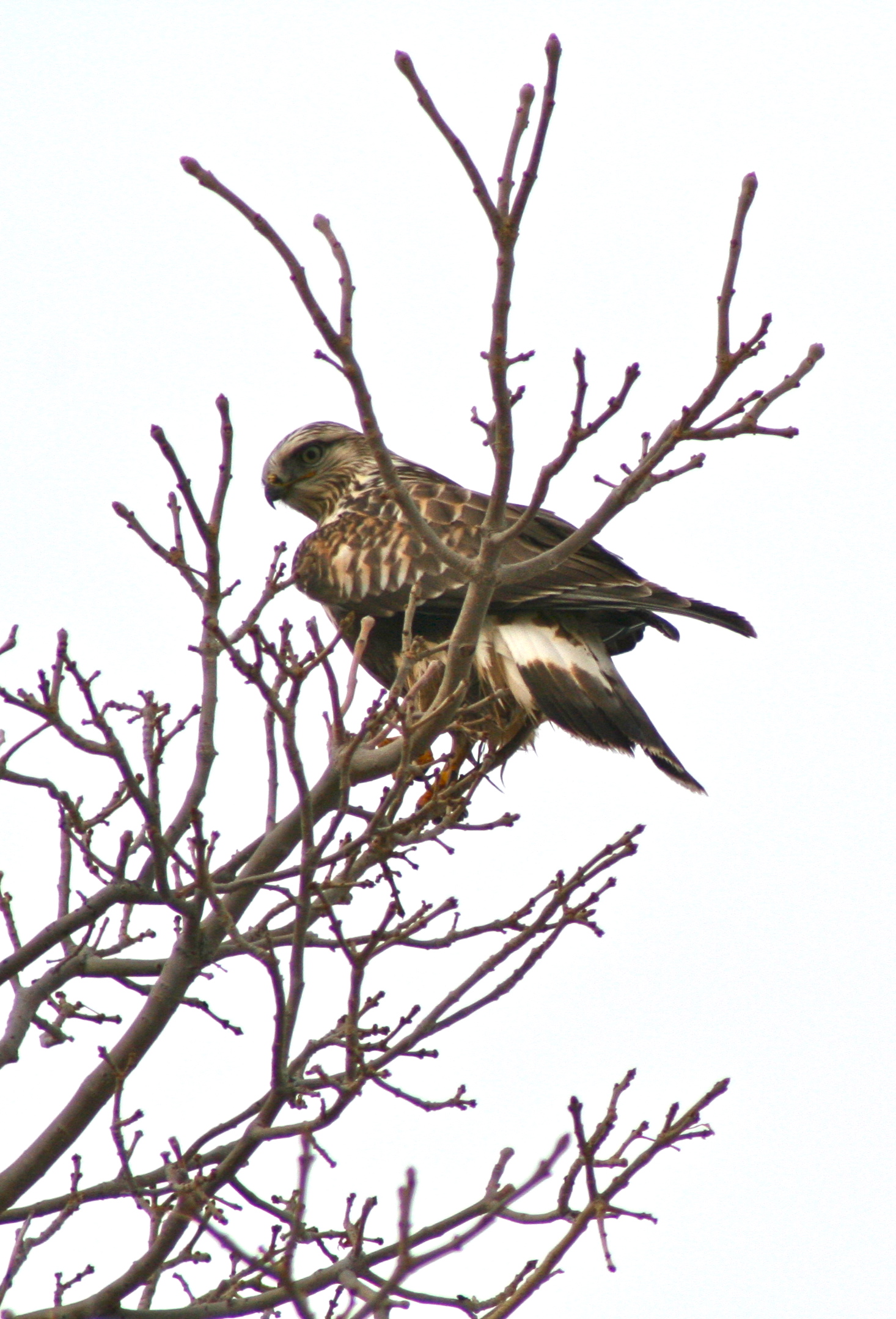
It was nice to see a variety of Red-tailed Hawks, but what made the day even better was when the Roughies were thrown into the mix. Because I conduct winter raptor surveys, I find myself with plenty of opportunities to photograph these arctic birds, but with Jerry’s help, I believe I came a way with my best photos to date of Buteo lagopus. They are at least in a close tie with those photographed last week using the same camera and lens.

Juvenile Rough-legged Hawk- Buteo lagopus

It seems that I only find Juvenile Rough-legged Hawks this year. What that fact is attributed to I can only wonder, but perhaps it is tied to wintering ecology, perhaps not. While we watched two Rough-legged Hawks soar together, Jerry and I heard the high pitch call of the birds. This was the first time the call of Buteo lagopus settled upon my ears. I did not take it for granted, and I will not forget the sound.

Juvenile Rough-legged Hawk

Although the point of the mountain is frequented with large, loud, and stinking trucks, it is a special place to gain a glimpse into the wild world. It stands as an inevitability that the area will soon be crowded with humanity, and there will no longer be a place for these wintering birds. They will undoubtedly find fortress someplace else, and we birders will follow. Still, how wonderful it would be to see these birds respected, and their winter home set aside from the expanding suffocation of the human world. I see no reality in the idea, as Utah County continues to grow faster than an adolescent boy, but may the seed be planted and pondered on. If you love raptors, make a point to visit this area. If you are respectful of the birds, and the truck drivers that pass, you will certainly have the best day of raptor watching you could ever ask for.

Learning from the Best- A Day in the Field with Jerry Liguori

by Bryce W. Robinson

Yesterday was spent photographing birds with Jerry Liguori. It was such a full day that I forgot to wish my mom happy birthday. I accept the label of a terrible son. Sorry mom, Happy Birthday.

I find that surrounding myself with those that are more skilled and knowledgable than myself helps me learn quite a bit more than I might alone. Birding with a man like Jerry Liguori should have been highly intimidating, but I felt very comfortable being myself and exposing my identification weaknesses. He is a very humble person, willing to teach and share his passion.

Jerry has some incredible photography equipment. You can look through the guides on raptor identification that he has published and see that he knows his stuff regarding bird photography. I was excited to see him in action, and perhaps pick up on some of his techniques. Seeing my camera and lens against his, Jerry kindly offered me the opportunity to use one of his set ups for the day. Taken aback, I accepted the offer. What followed was the best day of bird photography I have ever had.

As we continued, Jerry took the time to teach me some general techniques of using the camera on manual. I really learned a lot about the hows and whys of photographing raptors. I was so grateful that he was willing to take the time and energy to show me how to share in the experience. From my experience with Jerry, he teaches those who share his passion not from an ego, but from a true love of the birds. I personally feel that with true passion comes a desire to share and infect others with that same passion, and I see that in the way Jerry interacted with me.

From the start, Kestrel’s were every where to be seen. I have never been able to get as close to birds as I did with Jerry. He says he has the best luck, for whatever reason. I would be skeptical, however, we had some great experiences with tolerant birds. Here are two Kestrels, the first a docile male atop a sign, and the second, a hungry female feasting on an unlucky Marsh Wren.

Male American Kestrel- Falco sparverius

Female American Kestrel- Falco sparverius eating a Marsh Wren- Cistothorus palustris

Although common, I never pass up the opportunity to observe a Kestrel. They are a lot of fun to watch. The female munching on the Marsh Wren was very tolerant of our intrusion. As we watched her eat, we could see feathers fly as she ripped them from the bird. Admittedly, both Jerry and I assumed the Kestrel was feasting on a vole or field mouse. It wasn’t until I reviewed my photos at home that I discovered what the bird’s meal actually was.

Another species that seemed to cover the marshlands in large numbers was the Northern Harrier. Again, as common as the bird is, it is always enjoyable to watch it wander low above the marsh, occasionally making acrobatic moves at unsuspecting prey. We spent some time driving alongside many Harriers, photographing as we drove.

Northern Harrier-Circus cyaneus. Juvenile.

Northern Harrier- Circus cyaneus. Juvenile.

Another bird that was fairly numerous was the Rough-legged Hawk. According to Jerry, we didn’t see as many as usual, but to me the numbers were acceptable. All of the RL’s that I photographed are juveniles, which I found interesting. One particular individual was missing p7, a bird that Jerry had photographed a few weeks prior when the feather was dangling but not fallen. I did my best at getting a decent photo of the distant bird.

Juvenile Rough-legged Hawk-Buteo lagopus missing p7

The sun was in and out as the day went on. We found a RL on the wing taking advantage of a sunny spell and good thermals. Directly underneath the circling bird, I shot to my hearts content. I came away with some great photos as the bird rose on thermal updrafts, observing the strange behavior of the two mad humans below.

Juvenile Rough-legged Hawk- Buteo lagopus

Although the day was definitely dedicated to photographing raptors, I had the opportunity to take the time to capture images of a number of species outside of the raptors. While I was photographing some waterfowl, I saw a friend Debra, and she informed  that I had missed the opportunity at seeing two Great-horned Owls roosting. That was disappointing, but I was glad to come away with the birds that I did.

As we drove along a winding road, we spotted a Loggerhead Shrike only meters off the road. Surprisingly, the bird did not fly when we stopped directly beside it. I fired a number of shots, then took the time to simply watch. As I watched, Jerry stopped photographing to check the quality of his images. At that moment we both missed the opportunity to catch the shrike expelling a pellet in a dramatic fashion. We continued with a win some lose some mentality. I believe that when photographing birds, if you do not preemptively adopt this mind set, you will certainly go mad with missed opportunities.

Loggerhead Shrike-Lanius ludovicianus

American Wigeon- Anas americana

Song Sparrow- Melospiza melodia

Cistothorus palustris

Ring-billed Gull- Larus delawarensis

Great Blue Heron- Ardea herodias

It was an exceptional day of birding. I am very grateful for Jerry Liguori’s willingness to share his time and equipment with me, and teach me some things about a world we both find fascinating. I hope to join Jerry in the field again very soon. It must be in the very near future, because in a few weeks I will be moving to southern California to work as a biologist conducting nest surveys for a consulting firm. I want to get in as much Utah birding as I can before I leave, but I will certainly continue my study after I relocate. Soon the species that are featured will change as I travel. The ebb and flow of life is truly something to embrace, and embrace it I shall.

Winter Raptor Surveys- The Second Stint

by Bryce W. Robinson

Winter leaves a landscape sometimes snow covered with skeleton trees and frozen waters. Many find winter dampening, depressing, and void of beauty. I however, feel otherwise. My second stint in search of wintering raptors was full of breathtaking scenery and striking beauty. The desert aesthetic is an acquired taste for some. I myself have always been drawn to the subtle beauty of the sage steppe. After this past week, I have a renewed value for winter in the high desert. Sunset casts a warm glow across the cerulean lands, creating a calm comfort for all that feel. The juxtaposition of the warm glow of the setting sun against the harshness of the winter world and the impeding night is a wonder of the natural world. Balance is ever present, and even the wild creatures know enough to take advantage of the simple pleasures in life.

I came upon the Short-eared Owl atop the wheel line, watching the sun fall into the western skyline, seemingly dazed and content with the time at hand. In retrospect, this scene speaks to me in many ways. Perhaps the wild ones feel the importance of taking advantage of the simple pleasures of life, and slowing down to enjoy when times are good. No doubt that due to the way the owl reacted to my presence, it had recently finished a meal and needed nothing but to enjoy the warmth of the sun before the frigid frosts of night.

Colors are not vibrant or particularly potent in the high desert, but they are of course present and play a dramatic role in creating the world that I love. Taking in the expansive valleys surrounded by large goliath stone mountains creates a sense of mortality, deep time, and insignificance of individual life. These feelings coupled with the spectacular images provided by the sunlight and its play on snow filled clouds moving high above the valleys provides a sensational experience. I often found myself in deep thought and feeling as I reflected upon the wonders of the Great Basin.

The beautiful but simple colors of the desert provide the perfect backdrop for the many creatures that accent the scene. Many gregarious species travel the sage and rabbitbrush in search of food. The Juniper Titmouse is perhaps a favorite, and the sage landscape’s Bushtit, but of the many sparrows and larks, bluebirds, even buntings, the lone Loggerhead shrike is a favorite. The way the bird travels and hunts is delighting. Perched atop a shrub, the shrike steadies, surveying for prey. The bird’s flight is full of swoops, and charms the eye with the contrasting black, grey, and flashing white. In winter, the Loggerhead is joined by a relative, the Northern Shrike. I was lucky to find this relative and recognize what separated it from the Loggerhead. I was, however, unlucky in capturing an acceptable photograph of the bird to contrast it against the Loggerhead.

Raptors were everywhere to be seen. From the farmlands into the desert, the birds occupied every niche. Each time I came upon a bird, I did my best with identification, to glean information the best possible particular, and photograph with every opportunity. A bird that was more present than the previous November stint was the Rough-legged Hawk of the great north. With every Rough-legged I practiced my identification, strengthening my skills and enhancing my experience with the birds.

Identifying Hawks In Flight

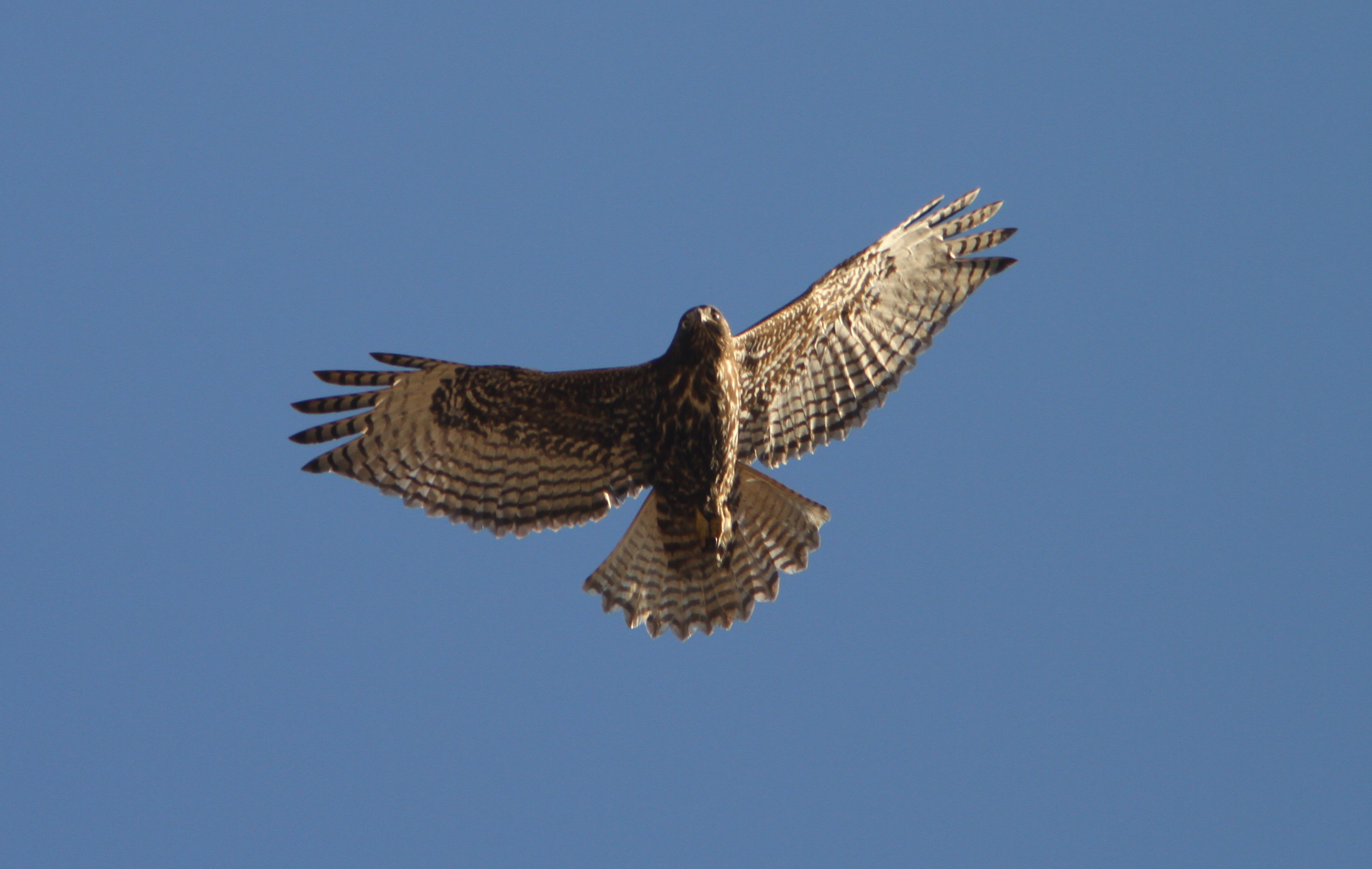
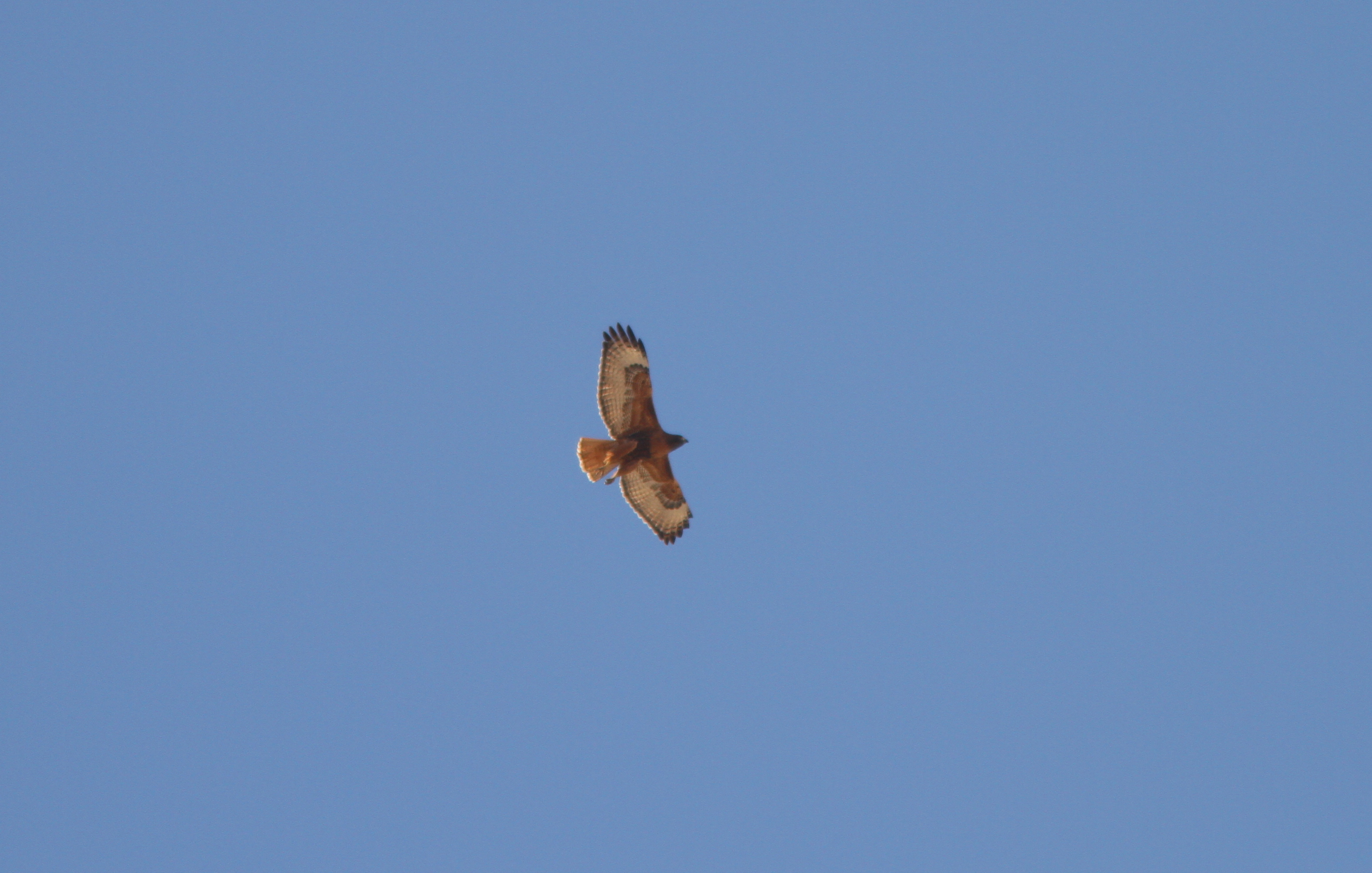
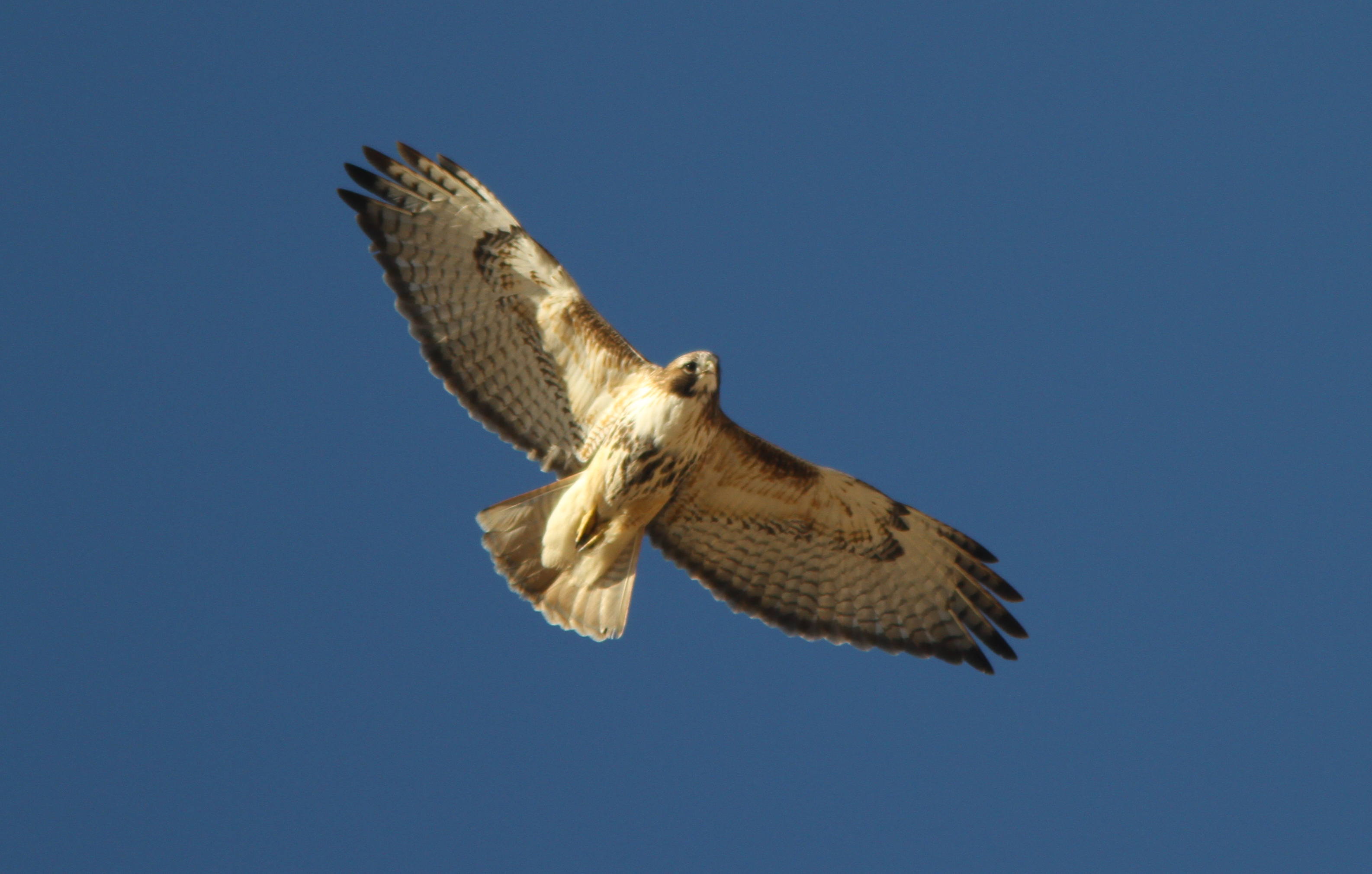
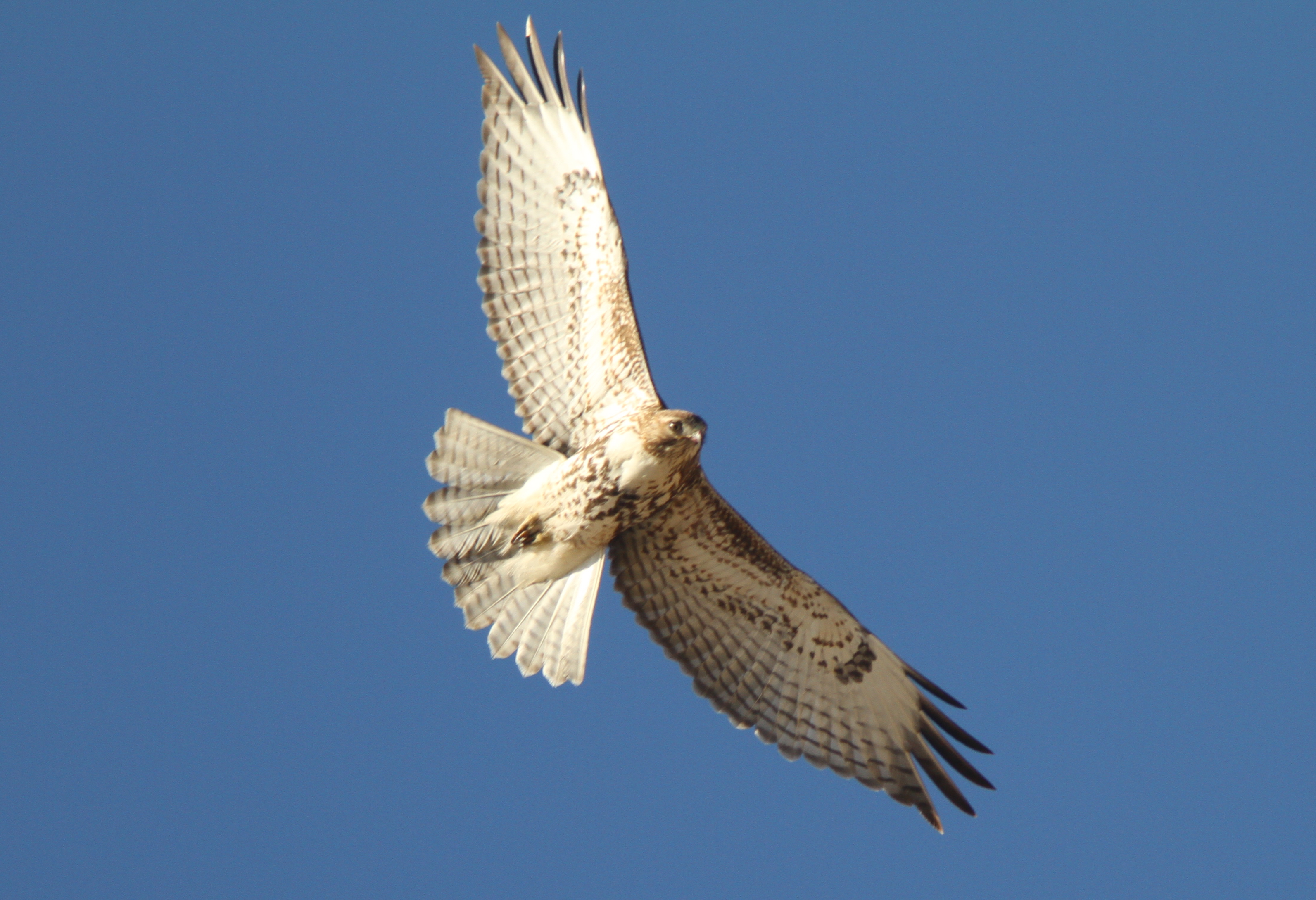
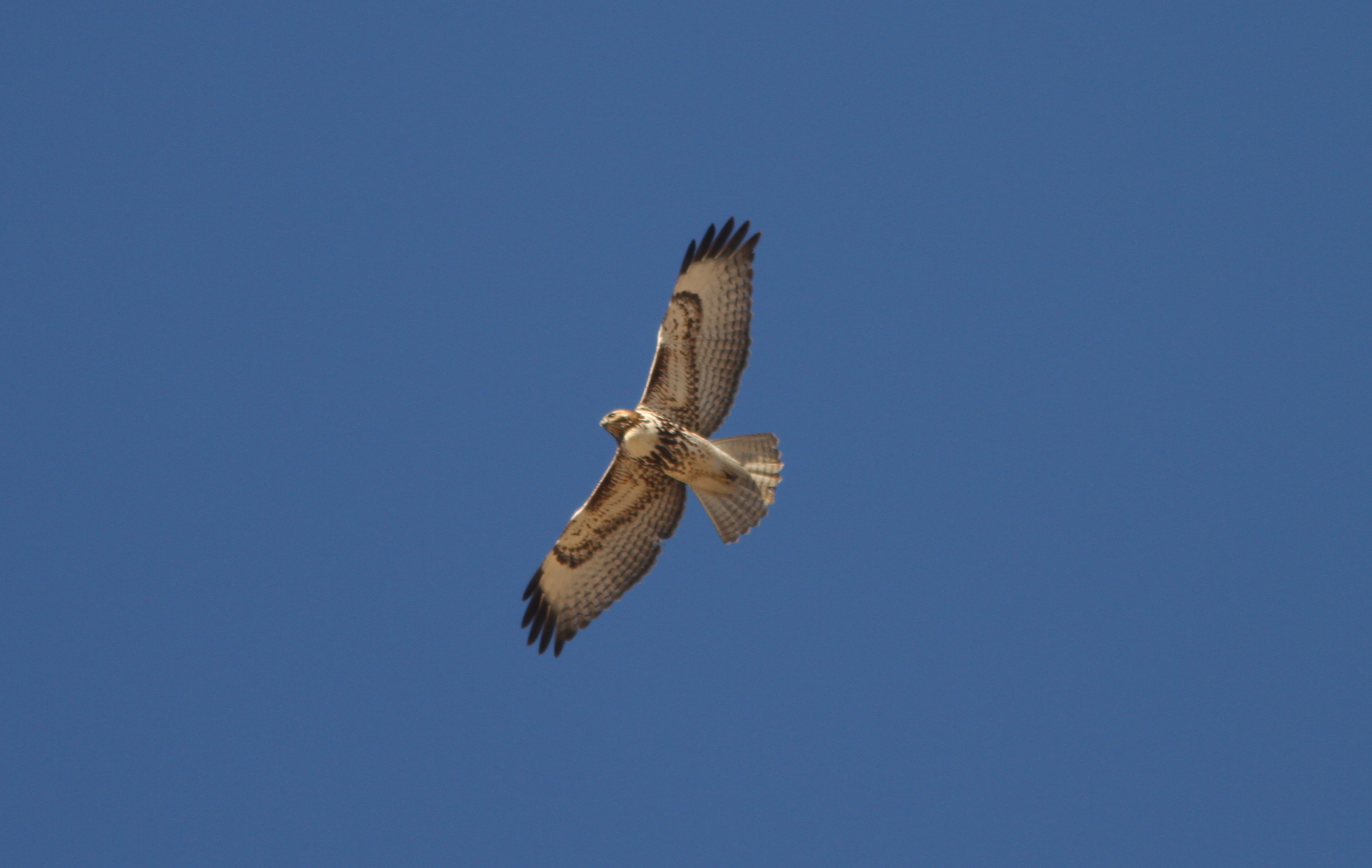
As the Rough-legged Hawk was more present this month, I took the opportunity to hone my identification skills down to the particulars. In flight sexing, if possible, is very difficult. With some raptors, even ageing becomes nearly impossible. With the help of the camera, I was able to make take my impressions and assumptions, review the photos, correct my mistakes, and cross reference my field guides for the most precise analysis I could muster. This approach is what I call in depth field study.

The above photos are examples of what I would so often see as I watched a bird through my binoculars. I was able to tell almost instantly the species, but narrowing my ID any further became a challenge. The bird above flew through the area quickly so an in flight ID of sex and age was not possible. After reviewing the photos I found that due to the mottled under-wing lining, obvious dark bib, and dark trailing edge to the wing, this bird is most likely an adult male. There are pitfalls to some of these criteria, but I feel fairly confident in this ID.

While photographing a Horned Lark in a high desert valley on my last survey day, I noticed a large shape growing larger in the sky. Looking up, I saw the familiar flight of another Rough-legged wandering north, perhaps in search of food. The bird flew directly overhead, giving me a great opportunity to photograph and observe at close range. The excitement kept me from making any ID on sex or age, but again I went back to the photo to see what I could tell about the hawk. The most notable feature is the nearly black belly band of the bird. This coupled with the pale wing edge and tail band indicates that the bird is a juvenile. Also, there is a faint hint of paleness to the primaries, which supports the juvenile conclusion. Still, the mottled under-wing coverts and heavily marked breast make me wonder if this could be a male. So far in my study, nothing has told that it is possible to sex a juvenile. Perhaps this particular could be basis for future research.

The Ferruginous Hawk seemed to be more present this month as well. I saw many more birds in the farmlands and desert alike. The strikingly rich colors and contrast of the Ferruginous Hawk give the bird an heir of royalty. Its fierce gaze exemplifies this royalty as well. No wonder the bird was given the epithet regalis, for its regality is unquestionable.

While surveying an area only miles from the Milford wind farm, I saw a large hawk flying across the horizon. After a quick glance through my field glasses, I knew the bird to be a Ferruginous Hawk. With a silver head and nape, rusty red coverts, pale primaries, and prime white tail, the large Buteo could be nothing else. I have since researched how to tell the difference between an adult and immature Ferruginous, and I believe the bird below is a typical adult light morph bird.

Given the rufous upper-wing and underwing coverts, rufous leggings, and the white tail lacking a terminal band, I feel fairly confident in my analysis. As with all buteos, when the varying color morphs are introduced, it can complicate things. The Ferruginous hawks I saw were all light morphs, save one. Atop a power pole only half a kilometer from the town of Minersville, I found a large dark bird watching a field for prey. I was unable to get a decent photo, but the picture below will have to do. I cannot help but share the bird.

Given the lack of a terminal tail band, I believe this bird to be an adult. There is a dark trailing edge to the remiges, but due to my mediocre camera skills, I chopped the wing in any other flight photos I took. I plan to go back to the area on my third stint to find this bird again and make another attempt to photograph it. One particularly neat aspect to this bird, and you can see clearly in this photo, is that the belly is a bit paler than the rest of the birds body. Dark morph buteos, especially in lagopus, seem to retain their plumage patterns. This makes sense as the dark plumage results from an increase in melanin in the feathers. In the case of this Ferruginous, the increase seems to be in phaeomelanin, responsible for rufous tones, and the areas where the rufous already exist seem darker than the areas that are regularly pale.

I could not believe the number of birds that occupied the areas that I travelled. Without question, the most incredible experience of the second survey stint was seeing the Short-eared Owl atop the wheel line, glowing golden from the falling sun. Content for the time being, the bird watched the warm rays as they caught fire against the frozen valley. As I watched the dazed and docile bird, I realized that for the moment, the Short-eared Owl and I shared a feeling some call heaven, some call pleasure, some call perfect. It is a feeling I live for, found so often at dusk. It is the feeling of life, and the Owl and I let the feeling pour upon us like warm water. As cars rushed by, I wondered why others would not stop to watch the sun fall. As mortal creatures, as any life is, it seems foolish to ignore such instances. I want to think that somewhere in the bird that watched the sun, there was a feeling of mortality and gratitude for the sun. Probably not so, but the bird served as a messenger to me the sentient, and drew my attention to the sun, the giver, the life provider for all.