A studio for bird study

Tag: photography

Learning from the Best- A Day in the Field with Jerry Liguori

by Bryce W. Robinson

Yesterday was spent photographing birds with Jerry Liguori. It was such a full day that I forgot to wish my mom happy birthday. I accept the label of a terrible son. Sorry mom, Happy Birthday.

I find that surrounding myself with those that are more skilled and knowledgable than myself helps me learn quite a bit more than I might alone. Birding with a man like Jerry Liguori should have been highly intimidating, but I felt very comfortable being myself and exposing my identification weaknesses. He is a very humble person, willing to teach and share his passion.

Jerry has some incredible photography equipment. You can look through the guides on raptor identification that he has published and see that he knows his stuff regarding bird photography. I was excited to see him in action, and perhaps pick up on some of his techniques. Seeing my camera and lens against his, Jerry kindly offered me the opportunity to use one of his set ups for the day. Taken aback, I accepted the offer. What followed was the best day of bird photography I have ever had.

As we continued, Jerry took the time to teach me some general techniques of using the camera on manual. I really learned a lot about the hows and whys of photographing raptors. I was so grateful that he was willing to take the time and energy to show me how to share in the experience. From my experience with Jerry, he teaches those who share his passion not from an ego, but from a true love of the birds. I personally feel that with true passion comes a desire to share and infect others with that same passion, and I see that in the way Jerry interacted with me.

From the start, Kestrel’s were every where to be seen. I have never been able to get as close to birds as I did with Jerry. He says he has the best luck, for whatever reason. I would be skeptical, however, we had some great experiences with tolerant birds. Here are two Kestrels, the first a docile male atop a sign, and the second, a hungry female feasting on an unlucky Marsh Wren.

Male American Kestrel- Falco sparverius

Female American Kestrel- Falco sparverius eating a Marsh Wren- Cistothorus palustris

Although common, I never pass up the opportunity to observe a Kestrel. They are a lot of fun to watch. The female munching on the Marsh Wren was very tolerant of our intrusion. As we watched her eat, we could see feathers fly as she ripped them from the bird. Admittedly, both Jerry and I assumed the Kestrel was feasting on a vole or field mouse. It wasn’t until I reviewed my photos at home that I discovered what the bird’s meal actually was.

Another species that seemed to cover the marshlands in large numbers was the Northern Harrier. Again, as common as the bird is, it is always enjoyable to watch it wander low above the marsh, occasionally making acrobatic moves at unsuspecting prey. We spent some time driving alongside many Harriers, photographing as we drove.

Northern Harrier-Circus cyaneus. Juvenile.

Northern Harrier- Circus cyaneus. Juvenile.

Another bird that was fairly numerous was the Rough-legged Hawk. According to Jerry, we didn’t see as many as usual, but to me the numbers were acceptable. All of the RL’s that I photographed are juveniles, which I found interesting. One particular individual was missing p7, a bird that Jerry had photographed a few weeks prior when the feather was dangling but not fallen. I did my best at getting a decent photo of the distant bird.

Juvenile Rough-legged Hawk-Buteo lagopus missing p7

The sun was in and out as the day went on. We found a RL on the wing taking advantage of a sunny spell and good thermals. Directly underneath the circling bird, I shot to my hearts content. I came away with some great photos as the bird rose on thermal updrafts, observing the strange behavior of the two mad humans below.

Juvenile Rough-legged Hawk- Buteo lagopus

Although the day was definitely dedicated to photographing raptors, I had the opportunity to take the time to capture images of a number of species outside of the raptors. While I was photographing some waterfowl, I saw a friend Debra, and she informed  that I had missed the opportunity at seeing two Great-horned Owls roosting. That was disappointing, but I was glad to come away with the birds that I did.

As we drove along a winding road, we spotted a Loggerhead Shrike only meters off the road. Surprisingly, the bird did not fly when we stopped directly beside it. I fired a number of shots, then took the time to simply watch. As I watched, Jerry stopped photographing to check the quality of his images. At that moment we both missed the opportunity to catch the shrike expelling a pellet in a dramatic fashion. We continued with a win some lose some mentality. I believe that when photographing birds, if you do not preemptively adopt this mind set, you will certainly go mad with missed opportunities.

Loggerhead Shrike-Lanius ludovicianus

American Wigeon- Anas americana

Song Sparrow- Melospiza melodia

Cistothorus palustris

Ring-billed Gull- Larus delawarensis

Great Blue Heron- Ardea herodias

It was an exceptional day of birding. I am very grateful for Jerry Liguori’s willingness to share his time and equipment with me, and teach me some things about a world we both find fascinating. I hope to join Jerry in the field again very soon. It must be in the very near future, because in a few weeks I will be moving to southern California to work as a biologist conducting nest surveys for a consulting firm. I want to get in as much Utah birding as I can before I leave, but I will certainly continue my study after I relocate. Soon the species that are featured will change as I travel. The ebb and flow of life is truly something to embrace, and embrace it I shall.

More Raptors, of Course

by Bryce W. Robinson

I have come to terms with my condition. I have CROD….Chronic Raptor Obsession Disorder. In my opinion it is wrongly termed a disorder. Sure, I will admit that it is odd and certainly passes the threshold of obsession, but it does me no harm… I hope. All in jest, there is no such thing as CROD, but I am beginning to realize my extreme “interest” in raptors.

Christmas weekend was full of countryside raptor watching. I even finally found my Christmas owl. I took my sister out with me and she insisted we pull over to check out some road kill that she claimed was a bird. I was skeptical, insisting it was likely a skunk or rabbit.  In response to her foolish older brother,  she fired back a snide and witty response atypical of a ten year old, “Bryce, is a skunk brown, and do they have tail feathers?!” I quickly U-turned, telling her that if I was turning around for some smashed rodent, she would be in a deal of hot water. Sure enough, I was humbled.

The large bird alongside the road was in fact a Great Horned Owl. The poor creature was victim of contact with a speeding automobile. It was largely intact, and I took the time to examine the incredible predator. I am at a loss for words when describing what intricacies and natural artwork the bird world holds. I was very pleased with my young sister and her insistence on stopping. I have resolved to listen to her more. She is a smart girl, much farther along than I was at her age. I hope the experience with the owl was as special to her as it was to me.

I found I great deal of birds in Sanpete valley, but before I even reached my parents, I had met a raptor near my brothers place in Orem. A juvenile Coopers Hawk sat high in a leafless Ash above the road.

Cooper's Hawk, Accipiter cooperii, Juvenile.

These birds always seem to glare at me as they pose. I love every opportunity to watch and interact with them. My younger brother Camden was with me, and it was he that I had to convince to stop the car and allow me to see the bird. As a sports fan, he doesn’t really identify with my bird obsession. He seemed to really love the bird, and was pleased with the opportunity to see something he normally wouldn’t pay attention to.

Not necessarily a quality photo, but a bit striking nonetheless.

On Christmas day I went for a drive around the northern end of Sanpete Valley. It was a clear afternoon as the sun began to fall towards the western mountains, pouring orange radiance and long shadows that served my mellow mood. The birds in the valley at this time of year are everywhere. Bald Eagles decorated the large trees of the valley, much like ornaments celebrating the season. With a keen eye, other not so noticeable birds also come to view in the tree tops. Merlins can be found all over the valley. I found three in the few hours I was out. My first was a Prairie Merlin, most likely a female, sitting atop a large cottonwood simply enjoying the sun.

The merlin is a very cute raptor. This may be a bit bold to say, but I can’t help but calling these killers cute. Kestrels fall right in line, and although I constantly see them ripping mice and voles apart, I still find them adorable.

I do not often see the Ferruginous Hawk in Sanpete Valley. In fact, until this year I never have. Christmas weekend provided me with close views at two birds. Analyzing the photos, I can’t help but think that the two birds are the same bird. After all, I found them only some five kilometers apart. Still, it is always exciting to see Buteo regalis, and even more exciting when I can get some photos.

Ferruginous Hawk, Buteo regalis, adult. Christmas day bird.

I was very happy when I captured the bird in flight. The sun shone from the opposite way, so the plumage was not highlighted to my liking. The bird does have some aesthetic, as the edges shine gold from the late afternoon sun. I was happy with this photo until I found the second bird the next day. This time around, I was able to get closer to the bird and take some pictures at a closer distance and in better lighting.

Note the bluish coloring on the scapulars. Such a visually striking species.

The bird then flew south and I was able to get a few shots before it vanished into the horizon. I am hoping to get out and find this bird again. Ferruginous Hawks are a favorite. I am so intrigued by their interesting plumage. As an artist, the bird satisfies my need for a tickling and tantalizing visual.

As we moved east through the farmlands, my sister and I found a very dark Red-Tailed Hawk in a grove of trees near the San Pitch River. I always get excited about dark morphs, and the possibility of the Harlan’s Hawk. At first, I snapped photos of the bird thinking it was indeed a Harlan’s. The bird took to the air and circled me, giving me ample opportunities to capture photos at all angles. After reviewing the pictures, my confidence was shaken. I now feel that the bird is probably a dark morph, but the tail has some very interesting characteristics. I have decided not to share the photos until I come to a confident conclusion of what I saw, if I ever do.

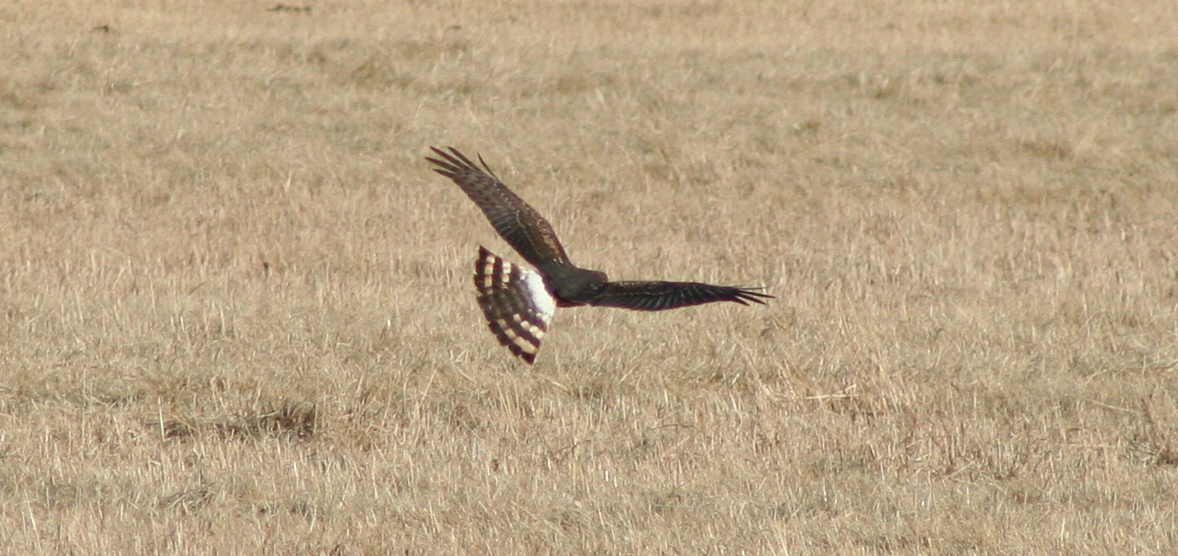
The Northern Harrier is always fun to watch. They are very common in agricultural and riparian areas across Utah. It has been my recent goal to strengthen my identification skills with the bird. I am beginning to get a handle on differentiating juveniles from females, and always can tell the males apart. The bird I found along the San Pitch, in a horse field, causes some intrigue.

Northern Harrier, Circus cyaneus. Surely and adult due to the apparent molted and replaced retrices. No dark wing tips and brown plumage indicates a female.

I love finding birds that have interesting or peculiar characteristics. This bird has molted its inner tail feathers. The bird seems a bit male like due to the grayish tones of the new tail feathers and wings. I am a bit perplexed and may seek some insight.

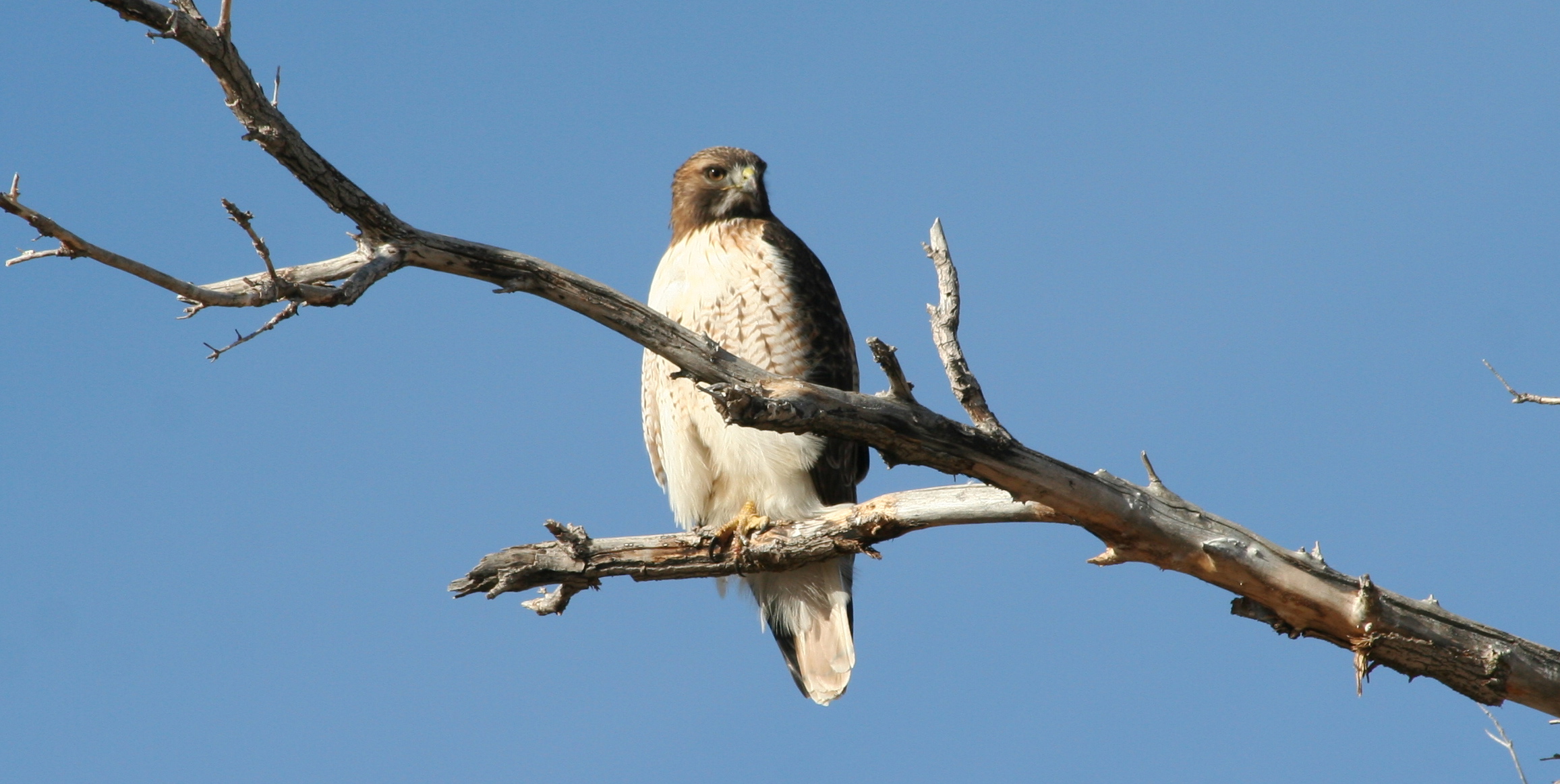
Typical adult light morph Red-tailed Hawks are not uncommon, even plentiful, around the farmlands of Sanpete County. Still, I am always taking the time to stop and watch. They can be so diverse, and I love to see the differences each individual presents. I found a bird above a farmhouse, in a large tree surrounded by a menagerie of Starlings, sparrows, and doves. That in itself was intriguing, so I stopped and photographed the bird. The lighting was spectacular, and I am very satisfied with the image.

Buteo jamaicensis, adult light morph western Red-tailed Hawk

I spent a lot of time along the San Pitch River because I have seen a number of Belted Kingfishers on branches that overhang the water. No luck with finding any, in fact there was an overall absence of anything non raptor, especially passerines, save the ever-present Starling and House Sparrow populations. Magpies and Ravens were also a plenty, but I never seem to find any that are willing to be photographed.

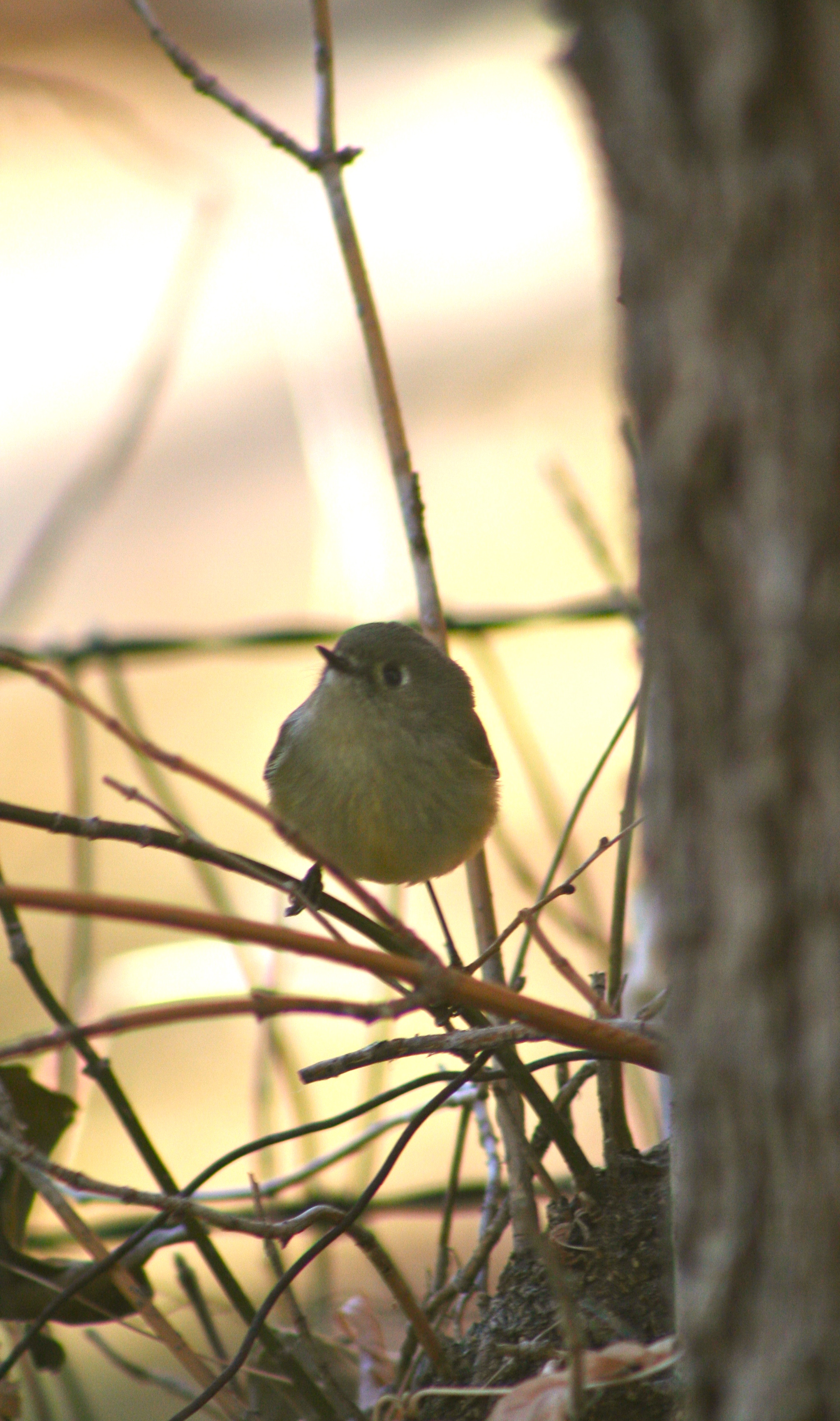
Lastly, I would like to include a poor photo of a bird that visited my feeder a few days ago. The Ruby-crowned Kinglet is not so common, but oh so delightful to see. As cute as the Merlin and Kestrel are, the Kinglets take the cake.

Ruby-crowned Kinglet, Regulus calendula