A studio for bird study

Tag: research

Lesser Yellowlegs Casts Pellet

by Bryce W. Robinson


I’m currently working in the Alaskan boreal forest outside of Anchorage. The focus of the work is on boreal wetland species such as Lesser and Greater Yellowlegs, Solitary Sandpiper, Short-billed Dowitcher, Olive-sided Flycatcher, and Rusty Blackbird to name a few. The time I’ve spent in the field has been rewarding on many levels, mostly because I’ve never worked in this system and I’m exposed to behaviors I’ve never seen.

Today I was in a canoe on my way to find some Rusty Blackbird nests. While slowly making my way, watching what I passed, I noticed a Lesser Yellowlegs perched on a log in the water. At the shoreline, I got out of the canoe and crept on the yellowlegs, laying down and turning on my camera. I’ve never had the chance to get great yellowlegs photos, so I took the opportunity. Meanwhile I recognized the opportunity to take some video, and as I switched over and began recording the yellowlegs expelled a pellet. This video alone, though it could be better quality, is worth an entire summer spent in the boreal. These seldom seen instances that speak to the life histories of birdlife are what I value.

Owls and raptors often get the attention when speaking about pellets in birds. In fact, many people don’t realize that most birds expel pellets. As recently as 1979, many species weren’t known to expel pellets (Below 1979). Now we understand that most species that consume insects and vertebrates cast pellets to reject indigestible material.

More description of the excellent boreal birdlife to come. I’m in heaven.

Referenced literature:

Below, T. H. 1979. First Reports of Pellet Ejection in 11 Species. Wilson Bulletin 91(4) pp. 626-628

Singing House Wren on the Boise River

by Bryce W. Robinson


I recorded a singing House Wren (Troglodytes aedon) today while banding birds along the Boise River with the Intermountain Bird Observatory (note the bird is banded!).

Although spring migration hasn’t hit in its entirety at this site, the House Wrens seem to have arrived in full. There are at least three different individual males singing in the area, and I’ve noticed an additional four individuals in the area as well. The House Wren population at this site seems to be healthy.

Unfortunately the video I recorded does not capture the song of the House Wren. I wasn’t too far from the wren, but I believe the inability of the phone to capture the song is related to the masking of other noises in the environment (and the iPhone’s lack of a directional mic). First and foremost it was a windy day, which I believe is the main contributor to the masking. On top of the wind was the noise of the busy highway, the noise of the Boise River, and nearby construction (all large bandwidth, but mostly low frequency). With both natural and anthropogenic noise, I wonder how House Wren territory distributions differ between an area like this and a relatively noiseless area such as a remote forest location away from a river.

HOWR

House Wren (Troglodytes aedon) banded at the Intermountain Bird Observatory’s Boise River site on the east end of Boise, Idaho.

Despite the heightened noise, the wrens in this area seem to be thick and continuing with life as they would. A study may enlighten us on the human noise impacts coupled with natural noise (rivers, etc.) on bird territory distributions like in this case, but if I were to hedge a bet I’d say the House Wren is one species that seems to weather the added impacts of humanity enough to maintain a regular and healthy population within human disturbance areas.

Harpy Eagle Painting for the Journal of Raptor Research

by Bryce W. Robinson

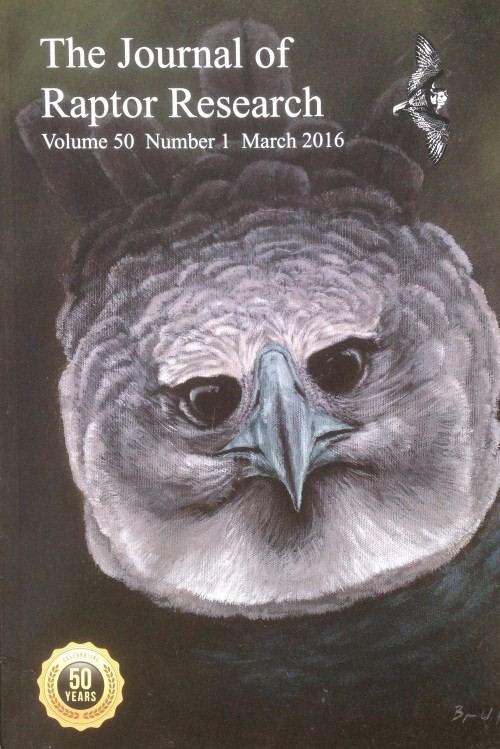
FullSizeRenderI’m honored and thankful for the opportunity to have painted the cover art for issue 1 of the 50th anniversary of the RRF’s Journal of Raptor Research. The issue features an article from The Peregrine Fund’s Harpy Eagle work, along with an article detailing a friend’s master’s work on Burrowing Owls, an excellent article on Gyrfalcon movement’s, and a lot more. I’m so happy for the opportunity to add to an organization that does such incredible work and carries the tradition of raptor studies forward.


For more information or to access the articles, visit the Journal of Raptor Research website.

Gyrfalcon Nest Observation

by Bryce W. Robinson

Somewhere between 45-50 days after hatching, young Gyrfalcons take a leap from their nest and fly for the first time. The clip above shows an angsty female preparing herself for that first jump. Her two siblings, both male, had already left the nest. This fact added to her anxiety as they called from outside of the nest.

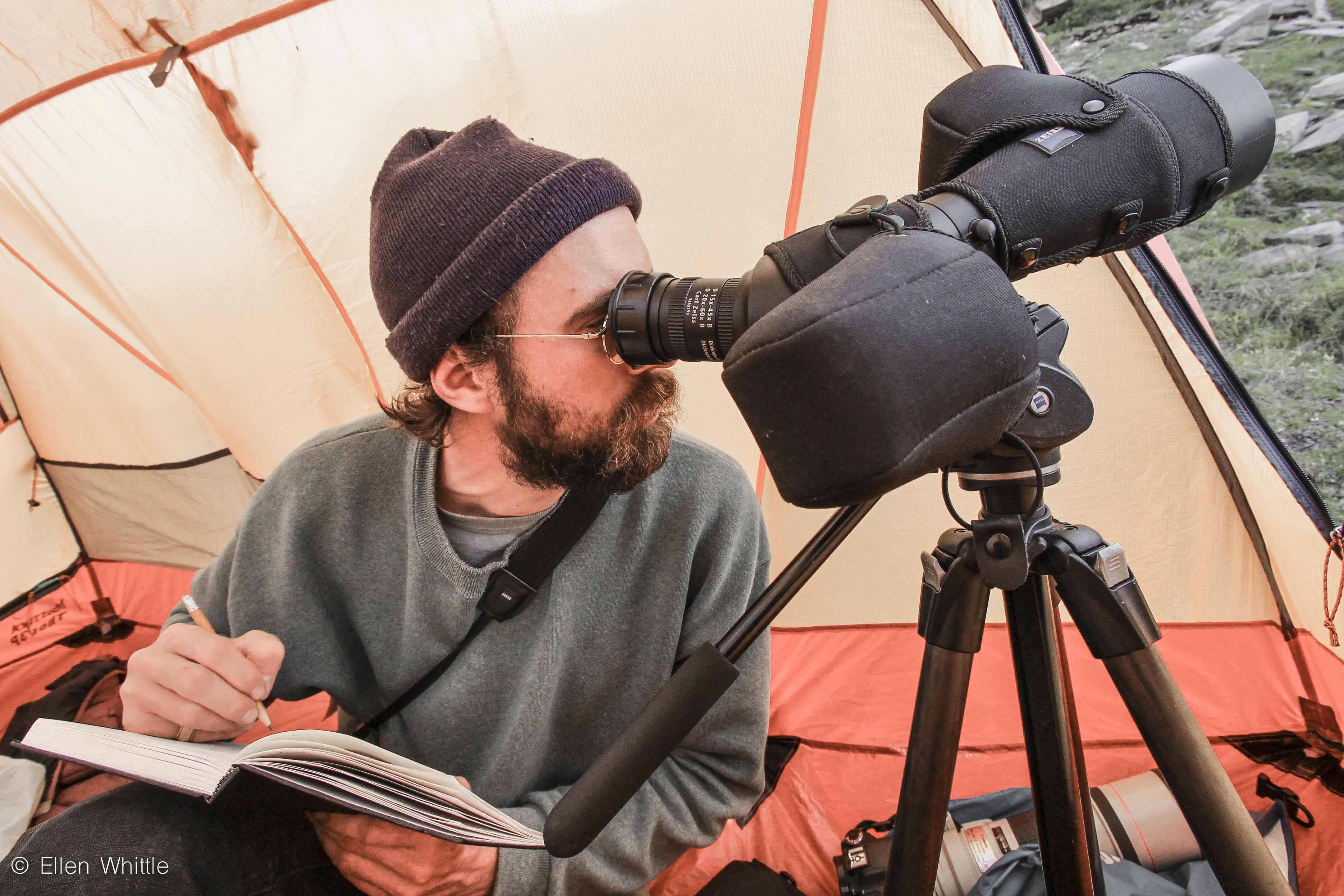
Last year I put some effort into seeing a Gyrfalcon’s first flight, but was never in the right place at the right time. This year, I’m making another attempt. The clip above – as seen from a tent through our Zeiss Diascope – is as close as I’ve come to seeing a first flight. I spent hours with my field partner Ellen in a tent outside of the eyrie waiting for the bird to make the leap. The clip shows the closest she came. After this intense flapping bout, she sat down and went to sleep. We had to leave before the bird left the nest, but the time spent watching her was worthwhile.

B_Fieldnotes

First hand study is invaluable. We live in an interesting world where technology gives us so much, so fast, so often. We are able to learn at such a high pace, and research is no exception. For instance, I’m gaining insight into multiple nests using motion-sensor cameras. This provides me an in-depth exposure to Gyrfalcon nests at a higher rate than ever before . This is all due to the camera technology. But I’m missing out on a slow pace digestion of first hand observation. I’m missing out on the whole picture. To get the full perspective, and truly see what it is like in the nest, I need to watch them myself.

B_observation

While I watched, I took notes on behaviors. I also did a bit of field sketching. Field sketches force you to focus, and digest very small details that can heighten your understanding of your subject, but also enhance your observation skills. Besides all that, it is an enjoyable way to pass the time while the nestlings sleep.

Ellen_observation

Ellen and I took turns watching the nest. We were able to see two prey deliveries during our time watching. A male fledgling returned after one of the prey deliveries, hoping to get part of the meal. The female, however, would not oblige. I most enjoyed watching their behaviors. The birds interacted with one another in an endearing manner. They would pick at each other, as if preening. I wasn’t quite sure if this was curiosity, playful, or truly preening. They would also watch flies buzz around the nest, as if they were about to pounce. You could see the predator engineered mind in the way they followed the flies. They were figuring out what they needed to do to survive.

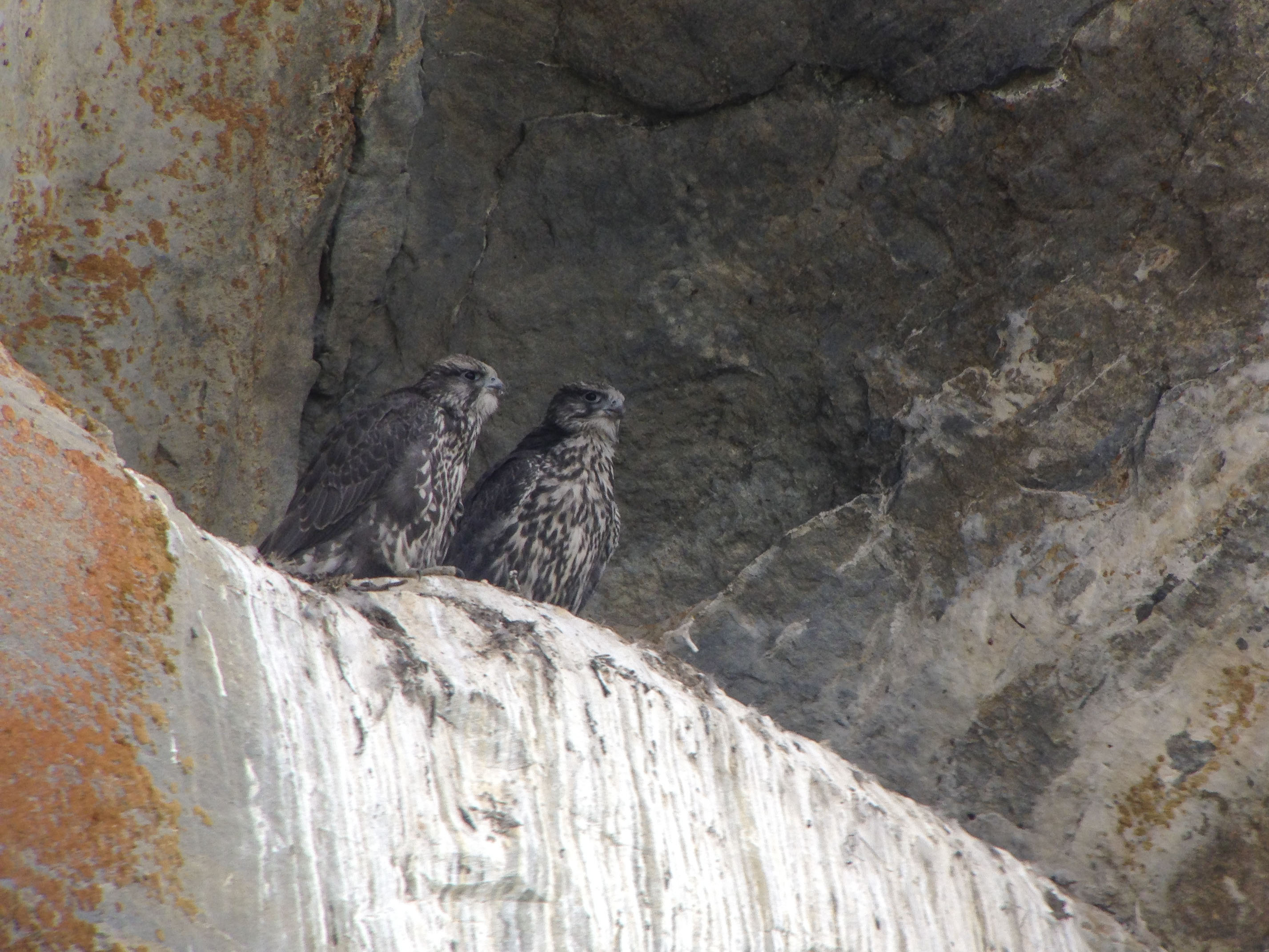
Male (R) and female (L) Gyrfalcon fledglings. Digiscoped with a Zeiss Diascope 65 T* FL

Male (L) and female (R) Gyrfalcon fledglings. Digiscoped with a Zeiss Diascope 65 T* FL

Although we missed the first flight of the female, we’ll have a few more opportunities to try with other nests. This means more hours behind the scope to watch, and more hours to learn.

To find out more about The Peregrine Fund’s Gyrfalcon Program, visit The Tundra Conservation Network and www.peregrinefund.org