A studio for bird study

Tag: wildlife

Rock Sandpiper (Calidris ptilocnemis) – A GIF to illustrate the power of feathers for rendering shape

by Bryce W. Robinson
ROSA.gif

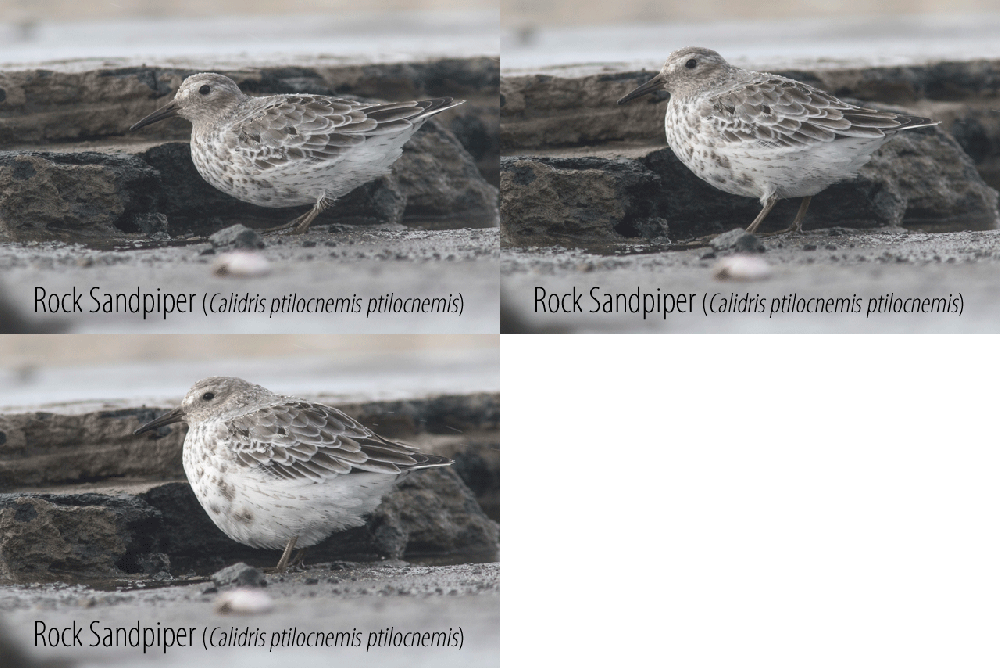
I finally had the pleasure of seeing a “nominate” Rock Sandpiper (Calidris ptilocnemis ptilocnemis) during my time on the Bristol Bay coast of the Alaska Peninsula. This bird was hanging out with darker Rock Sandpipers (likely tschuktschorum) and Dunlin. These birds breed on Bering Sea Islands and mostly winter in Alaska’s Cook Inlet, farther north than any other shorebird (Gill et al. 2002).

While sifting through the many photos I took of this bird I found three taken almost simultaneously that illustrate the power of feathers for rendering a birds shape, and how much and quickly that can change for an individual bird.

After seeing the potential of putting the three photos together, I taught myself how to create a GIF (Graphic Interchangeable Format). I feel a GIF is an excellent way to show how only a few seconds and a relaxed posture can change the shape of a bird.

Referenced literature:

Gill, Robert E., Pavel S. Tomkovich and Brian J. McCaffery. (2002). Rock Sandpiper (Calidris ptilocnemis), The Birds of North America (P. G. Rodewald, Ed.). Ithaca: Cornell Lab of Ornithology; Retrieved from the Birds of North America: https://birdsna.org/Species-Account/bna/species/rocsan

DOI: 10.2173/bna.686
Black-bellied Plover (Pluvialis squatarola) Feeding on a Jellyfish

by Bryce W. Robinson


For the past two weeks I stayed at a small cabin along the Bristol Bay coast of the Alaska Peninsula near the village of Egegik.  I was part of an expedition to trap staging Bar-tailed Godwits (Limosa lapponica) led by the shorebird aficionado Dan Ruthrauff of USGS, accompanied by Lucas DeCicco, Stuart Fety, and Jaime Welfelt. We had poor luck with godwits, but had a spectacular time with the avifauna that was present. I have a lot of content to share from the expedition, and will start by sharing a clip of a Black-bellied Plover (Pluvialis squatarola) feeding on a beached Hydromedusae (Jellyfish).

Although not mentioned in any literature on diet of the Black-bellied Plover (so far as I’ve found), there is discussion of the behavior for Rock Sandpiper (Calidris ptilocnemis; Gill et al. 2002). Apparently the birds feed on the gonads of washed up jellyfish. There were many jellyfish that were left on the tidal flats each day as the tide receded, providing an ample food source for staging plovers preparing for the next leg of their fall migration.

Referenced literature:

Gill, Robert E., Pavel S. Tomkovich and Brian J. McCaffery. (2002). Rock Sandpiper (Calidris ptilocnemis), The Birds of North America (P. G. Rodewald, Ed.). Ithaca: Cornell Lab of Ornithology; Retrieved from the Birds of North America: https://birdsna.org/Species-Account/bna/species/rocsan

DOI: 10.2173/bna.686
 

Juvenile Whimbrel (Numenius phaeopus) in Flight

by Bryce W. Robinson

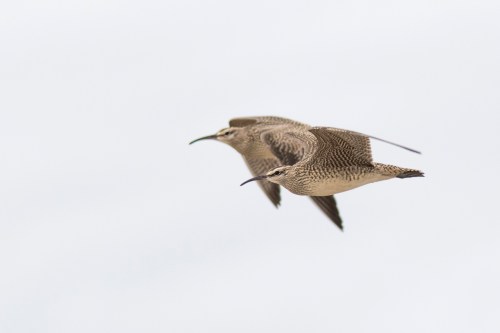
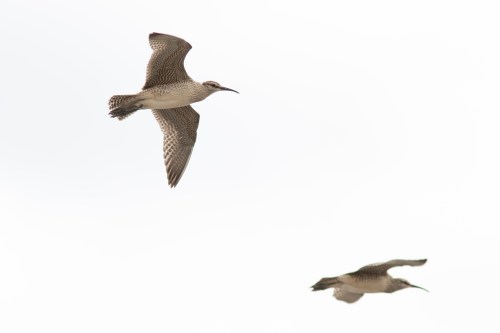
I’ve included two photos of in-flight juvenile Whimbrel that I took in the first week of August 2016. I’m sharing these images for the simple reason of illustrating how a young juvenile differs from an adult. The age of these birds is told by the overall fresh, clean plumage and relatively short bill. It’s that simple in August. In a few months the bills will grow to a length comparable to the adults and determining age will become more difficult.

2l3a8758

2l3a8764


Black Hawk Eagle Painting for Belize Raptor Center

by Bryce W. Robinson

bhea

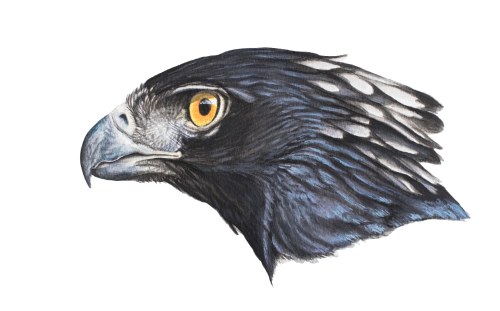
Black Hawk Eagle (Spizaetus tyrannus). 11 x 15″ Gouache on paper.

My friend Aron came to me recently to ask for a favor; an illustration for a silent auction to benefit a small raptor education center in Belize. The Belize Raptor Center is an organization whose primary focus is to showcase indigenous Belizean species as the most ecologically and economically important class of wildlife in the country.

The benefit will be held in Salt Lake City on 8 October at Church and State from 7-10 PM. There will be a silent auction, live music, and best of all live birds. If you’re in Salt Lake City, be there.

Here are a few details about the Belize Raptor Center from their website:

MISSON: Educate and inspire conservation of birds of prey and their habitat, using permitted non releasable raptors. Rescue and rehabilitate injured and orphaned birds of prey.

SUMMARY: Our mission is important because in Belize, raptors are highly persecuted due to the many myths and misconceptions that surround them. Although they are protected in the United States, the vast majority of them migrate south for the winter and face dangers such as shooting, poisoning, and habitat loss…. Only though proper education can we hope to protect them.

GOAL: We are planning to construct a brand new facility that will serve as the Visitor Center for Belize Raptor Center. Currently the center houses 6 birds of prey that are taken off-site to educate schoolchildren about the importance of raptor conservation. There will be a museum and education center as well as an indoor flight space for a free-flighted bird show – the first of its kind in Belize.

THE FACILITY: The funding will go towards the costs of labor and materials for the Visitor Center. The entire establishment is completely off-grid; solar power and rain/well water keep expenses low. Income from the gift shop and paid programs will help keep our facility self sustaining after the initial costs of building the visitor center.

If you’re interested in the painting to help the Belize Raptor Center reach their goal, but can’t attend the benefit in Salt Lake City, feel free to contact the Belize Raptor Center or me.

Find them on Facebook

Contact: belizeraptorcenterATgmail.com

Our MISSION