
A studio for bird study
Tag: wildlife
July 20, 2015
Rough-legged Hawk Nestlings
by Bryce W. Robinson
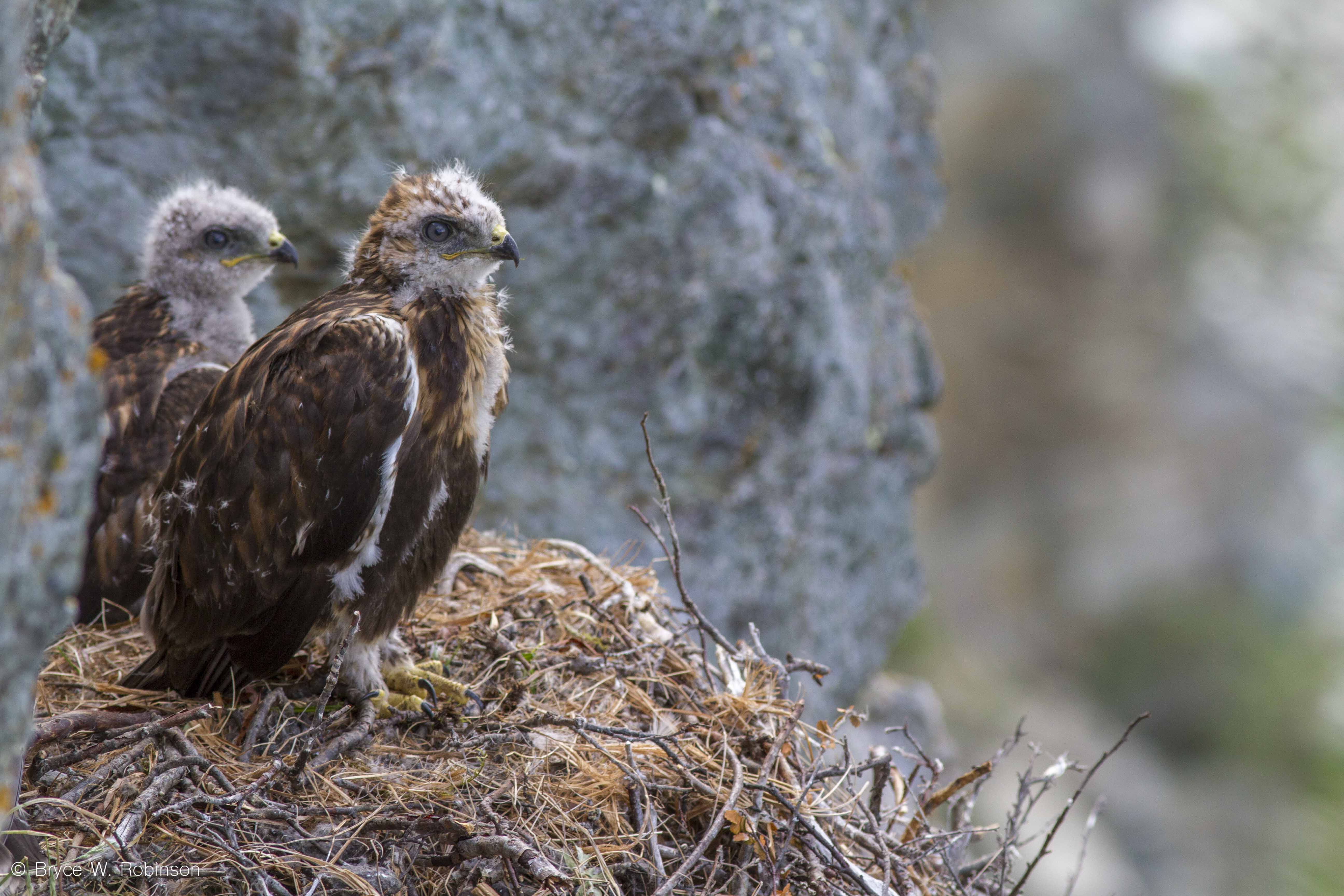
I was surprised the first time I saw the proximity of nesting Rough-legged Hawk and Gyrfalcon. It was my first summer in Alaska. I was along the Dalton Highway peering through a scope at an incubating white Gyrfalcon. Only 100 meters down the cliffside was an incubating Rough-legged Hawk. Now that I’ve gained an in depth experience with cliff nesting birds of the Arctic, I see why these birds tolerate one another. There simply aren’t enough locations to be choosy.
These eyes were watching me as I pulled out one of my Gyrfalcon nest cameras the other day. This is on the extreme end of Gyrfalcon – Rough-legged Hawk nest proximity. These nests are only about 10 meters apart, and given that these young Roughies are about to fledge, they will both be successful. Almost every cliff I’ve worked in this summer has had a nesting Rough-legged Hawk pair. Some cliffs have had two, along with nesting Raven and Cackling Goose (yes, they nest in cliff nests often). Real estate is limited, so all suitable sites are usually occupied given enough food in the area.
Rough-legged Hawks are a favorite. I gained a familiarity with them during past winters in Utah, and it was always a dream of mine to see them on their breeding grounds. Each time I’m around a nest, I remember my current place and business in life, something that is not to be taken for granted. I’m living a personal dream, and I’m happy.
July 15, 2015
Rock Sandpiper Short
by Bryce W. Robinson
Rock Sandpiper – Calidris ptilocnemis. As seen through the ZEISS Diascope 65 T* FL
July 14, 2015
Gyrfalcon Nest Observation
by Bryce W. Robinson
Somewhere between 45-50 days after hatching, young Gyrfalcons take a leap from their nest and fly for the first time. The clip above shows an angsty female preparing herself for that first jump. Her two siblings, both male, had already left the nest. This fact added to her anxiety as they called from outside of the nest.
Last year I put some effort into seeing a Gyrfalcon’s first flight, but was never in the right place at the right time. This year, I’m making another attempt. The clip above – as seen from a tent through our Zeiss Diascope – is as close as I’ve come to seeing a first flight. I spent hours with my field partner Ellen in a tent outside of the eyrie waiting for the bird to make the leap. The clip shows the closest she came. After this intense flapping bout, she sat down and went to sleep. We had to leave before the bird left the nest, but the time spent watching her was worthwhile.
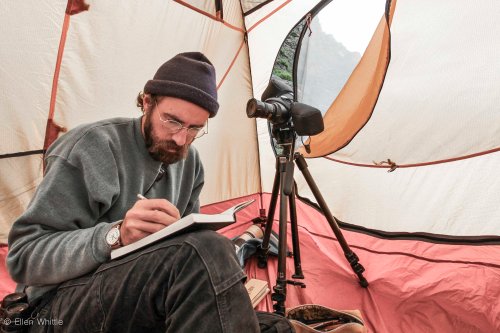
First hand study is invaluable. We live in an interesting world where technology gives us so much, so fast, so often. We are able to learn at such a high pace, and research is no exception. For instance, I’m gaining insight into multiple nests using motion-sensor cameras. This provides me an in-depth exposure to Gyrfalcon nests at a higher rate than ever before . This is all due to the camera technology. But I’m missing out on a slow pace digestion of first hand observation. I’m missing out on the whole picture. To get the full perspective, and truly see what it is like in the nest, I need to watch them myself.
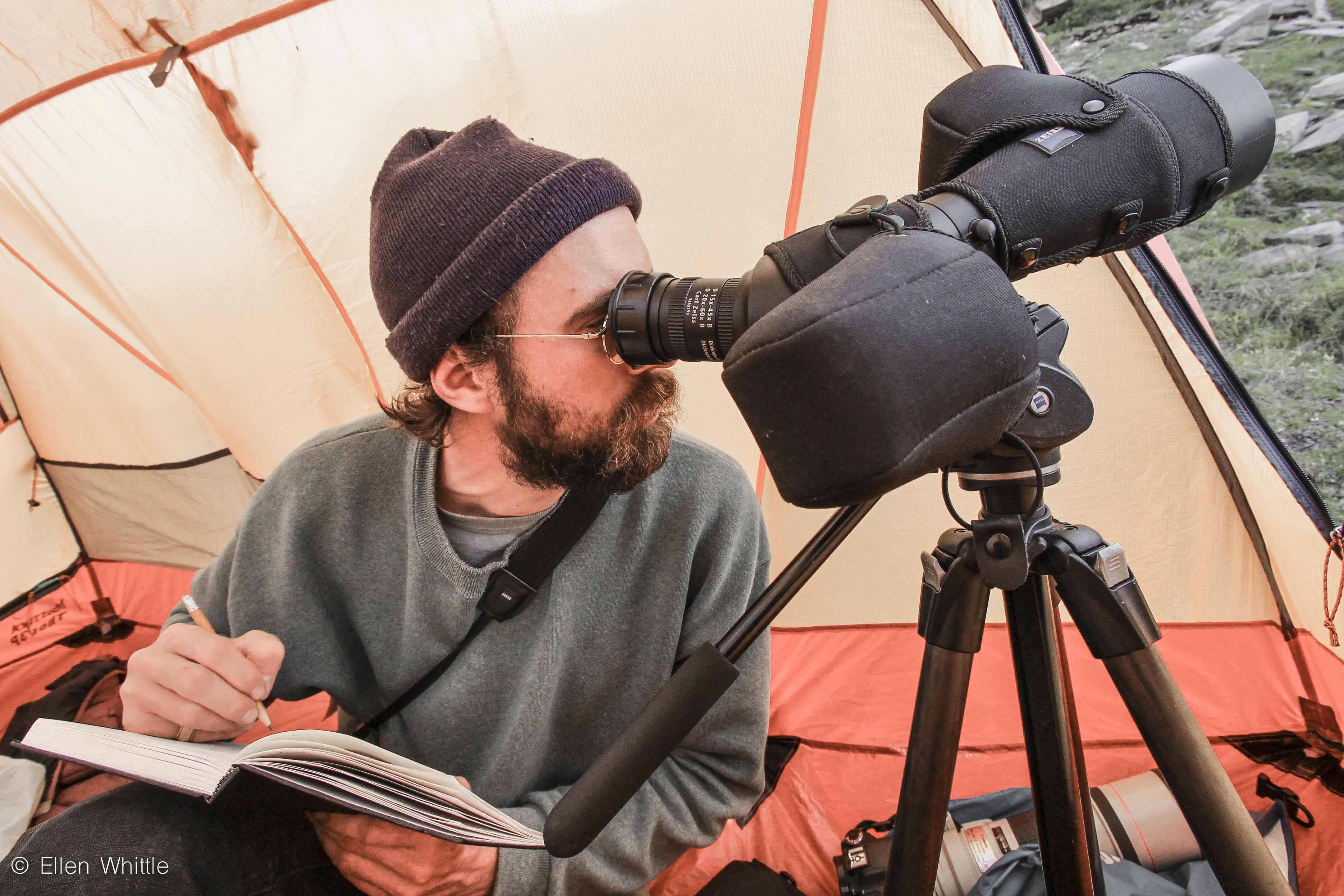
While I watched, I took notes on behaviors. I also did a bit of field sketching. Field sketches force you to focus, and digest very small details that can heighten your understanding of your subject, but also enhance your observation skills. Besides all that, it is an enjoyable way to pass the time while the nestlings sleep.
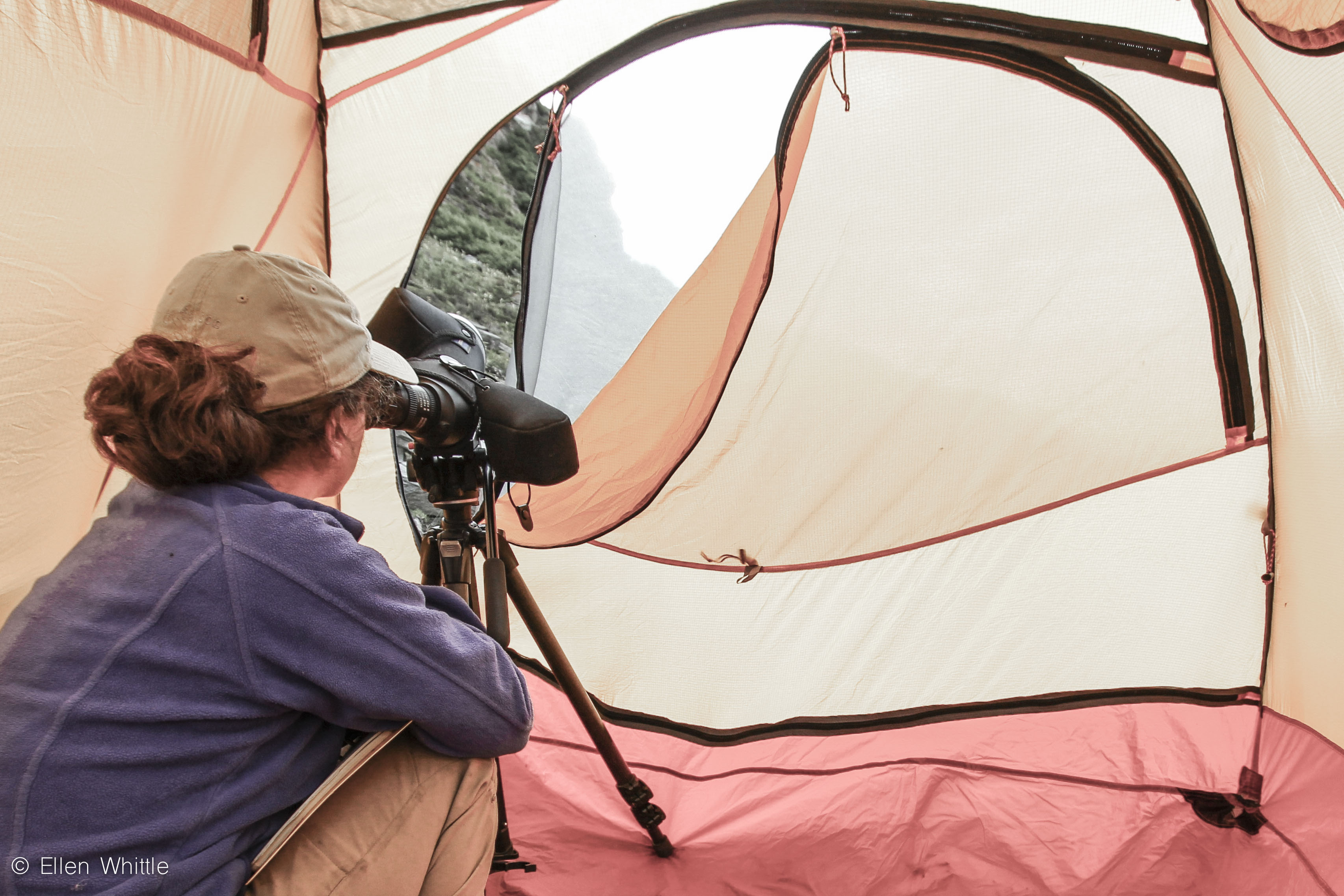
Ellen and I took turns watching the nest. We were able to see two prey deliveries during our time watching. A male fledgling returned after one of the prey deliveries, hoping to get part of the meal. The female, however, would not oblige. I most enjoyed watching their behaviors. The birds interacted with one another in an endearing manner. They would pick at each other, as if preening. I wasn’t quite sure if this was curiosity, playful, or truly preening. They would also watch flies buzz around the nest, as if they were about to pounce. You could see the predator engineered mind in the way they followed the flies. They were figuring out what they needed to do to survive.
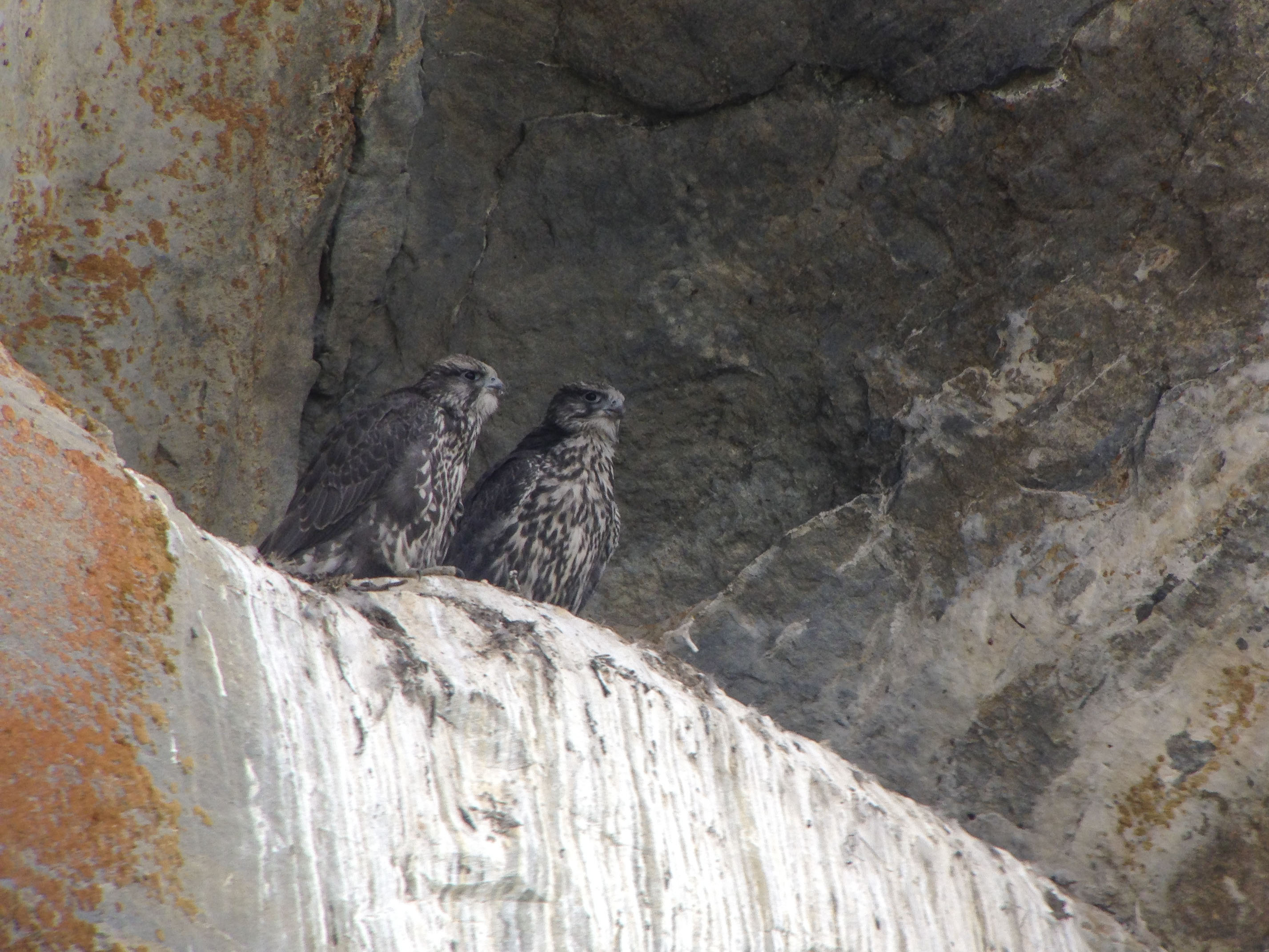
Male (L) and female (R) Gyrfalcon fledglings. Digiscoped with a Zeiss Diascope 65 T* FL
Although we missed the first flight of the female, we’ll have a few more opportunities to try with other nests. This means more hours behind the scope to watch, and more hours to learn.
To find out more about The Peregrine Fund’s Gyrfalcon Program, visit The Tundra Conservation Network and www.peregrinefund.org
 ornithologi.com