A studio for bird study

Plumage in Transition: Red Phalarope Pre-Basic Molt

by Bryce W. Robinson
REPH_1505

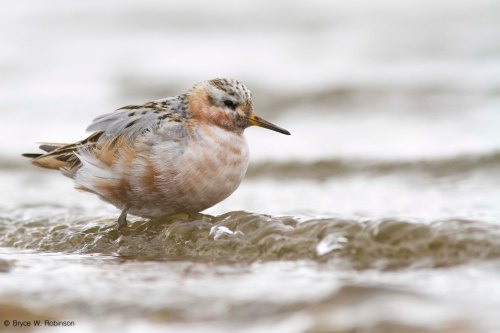
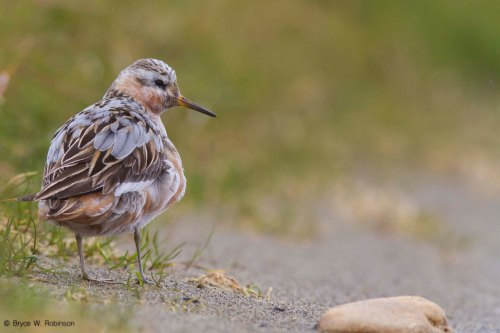
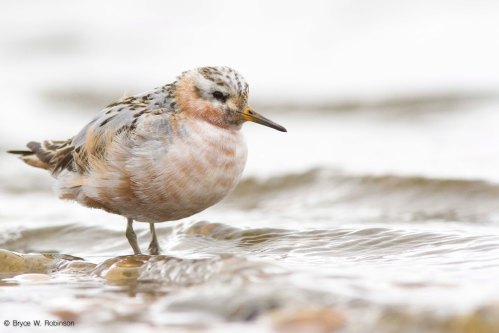
I don’t often post a large amount of photos from one subject, but I think this bird deserves the coverage. I was birding the western Alaskan coastline with my friends Neil and Ellen the other day when we found this male Red Phalarope – Phalaropus fulicarius. Even better, the bird was mid-way through its pre-basic molt, giving it a unique look. This was the first time I’d ever seen this transitional plumage. REPH_1501
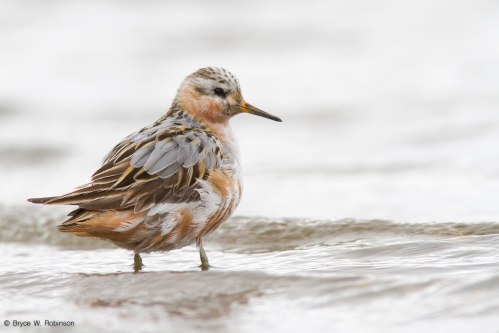
The new feathers of the basic plumage are blue-grey. The old feathers of the alternate plumage are gold and black. It’s a striking difference. Also note the orange body feathers of the alternate plumage, and the white feathers of the basic plumage. These birds are so colorful during their breeding periods on the pools of the Arctic tundra, but after this short period ends they molt into a cool plumage reminiscent of their winter haunts, the open ocean and coastlines. These color changes mean something, or better put, they have context. What a satisfying process, to see a bird in a state like this male and recall that the appearance has a story (begs the question, why the difference in appearance between seasons?).
REPH_1502

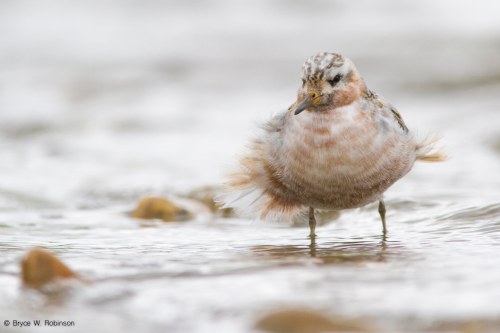
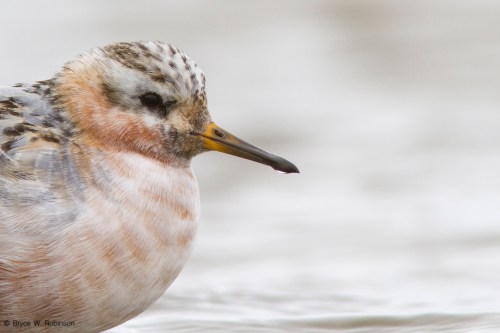
Although the bird was midway through its molt, it is still identifiable as a male. You can see in the crown that the retained feathers are brown and gold. If it were a female, these retained feathers would be wholly black, and bold. The gold and brown around the face and on the nape also tell its sex.
REPH_1503

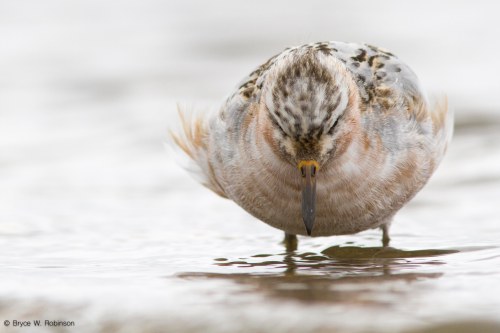
This bird was so cooperative that I was able to take my fill of photos. It’s rare to see this species in a plumage such as this, so I’m happy that I was able to capture many different angles and views, truly document the bird, and even put the camera down and simply watch. I feel spoiled with the way the birding has been lately here in western Alaska. Too many great things to see, too may things to shoot with the camera, too many experiences to write about. Just the way life should be.REPH_1505REPH_1504 REPH_1507 REPH_1509
Short-tailed Shearwater

by Bryce W. Robinson

I’ve seen a lot of North America’s birdlife, but there are certain bird groups where my exposure is lacking. One area is birds of the sea, or what we refer to as pelagic species. I haven’t seen many of these birds, particularly those that belong to the order Procellariiformes. In fact, I can count on one hand the number of species from this group that I’ve seen. So understandably I’d be interested in gaining more exposure in any way.

The other day I was birding the western Alaska coastline with my friends Neil Paprocki and Ellen Whittle. We were paying a lot of attention to the sea because we were looking to see puffins and a few loon species. I myself have spent a great deal of time watching the sea from the Alaskan coast, and I’ve never seen anything from the order Procellariiformes. On this day I had a first. We noticed a dark bird floating along the shoreline, maybe 100 m out. After scoping the bird, I knew that it was a Short-tailed Shearwater, a lifer for me and a long awaited bird. I was, to understate it entirely, excited.

The sight raised one thought in my mind, that the bird was obviously ill in some manner. It seemed to be sleepy, unconcerned by our presence, and very near shore (uncommon among these types of birds). So, something was likely wrong with the bird. Still, I took the proper satisfaction from studying the bird and enjoying its subdued behaviors.

I took some video (above) using my Zeiss Victory Diascope 65 F* TL that show the bird at a peak in its activity while we were watching. Notice the bird take a drink at the end of the video. If we drank seawater we’d in effect die of dehydration due to the high salt concentration. But, seabirds can drink saltwater. They excrete the excess salt through their nostrils. Observing this bird drinking the saltwater, and recalling their adaption for surviving life on the ocean was another moment where I saw something in real time that I had read about previously. Such an incredible experience, and behavior birding at its best.

Juvenile Surfbird – Calidris virgata

by Bryce W. Robinson

Rough-legged Hawk Nestlings

by Bryce W. Robinson

Rough-legged Hawk Nestlings

I was surprised the first time I saw the proximity of nesting Rough-legged Hawk and Gyrfalcon. It was my first summer in Alaska. I was along the Dalton Highway peering through a scope at an incubating white Gyrfalcon. Only 100 meters down the cliffside was an incubating Rough-legged Hawk. Now that I’ve gained an in depth experience with cliff nesting birds of the Arctic, I see why these birds tolerate one another. There simply aren’t enough locations to be choosy.

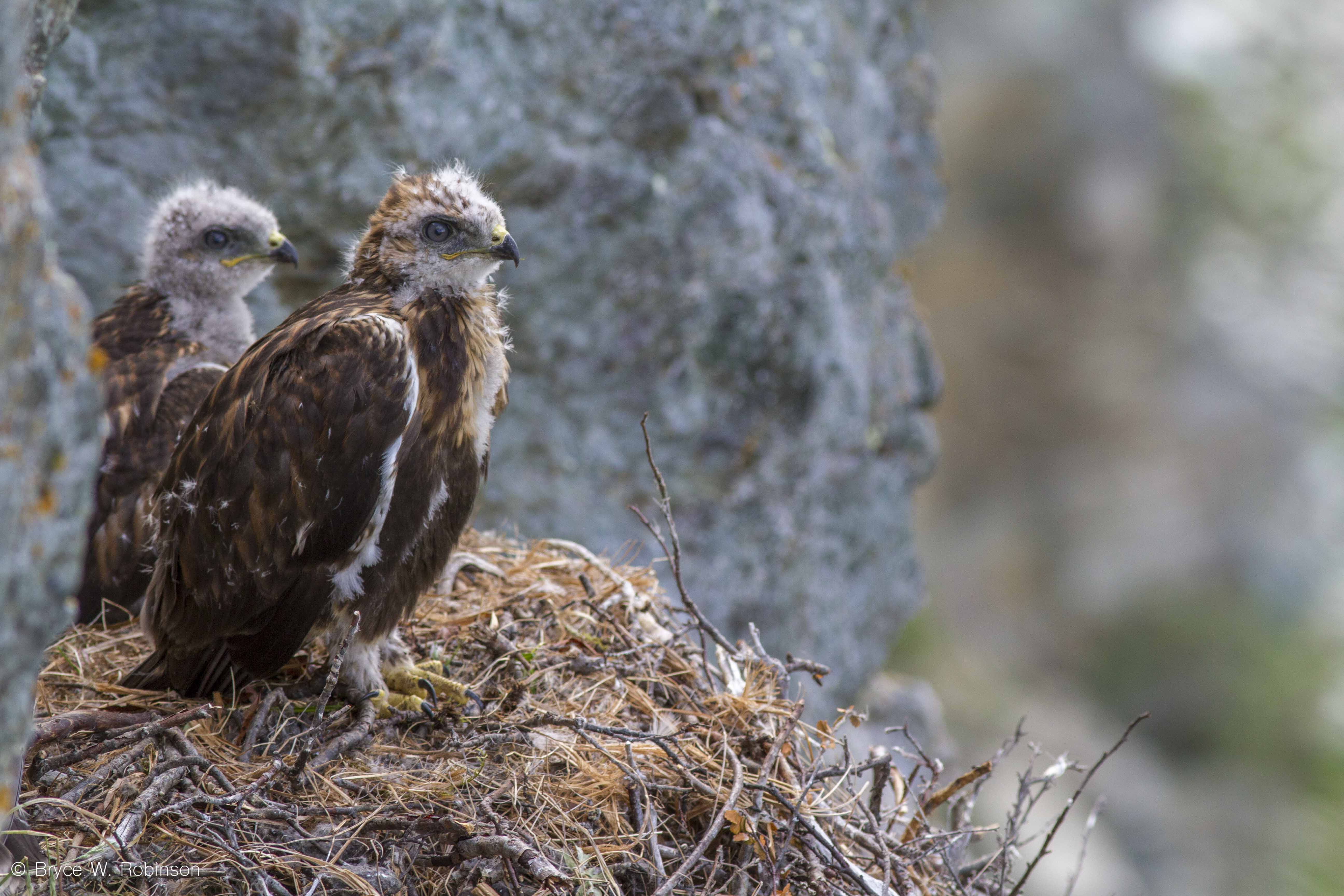
These eyes were watching me as I pulled out one of my Gyrfalcon nest cameras the other day. This is on the extreme end of Gyrfalcon – Rough-legged Hawk nest proximity. These nests are only about 10 meters apart, and given that these young Roughies are about to fledge, they will both be successful. Almost every cliff I’ve worked in this summer has had a nesting Rough-legged Hawk pair. Some cliffs have had two, along with nesting Raven and Cackling Goose (yes, they nest in cliff nests often). Real estate is limited, so all suitable sites are usually occupied given enough food in the area.

Rough-legged Hawks are a favorite. I gained a familiarity with them during past winters in Utah, and it was always a dream of mine to see them on their breeding grounds. Each time I’m around a nest, I remember my current place and business in life, something that is not to be taken for granted. I’m living a personal dream, and I’m happy.