NOTES ON BEACH SIGHTINGS OF TWO MEMBERS OF PROCELLARIIDAE ON THE SOUTHERN SHORE OF THE SEWARD PENINSULA, ALASKA
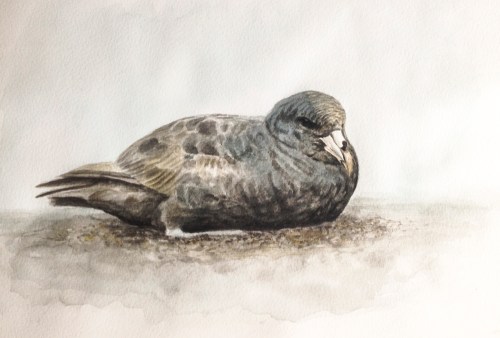
Photo 1. An unfinished watercolor sketch of a dark morph Pacific Northern Fulmar (Fulmarus glacialis rogersii) from my Nome 2016 sketch journal.
In late July my friend Luke DeCicco and I spent quite a bit of time studying gulls along the southern Seward Peninsula coast east of Nome, Alaska. The gulls at this time of year are in their first to second cycle transitive molt (first pre-basic molt), and represent an excellent challenge and education for those of us who care. But this post isn’t about gulls. This post details some anecdotal observations Luke and I made on procellarids we observed while on the coast studying gulls.
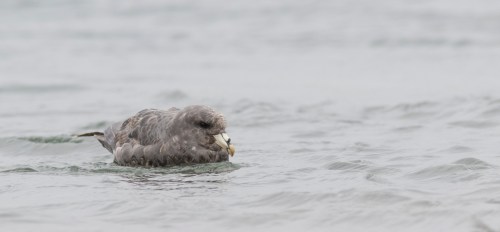
Photo 2. Dark morph Pacific Northern Fulmar (Fulmarus glacialis rogersii) sitting on the mouth of the Nome River. Nome, Alaska.
While studying gulls at the Nome River mouth east of Nome, Luke noticed a small dark bird sitting onshore amongst a large flock of gulls. He immediately recognized the bird as a dark morph Pacific Northern Fulmar (Fulmarus glacialis rogersii). Soon after noticing the bird, the flock took to the air and mixed up. The fulmar flew upstream and landed 200 meters up river, drifting back downriver towards the coast.
I took photos as the bird drifted downriver. When the bird neared my location it started moving towards the shore. It soon reached the river bank and climbed onshore directly in front of me (Photo 3). I was shooting with my 300 mm f4.0 and 1.4X teleconverter, to give some understanding of how close I was to the bird. I still don’t understand the behavior, but I suppose the bird was quite ill and needed to be off water to feel secure.
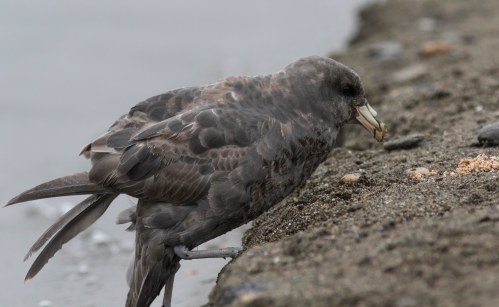
Photo 3. Dark morph Pacific Northern Fulmar (Fulmarus glacialis rogersii) climbing onto the river bank to rest on land. The bird came directly towards me, climbed onshore in front of me, and sat looking towards me.
The bird sat and seemed content and alert. Other than sitting on land only meters in front of me and surrounded by many other people as well, there didn’t appear to be anything aberrant about the birds behavior. I did notice the striking plumage of the dark fulmar, especially the difference between the brown toned retained feathers and the cobalt colored fresh feathers. The bird was in the midst of its pre-basic molt. After about 10 minutes the bird took off and flew out to the ocean and landed ~200 meters offshore. It seemed to fly fine but I still think the reason the bird was on the coast was due to illness.
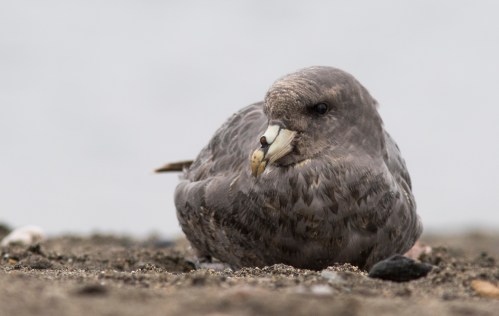
Photo 4. Resting dark morph Pacific Northern Fulmar (Fulmarus glacialis rogersii) on the river bank at the mouth of the Nome River, Nome, Alaska.
Later the same week Luke and I were frequenting the coast of Safety Sound in our attempts at finding and trapping juvenile Red Knots. While checking the coast for knots we came upon a Short-tailed Shearwater sleeping on the beach in the rain. The bird had drooped wings, a sullen posture, and was very wet. It was quite clear the bird was ill and likely wasn’t going to last long.
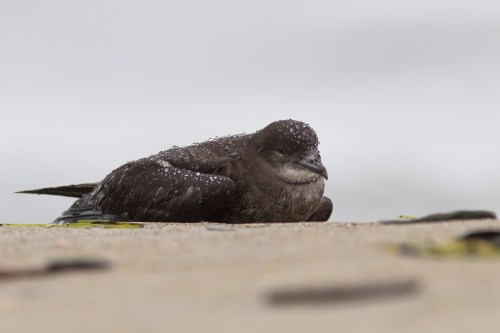
Photo 5. An ill Short-tailed Shearwater (Ardenna tenuirostris) on the beach of Safety Sound on the Seward Peninsula, Alaska.
Over the next week Luke and I came upon 2 more dead Short-tailed Shearwater on the coast of Safety Sound. The high number of shearwaters and the lone fulmar left me thinking about ill seabirds and their possible inclination to seek land for comfort. I haven’t been able to find any literature on the matter, but I’ll keep looking.
Last year I discovered a Short-tailed Shearwater only 20 meters off shore of Safety Sound at approximately the same location as the bird photographed above (photo 5) and the two other dead shearwaters we discovered this season. I remember last year having thoughts on the health of the near shore shearwater. You can read my write up from last year here: https://ornithologi.com/2015/08/08/short-tailed-shearwater/
I haven’t spent much time on the coast, nor have I much experience studying the family procellariidae, so I’m unsure whether or not these birds seek shelter on the coast if they are ill. I have found seabirds dead on the coast, but in these cases the birds appeared to have been washed to shore after dying in the ocean.
Although a grim subject I couldn’t help but share my observations and thoughts. It’s quite interesting, and for someone who hasn’t spent much time at sea observing these birds it was quite exciting. I’m open for discussion on the matter and would love to hear of any similar experiences from those living on coastlines.

 ornithologi.com