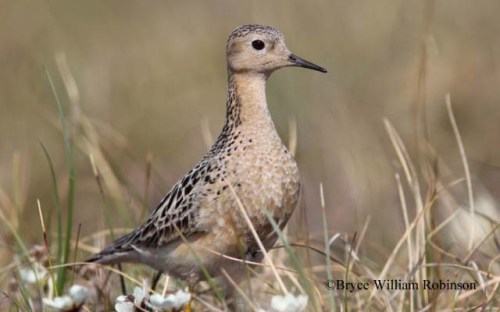
Now this is my favorite sandpiper of the tundra, I promise.
The Buff-breasted Sandpiper intrigues me to no end, and I do not know why. Perhaps it is the interesting courtship displays they employ while courting potential mates on the lek, or perhaps it is their simple yet satisfying aesthetic.
Photographing these birds has been difficult. It has been an outright failure, till I visited a nest the other day. Then, I had cooperative subject. Cooperative is not quite the best word for the subject, as it implies a certain awareness to my intentions. What I had was a very concerned and responsible parent, doing its best to draw me away from its nest, and weigh the risk of my presence.
Lately, I’ve been experiencing something new to my photography. I keep having birds too close… Too close? How is that a problem?
While I set myself up at the optimal distance, I’ve often had birds walk towards me, within feet, to analyze my intentions, and exhibit their distraction. Patience is a virtue in this instance. Each bird has its own style, and each species has its own technique. This Buff-breasted seemed to have a calm, silent approach to dealing with the bearded inquisitor. When I finally came too close, she was off the nest, but only to walk about, in a seemingly natural manner, foraging here, foraging there. She often came too close, but I allowed her to conduct her business.
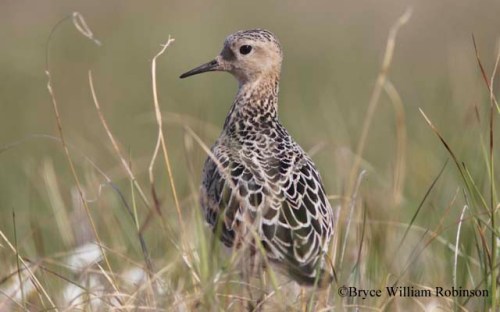
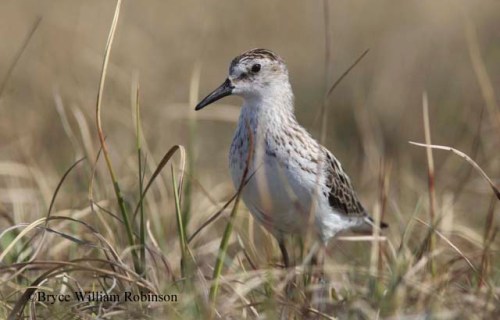
When she was too close, I enjoyed the experience. When she wandered to areas of good light and proper distance, I let the shutter go. As mentioned in my earlier post, the grass became an issue. But perhaps I’ve had a change of heart, as the habitat the bird frequents tells a story. On my belly, I capture the bird on their level, and in the tundra, the grass is ever-present and a consistent part of their world. It should be in the photo of this bird on its nesting grounds. I want my photos to be as natural as the subject they portray.
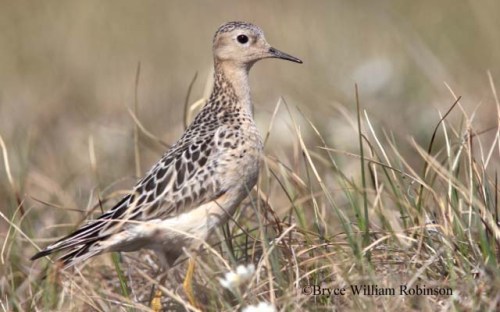
I made a trip back to this nest today. The eggs had many pip holes, and I could see small beaks working their way to chip and break out into the world. Tomorrow, there will be small Buff-breasted Sandpipers making their first steps into a tundra grassland full of danger and life. I hope to make it there before they wander too far for me to find.

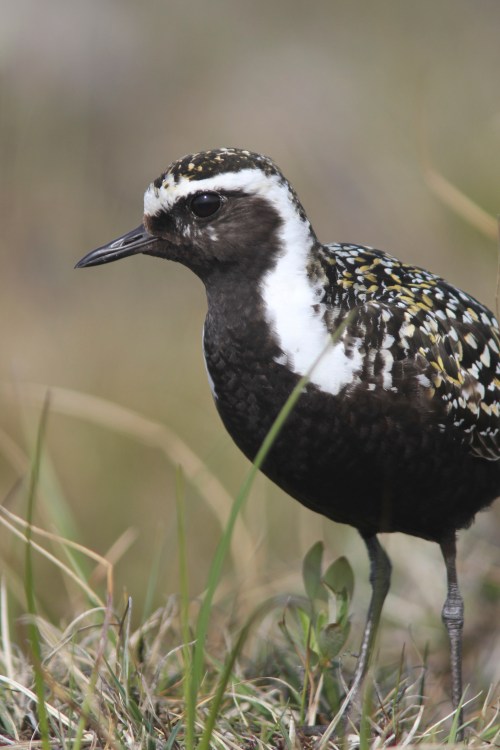 Lately I’ve discussed a problem I have with birds being too close to photograph. This plover has a nest I’ve been monitoring, and each time I visit, the bird does its best to draw attention to itself, and away from the nest. I’ve used this behavior to my advantage for photography, but so often the bird comes too close for the composition I like. My friend Ron, and exceptional photographer, commented on his own experiences, saying that he often embraces this closeness, capturing a headshot. I wanted to share this photo, because I too embraced the birds behaviors, and the result pleases me.

 ornithologi.com