A studio for bird study

Tag: birding

The Muddy Ruddy

by Bryce W. Robinson

IMG_5414_edited-1

The Ruddy Duck is a unique character in appearance. They are not all too uncommon in areas I frequent lately, but I always enjoy finding them and watching their behaviors. The Ruddy duck dives for its food. It digs through the mud on the bottom of the freshwaters, returning to the surface after a successful mudding, to look about, swim some distance, and dive again. The fun of  the divers is to see a submersion and watch for the bird to reappear.

I was watching a Ruddy, about its business, in a freshwater estuary of the highly saline Great Salt Lake. As it dove and resurfaced, I began noticing that each time the bird came up, its broad bill was soiled with silt from where it had been feeding. The mud added to an aesthetic I enjoy immensely among diving waterfowl. So often, they resurface with beads of water across their back, and semi-saturated feathers on their face and crown. Their breast often appears glossy. Watching closely always rewards me with a detailed view of textures and details overlooked from quick glances or distant views.

Birding is rewarding on so many levels. I can’t help but respect it all.


A Personal Photo First: The Hairy Woodpecker

by Bryce W. Robinson

IMG_4737_edited-1

Not too many mornings ago, I found myself in a mountain home, overlooking a mountain valley, admiring the mountain birds. The home had a large window array on its back end, providing healthy viewing of flitting and such from a host of active birds. Mountain and Black-capped Chickadees sped from tree to tree, about their business. A group of Pine Siskin came and went, and came again. Red-breasted Nuthatches twitched about, nervously checking needles and limbs for food. It was a mountain morning, full of light and life.

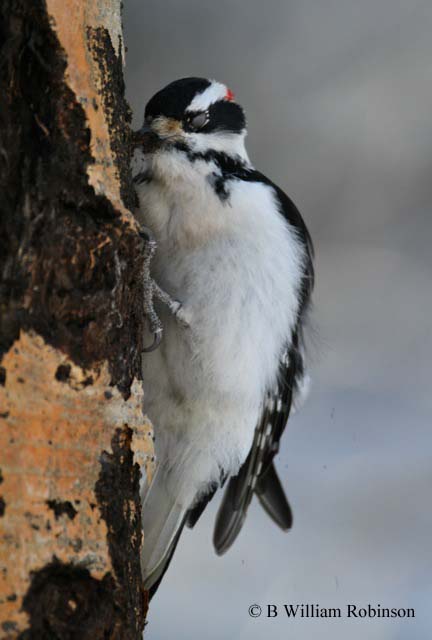
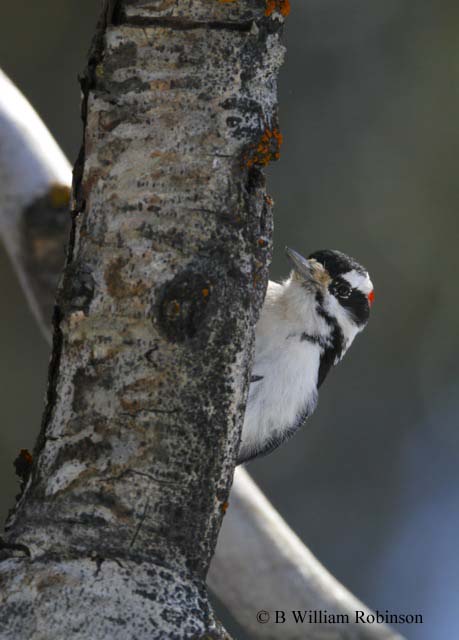
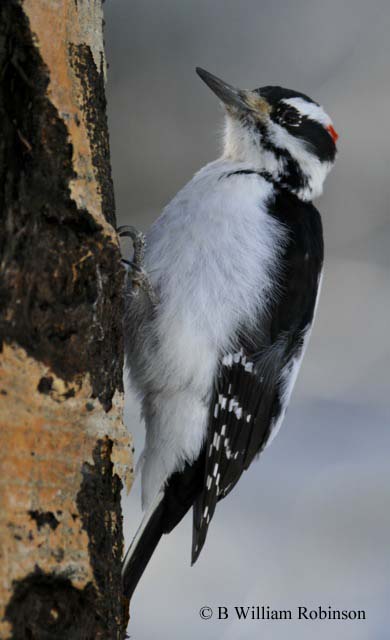
The arrival of a woodpecker is always celebrated. Watching from the windows, I saw a black and white bird traveling the trees. This bird was the Downy Woodpecker, a common, but celebrated sight. While watching the small woodpecker, I noticed another. Larger, and about its own business, was the Hairy Woodpecker. Having both in my view was of value. Seemingly identical, it is helpful to watch both at once, bouncing back and forth, analyzing minute differences that set each apart. After you know each bird well, the identification becomes second nature, and the large, long billed Hairy is unmistakable.

This Hairy stayed with me a while. It was intent upon chiseling at the trees to uncover its morning meal. Recognizing a relatively stationary subject among the hustle and bustle of the mountain passerines, I grabbed my camera and went to work,documenting the activity of the Hairy. One thing that has always puzzled me is the mechanics of the drumming woodpecker. How does it prevent damaging its brain while it taps and slams at trees? While pondering this I did notice something, not really remarkable, and rather obvious. Still, I find it neat. Every time the bird strikes the tree it closes its nictitating membrane, shielding its eye from wood shavings.
IMG_4940 copy

The Hairy Woodpecker kept about for minutes. I kept at it with my camera as well. It traveled from tree to tree, checking here, picking there, searching and finding and then back at the search again. At times it would check about for any watchers or threats. At these times I caught endearing images of an inquisitive but very serious bird.
IMG_4789_edited-1
Minutes passed and the Hairy Woodpecker flew from view. I then turned back to watch the other birds about their business. I envy those of that mountain home. They have the view, with a back deck overlooking the mountainside. Surrounded by trees, there is no shortage of birds that flit about. I had a terribly fun morning watching, and taking my camera to whatever I saw.

The experience with the Hairy and Downy Woodpeckers, foraging side by side, gave me an Idea for an illustration. I have actually felt the desire to do many illustrations comparing like species such as these two Picids. Perhaps soon I will begin a series to highlight like species and discuss similarities and differences between the two. It would surely help me learn many things.

IMG_4896_edited-1

The White Owl of the North

by Bryce W. Robinson

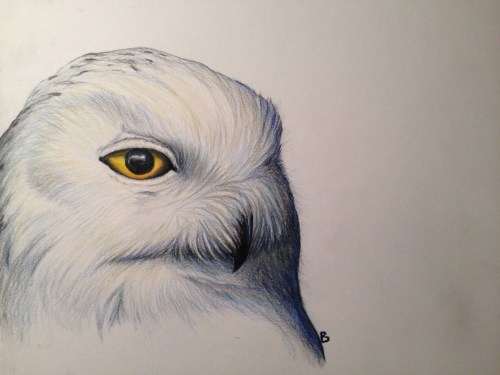
Snowy Owl- Bubo scandiaca. 9x12" prismacolor on bristol.

Snowy Owl- Bubo scandiaca. 9×12″ prismacolor on bristol.

Sometimes the internet, or electronics, take so much away from life. I wanted to write in depth about my experience of seeing my very first glimpse of a Snowy Owl last week. I powered out a long story about the experience. When I went to post the story, the page reset and I lost everything. For whatever reason the regular save as you go feature was not working. Oh the misfortune, but life goes on.

So now I have neither the time nor the energy to write about that day. I just wanted to share an illustration I did of the bird. It was too far for any photographs, so I decided to capture and celebrate the experience by illustrating the white owl. I have found that illustration is always an appropriate way to pay homage to new experiences. This way, all I need to do is look at this image, and memories will flood into my mind of the evening that I first saw the white owl of the north.

The Gyrfalcon as a Milestone

by Bryce W. Robinson

Gyrfalcon- Falco rusticolus

Gyrfalcon- Falco rusticolus

Today I ventured north into Idaho with Jerry Liguori and Caitlin Davis. We were in search of a Gyrfalcon, the largest falcon in the world, a dweller of the arctic. I really didn’t hold my hopes too high for finding any Gyrfalcons, mostly to curb any disappointment, but really we were on the hunt for a wandering creature on wings, in a vast and open land. In my eyes, the odds were stacked against us.

We made our heading to the area where the bird had been reported, and upon arrival, began our diligent search for what was truly a needle in a haystack. Not thirty minutes following the inception of our search, we spotted a perching raptor some telephone poles down the line. My excitement quickly grew, as I realized I was approaching what was to be the first falco rusticolus of my life, a veritable holy grail to my raptor watching.

How quickly we found the bird was remarkable. It went far better than expected. The bird turned out to be an adult, not the juvenile we were after. That meant that two Gyrfalcons were in the area. Quite spectacular to me, but perhaps something more common than anyone is yet to realize. Or maybe it is just this winter, as it seems many species of the north have ventured in large numbers to our lower lands.

I feel I dropped the ball as they say, so far as photography goes. I did my best for good photos of the bird, but honestly, the photo was not what the experience was about for me. It was a first in my life. I saw a bird on a long journey, from a harsh landscape far to the north, escaping a place so frigid and formidable it chose a winter setting in Idaho to ensure its survival. This bird is rare, it is beautiful, it is tough. This bird is wild. And today marks a great milestone in my exposure and education in the world of birds. I finally, with the help and direction of Jerry, saw Falco rusticolus, the Gyrfalcon.

Gyrfalcon- Falco rusticolus

Gyrfalcon- Falco rusticolus