A studio for bird study

Tag: nature

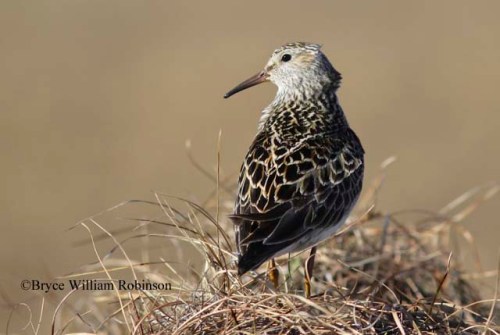
Pectoral Sandpiper- Calidris melanotos

by Bryce W. Robinson

IMG_3735 copy

The Pectoral Sandpiper is one of the most common sandpipers in the areas I’ve been frequenting. These birds have one of my favorite flight displays. The male flies low over the tundra, filling his anterior air sacs with air to increase the resonance of his calls. Close your mouth, and in a low voice repeat goo goo goo goo, and you have produced the sound of the displaying male Pectoral Sandpiper. I’m making attempts to record this behavior, but all I have so far are some very poor photographs. I thought I’d share one just to help paint the picture of the bizarre behavior.

IMG_3491

The behaviors here are fascinating. This is only a taste of the smorgasbord of incredible bird life that is available here in the thawing tundra summer. I can’t wait to capture and share more.

Dunlin- Calidris alpina

by Bryce W. Robinson

IMG_3794 copyI’ve been on the Arctic Tundra now for a few weeks, and I’m loving it. The birds are everywhere, and they are all new to me. Everything is my favorite, everything is the most interesting, and everything excites me more than the next. To say that I’m immersed in learning is an understatement. My experiences in the past few weeks have been invaluable.

The above photo features a female Dunlin, returning to her nest. I’ve found two Dunlin nests thus far. They are in fact my favorite.

In the next few weeks everything will be hatching. The tundra will be crawling with fuzzy precocial birds, and I will be there to soak it all in. I’ll try to share along the way, but the nesting season is keeping me very busy, and very tired. In the end, I’ll have a lot to share. Photos, video, illustrations, and stories. Till then, happy birding.

Red-tailed Hawk- Buteo jamaicensis

by Bryce W. Robinson

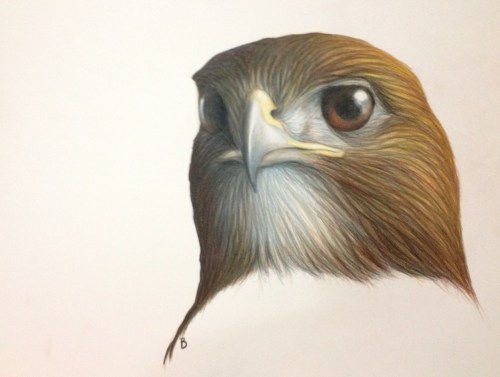
Red-tailed Hawk- Buteo jamaicensis. 12x16" prismacolor on bristol

Red-tailed Hawk- Buteo jamaicensis. 12×16″ prismacolor on bristol


Beatnik Birding: A True Desert Denizen, the Le Conte’s Thrasher

by Bryce W. Robinson

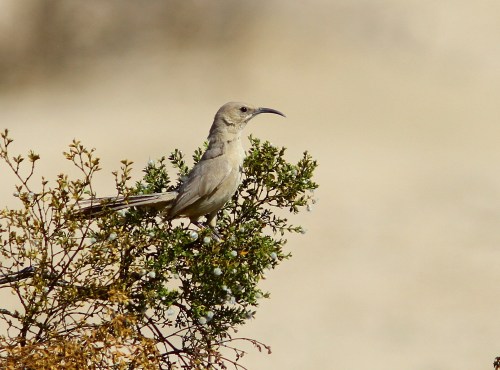
Le Conte's Thrasher- Toxostoma lecontei

Le Conte’s Thrasher- Toxostoma lecontei

The genus Toxostoma is comprised of some of my favorite birds. At the top of these species is the Le Conte’s Thrasher. I love this bird in part because it is rather difficult to find. I’ve spent a great deal of time in the Sonoran Desert, frequenting the sandy creosote scrub that is this birds habitat. Still, I’ve only seen a handful of this desert specialist, and each time has been memorable.

Recently, I found two birds outside of Palm Springs, CA, one of which was singing atop a creosote. I had never heard the song of the Le Conte’s. It is the same wonderful wandering warble of other Toxostoma species, yet it seems a bit more delicate.
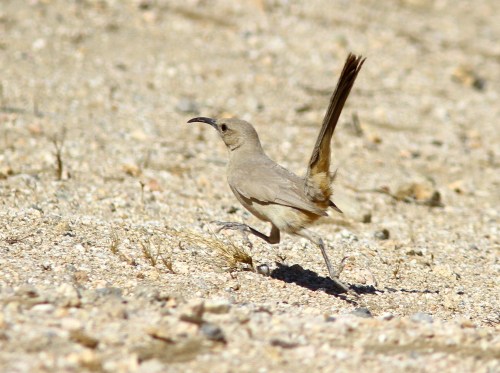
The Le Conte's Thrasher signature habit, running along the sand as if it were a Roadrunner.

The Le Conte’s Thrasher signature habit, running along the sand as if it were a Roadrunner.

One of the reasons I am so fascinated by this bird is its habit to run across the sand between Creosote shrubs as it forages for food. It seems to prefer running rather than flying. I can’t help but think of the Greater Roadrunner every time I see this behavior.
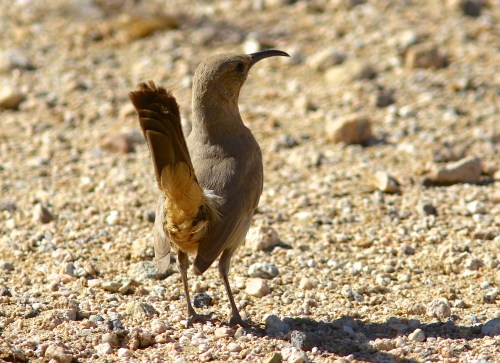
Le Conte's Thrasher- Toxostoma lecontei

Le Conte’s Thrasher- Toxostoma lecontei

I find it incredible that this bird is only twenty miles from another southern California Toxostoma species. The California Thrasher is much like the Le Conte’s in appearance, but it frequents the chaparral hills of southern California. This pair of Le Conte’s Thrashers I found are on the western edge of the desert in the extremely arid white sand hills amidst Palm Springs iconic wind mill farms. Its proximity to the California Thrasher’s range is incredible, as the species is very different in habits and habitat. These two species are prime examples of evolution, adaptability, and the affects of environmental pressures.