A studio for bird study

Tag: photography

A Crested Auklet as a Prey Item in an Inland Gyrfalcon Nest as Detailed in Marine Ornithology

by Bryce W. Robinson

Fig-1-Crested-Auklet-insert-in-a-Gyrfalcon-nest-as-captured-by-a-motion-activated.png

Photo 1. Image of a Crested Auklet that was delivered to a Gyrfalcon nest, located over 100 km from the nearest coastline. Image published in Marine Ornithology 44(2) 229-231.

The fist publication from my Gyrfalcon research is now available online:

Click to access 44_2_229-231.pdf

The account (Robinson and Anderson 2016) published in Marine Ornithology details a strange prey item, an adult Crested Auklet, delivered to one of the Gyrfalcon nests I had placed a camera in during the summer of 2015. All details are in the paper, so be sure to give it a read.

More Gyrfalcon publications to come!

Referenced literature:

ROBINSON, B.W. & ANDERSON, D.L. 2016. Crested Auklet Aethia cristatella as a prey item in an inland Gyrfalcon Falco rusticolus nest. Marine Ornithology 44: 229–231.

Fork-tailed Storm Petrel (Oceanodrama furcata) Foraging on Tidal Flats: Part 1

by Bryce W. Robinson

Video 1. Dan Ruthrauff photographs passing Fork-tailed Storm Petrel as the tide comes in. Bristol Bay coast, Alaska. September 2016.

Over my time on the Bristol Bay coast near the village of Egegik on the Alaska Peninsula, I was privy to one of the most incredible experiences I’ve ever had with birdlife. The experience is captured in video 1, which shows Dan Ruthrauff kneeling on tidal flats at low tide photographing passing Fork-tailed Storm Petrels at close range. I’d never heard of anything like this for any pelagic bird. It turned out to be a regular occurrence, but still appears quite novel so far as we understand Fork-tailed Storm Petrel foraging behaviors.

2L3A9888.jpg

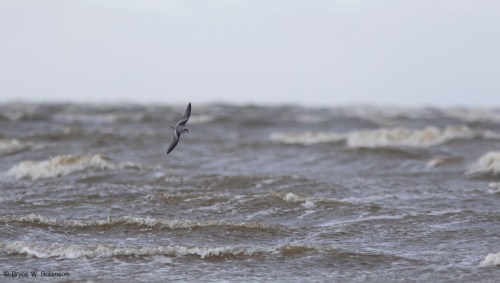
Photo 1. Fork-tailed Storm Petrel arcing down amidst a dynamic soar in high winds. This photo was taken from the shoreline at high tide. Bristol Bay coast, Alaska. September 2016.

Typical experiences with Fork-tailed Storm Petrels are like the image above: A dynamic soaring Hydrobatid at relatively close range. It’s very exciting, but nothing like walking through tidal flats surrounded by the birds.

2L3A1376.jpg

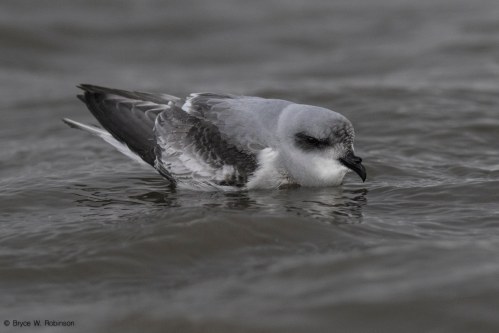
Photo 2. Fork-tailed Storm Petrel at rest on the water. I was standing in ankle deep water when this photo was taken. Bristol Bay coast, Alaska. September 2016

Other more typical experiences can provide observations such as the above photo, where calm water and resting birds near a boat might provide great views. Photo 2 is a bird that I stood near in ankle deep water. This bird was taking a moment to rest from foraging and seemed non-plussed by me. I’ve never heard of anything like it.

2L3A1113.jpg

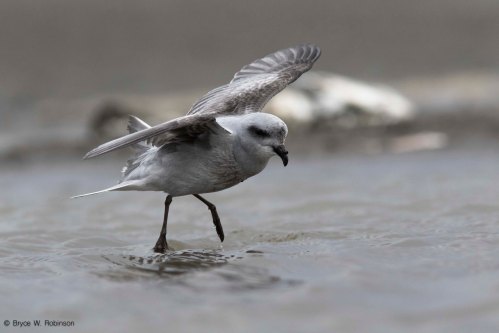
Photo 3. Fork-tailed Storm Petrel (Oceanodrama furcata) dabbing on water. I was lying on my belly when this photo was taken. Bristol Bay coast, Alaska. September 2016

The experiences continued for the entire two weeks I was on the Bristol Bay coast. After reading through the literature, the behavior seems undocumented and may warrant publication as a note. I’m excited to organize, avail myself of the literature, and share this experience with a crowd more knowledgeable and literate than myself. For me, experiences like these make field ornithology one of the best things about life.

Juvenile Whimbrel (Numenius phaeopus) in Flight

by Bryce W. Robinson

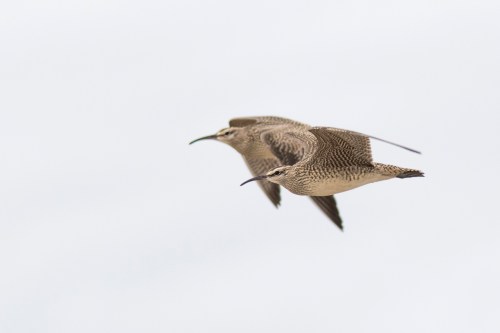
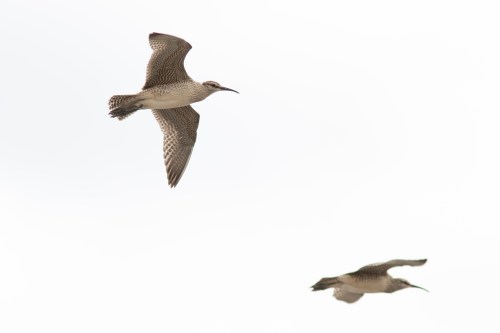
I’ve included two photos of in-flight juvenile Whimbrel that I took in the first week of August 2016. I’m sharing these images for the simple reason of illustrating how a young juvenile differs from an adult. The age of these birds is told by the overall fresh, clean plumage and relatively short bill. It’s that simple in August. In a few months the bills will grow to a length comparable to the adults and determining age will become more difficult.

2l3a8758

2l3a8764


Birding Kachemak Bay, Alaska, by Boat

by Bryce W. Robinson

2L3A9761

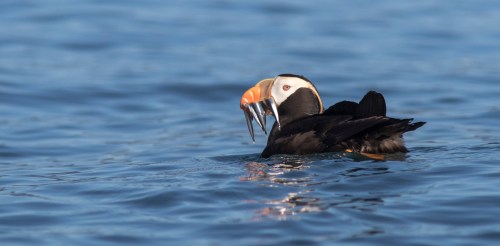
Tufted Puffin (Fratercula cirrhata) with a bill full of fish to take back to its burrow to feed young. Kachemak Bay, Alaska.

I had the pleasure of taking a few days to visit Homer, Alaska and get in some much needed birding on the southcentral Alaskan coast. I was after Alaska state bird additions, as well as a few potential lifers. I needed to get on a boat so I scheduled a trip with Bay Excursions for a morning around the bay.
2L3A9621

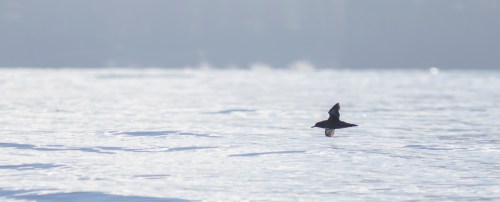
Sooty Shearwater (Ardenna grisea). Kachemak Bay, Alaska.

I was after both Kittlitz’s Murrelet (Brachyramphus brevirostris) and Red-faced Cormorant (Phalocrocorax urile). Karl, who leads the trip and captains the boat, mentioned concern that it was too late for Kittlitz’s and that the cormorants were scarce in the bay this year. With the poor forecast, I still thought it equitable to make the trip and gain experience with other birds. Anytime on a boat, in good weather, is equitable.

Homer is great. There are plenty of camping spots right on the spit. I camped on the shore, woke up in the morning, and had a five minute walk to the boat ramp where I boarded and we set off. Joining me were the expected crew of older folks with cameras and an excitement for seeing wildlife. But they weren’t necessarily birders, so I knew that I was outnumbered and would have to accept that we wouldn’t be spending much time studying murrelet behavior, shearwater ID, or following any curiosities I’d have. Such is birding on a boat I suppose.
2L3A9607

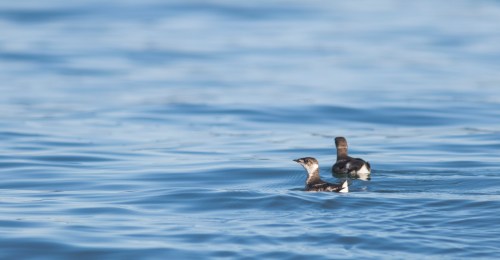
Marbled Murrelet (Brachyramphus marmoratus). Paler individual on the left cause pause in hopes of it being a Kittlitz’s, but no luck. Kachemak Bay, Alaska.

Immediately out of the harbor we began to see murrelets. I checked every bird, and for a while Karl paused to give the folks on the boat good looks at the endearing birds. After a short time the group grew tired of the murrelets so we unfortunately cruised by too many groups that I wanted to spend a little more time with in hopes of a random Kittlitz’s popping up amongst the marbled.

I was able to get the boat stopped for some shearwaters. I caught a handful of birds cruising about 1 km west, and once the boat had stopped a few had circled us and I was able to ID them as Sooty Shearwater (Ardenna grisea). We spotted one set on the water that happened to be a Short-tailed Shearwater (Ardenna tenuirostris). With my limited experience observing procellariids on the water I felt satisfied with the short encounter.
2L3A9664

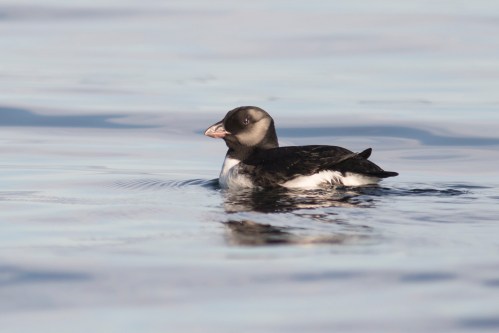
Juvenile Horned Puffin (Fratercula corniculata) alone on the water. Kachemak Bay, Alaska.

One of the neatest birds we found on the water was a juvenile Horned Puffin. It’s bill was extremely small, nothing like the ornate bill of a matured bird.

Some of the strangest birds to encounter from the boat were Song Sparrows on every island we passed. I also caught a Steller’s Jay in the air above a larger island with some conifers. Island living passerines, neat to see.

Overall I was happy with the few hours on the water. I do think that the trip deserves more time, as I could have likely spent another few hours on the bay watching alcids and looking for a Red-faced Cormorant. I also would have liked to venture a bit farther out of the bay to encounter more shearwaters, and whatever else we might have happened upon farther out to sea. In the end I missed my two hopefuls, but the time on the water was excellent. I’ll be back again when the time is right for the missed species.