A studio for bird study

Tag: science

Fork-tailed Storm Petrel (Oceanodrama furcata) Foraging on Tidal Flats: Part 1

by Bryce W. Robinson

Video 1. Dan Ruthrauff photographs passing Fork-tailed Storm Petrel as the tide comes in. Bristol Bay coast, Alaska. September 2016.

Over my time on the Bristol Bay coast near the village of Egegik on the Alaska Peninsula, I was privy to one of the most incredible experiences I’ve ever had with birdlife. The experience is captured in video 1, which shows Dan Ruthrauff kneeling on tidal flats at low tide photographing passing Fork-tailed Storm Petrels at close range. I’d never heard of anything like this for any pelagic bird. It turned out to be a regular occurrence, but still appears quite novel so far as we understand Fork-tailed Storm Petrel foraging behaviors.
2L3A9888.jpg

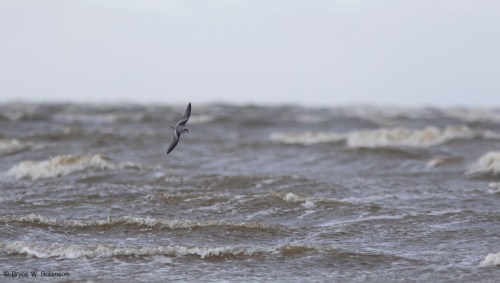
Photo 1. Fork-tailed Storm Petrel arcing down amidst a dynamic soar in high winds. This photo was taken from the shoreline at high tide. Bristol Bay coast, Alaska. September 2016.

Typical experiences with Fork-tailed Storm Petrels are like the image above: A dynamic soaring Hydrobatid at relatively close range. It’s very exciting, but nothing like walking through tidal flats surrounded by the birds.
2L3A1376.jpg

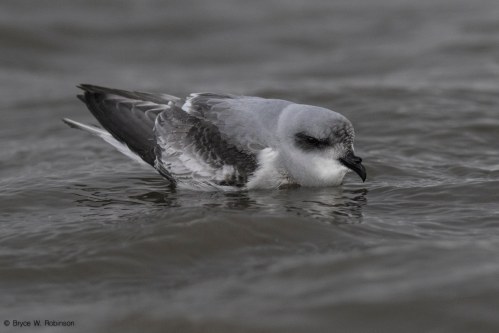
Photo 2. Fork-tailed Storm Petrel at rest on the water. I was standing in ankle deep water when this photo was taken. Bristol Bay coast, Alaska. September 2016

Other more typical experiences can provide observations such as the above photo, where calm water and resting birds near a boat might provide great views. Photo 2 is a bird that I stood near in ankle deep water. This bird was taking a moment to rest from foraging and seemed non-plussed by me. I’ve never heard of anything like it.
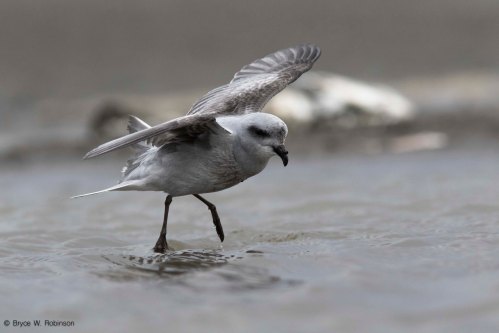
2L3A1113.jpg

Photo 3. Fork-tailed Storm Petrel (Oceanodrama furcata) dabbing on water. I was lying on my belly when this photo was taken. Bristol Bay coast, Alaska. September 2016

The experiences continued for the entire two weeks I was on the Bristol Bay coast. After reading through the literature, the behavior seems undocumented and may warrant publication as a note. I’m excited to organize, avail myself of the literature, and share this experience with a crowd more knowledgeable and literate than myself. For me, experiences like these make field ornithology one of the best things about life.
Black-bellied Plover (Pluvialis squatarola) Feeding on a Jellyfish

by Bryce W. Robinson


For the past two weeks I stayed at a small cabin along the Bristol Bay coast of the Alaska Peninsula near the village of Egegik.  I was part of an expedition to trap staging Bar-tailed Godwits (Limosa lapponica) led by the shorebird aficionado Dan Ruthrauff of USGS, accompanied by Lucas DeCicco, Stuart Fety, and Jaime Welfelt. We had poor luck with godwits, but had a spectacular time with the avifauna that was present. I have a lot of content to share from the expedition, and will start by sharing a clip of a Black-bellied Plover (Pluvialis squatarola) feeding on a beached Hydromedusae (Jellyfish).

Although not mentioned in any literature on diet of the Black-bellied Plover (so far as I’ve found), there is discussion of the behavior for Rock Sandpiper (Calidris ptilocnemis; Gill et al. 2002). Apparently the birds feed on the gonads of washed up jellyfish. There were many jellyfish that were left on the tidal flats each day as the tide receded, providing an ample food source for staging plovers preparing for the next leg of their fall migration.

Referenced literature:

Gill, Robert E., Pavel S. Tomkovich and Brian J. McCaffery. (2002). Rock Sandpiper (Calidris ptilocnemis), The Birds of North America (P. G. Rodewald, Ed.). Ithaca: Cornell Lab of Ornithology; Retrieved from the Birds of North America: https://birdsna.org/Species-Account/bna/species/rocsan

DOI: 10.2173/bna.686


Red Knot (Calidris canutus roselaari) Fieldwork in Western Alaska

by Bryce W. Robinson

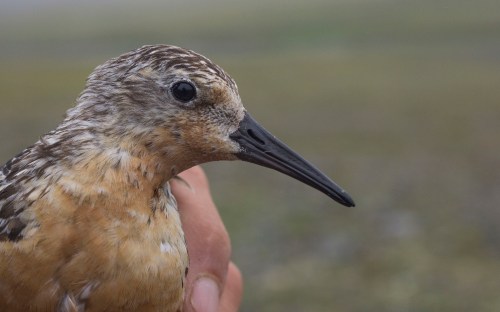
IMG_7100

Adult Red Knot (Calidris canutus roselaari) captured on the breeding grounds in western Alaska.

On 1 July I travelled to Nome, Alaska to work on roselaari Red Knot research. I’ve spent the last month working on the project, and I’ve learned a great deal. The U.S. Fish & Wildlife Service has been conducting research on breeding Red Knots for the last seven years on ridge lines outside of Nome. They’ve focused on reproductive monitoring, marking and resighting birds, and determining the timing of arrival and departure on their breeding grounds. The effort has also provided collaboration with folks studying this population on their migratory and wintering grounds. You can read more about the connectivity study here.

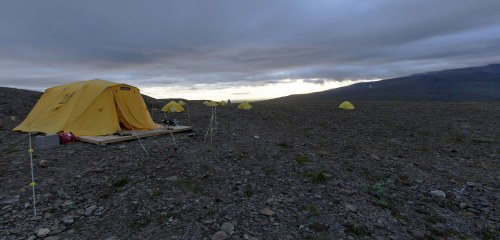
IMG_7045

Red Knot research field station. Seward Peninsula, Alaska

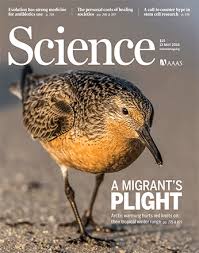
I feel fortunate to have joined the work, especially considering that the collaborative study effort on this circumpolar breeding species is growing. This year a researcher from the Royal Netherlands Institute for Sea Research (NIOZ) joined the USFWS study effort in Alaska. Jan van Gils Ph.D., whose work was recently featured as the cover article in Science Magazine, joined Jim Johnson and Lucas DeCicco and the USFWS crew to investigate the potential impacts that trophic mismatch may pose on the breeding roselaari Red Knot. It was excellent spending time with Jan, as we discussed many ideas concerning climate change impacts on Red Knots and Arctic life alike.

images

Jan van Gils et al. 2016 as featured on the cover of Science Magazine.

Alaska’s Red Knot population breeds on higher elevation rocky tundra. Many ridge lines on the Seward Peninsula are important breeding grounds for Red Knots. With climate change comes impacts to prey populations that the Red Knot needs for successful breeding.

IMG_7043

Red Knot breeding grounds in western Alaska. The low rocky ridge lines surrounding the river valleys are the preferred breeding habitat of the roselaari Red Knot.

There is then the potential that the tight timing of arrival and breeding of these birds may no longer coincide with the peak abundance of prey populations, something that has already been shown in many species that breed in the Arctic. Thus, understanding fully the timing of their breeding on the ridge is essential for understanding future climate change impacts.

IMG_7071

Pinpoint GPS unit attached to an adult Red Knot.

To better understand the latter portion of the timing of Red Knot breeding on the Alaskan ridges, Jim and Luke began deploying pinpoint GPS dataloggers on adults to determine when they depart the breeding grounds, the time they spend on migratory stop over sites, and the length of migration, . This year we deployed units that have already started returning data on migratory locations and duration. It will be exciting to see how the birds differ, or don’t.

IMG_7080

Luke checks out the placement of the pinpoint GPS unit on this adult roselaari Red Knot.

I had an excellent month on the peninsula. Apart from learning a great deal about these birds and their breeding ecology, I gained more exposure to excellent bird life in one of my favorite ecosystems. At the end of the season Luke and I shifted our focus to the coastal areas to attempt trapping of staging Juvenile Red Knots for more pinpoint deployment. I’ll highlight the rewards from the effort in my next post. In the end the Red Knot work was the cessation of an excellent summer of Alaskan bird study.

The season was successful thanks to a great field crew apart from Jim, Luke, and myself: Nick Hajdukovich who handled the lead for the first part of the season before Lucas joined in the field, Sarah Godin, Bethany, and Charlie and Linnaea Wright. 

Singing House Wren on the Boise River

by Bryce W. Robinson


I recorded a singing House Wren (Troglodytes aedon) today while banding birds along the Boise River with the Intermountain Bird Observatory (note the bird is banded!).

Although spring migration hasn’t hit in its entirety at this site, the House Wrens seem to have arrived in full. There are at least three different individual males singing in the area, and I’ve noticed an additional four individuals in the area as well. The House Wren population at this site seems to be healthy.

Unfortunately the video I recorded does not capture the song of the House Wren. I wasn’t too far from the wren, but I believe the inability of the phone to capture the song is related to the masking of other noises in the environment (and the iPhone’s lack of a directional mic). First and foremost it was a windy day, which I believe is the main contributor to the masking. On top of the wind was the noise of the busy highway, the noise of the Boise River, and nearby construction (all large bandwidth, but mostly low frequency). With both natural and anthropogenic noise, I wonder how House Wren territory distributions differ between an area like this and a relatively noiseless area such as a remote forest location away from a river.

HOWR

House Wren (Troglodytes aedon) banded at the Intermountain Bird Observatory’s Boise River site on the east end of Boise, Idaho.

Despite the heightened noise, the wrens in this area seem to be thick and continuing with life as they would. A study may enlighten us on the human noise impacts coupled with natural noise (rivers, etc.) on bird territory distributions like in this case, but if I were to hedge a bet I’d say the House Wren is one species that seems to weather the added impacts of humanity enough to maintain a regular and healthy population within human disturbance areas.