
Photo 1. Adult Male Gyrfalcon – Falco rusticolus
I like to pay attention to molt in birds. There are many aspects of a birds life history that can be reflected by their strategy for feather replacement. A great example is something I’ve been watching with the nesting Gyrfalcons I’ve been working with lately.
Last summer, I noticed something about the molt between male and female Gyrfalcons. While I was entering nests to install cameras in the early nesting period (mostly during incubation), I noticed that males were behind females in their molt progression. Following my initial observation, I started paying closer attention to each bird. I continue to take notes on this, and wanted to share the molt of a pair from a nest I visited recently.

Photo 2. Adult Female Gyrfalcon – Falco rusticolus
You can see that the male (photo 1) has just dropped his fifth primary. Falcons generally begin their primary molt at P 4&5 and progress in two directions. The female (photo 2) has dropped her third, fourth, fifth, and sixth primaries. You can see P 4&5 are growing in already.
This illustrates a few simple things in the life of a Gyrfalcon. One, that energetics govern the ability to molt. Two, that male and female Gyrfalcons have different energetic roles and energy budgets during incubation and early brood rearing. They have different roles in the process. These are illustrated by the fact that they differ in the progression of their molt.
Later, the rates even out as both adults need to provision for their growing brood. I hope to get photos of this pair on my next visit to the nest in a few weeks.

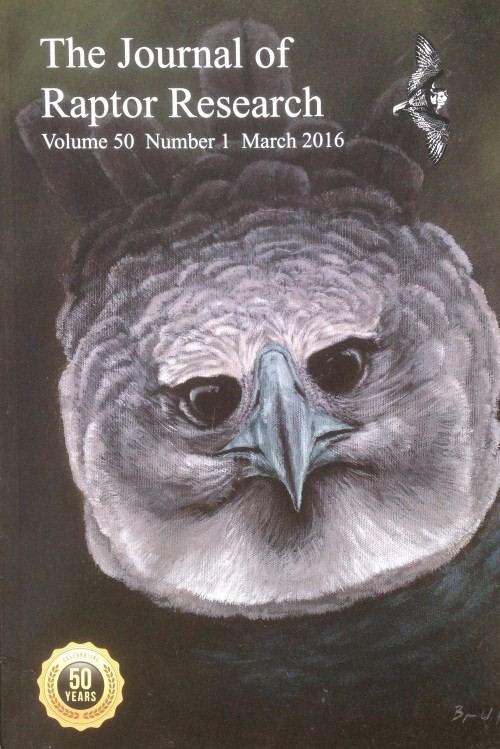 I’m honored and thankful for the opportunity to have painted the cover art for issue 1 of the 50th anniversary of the RRF’s Journal of Raptor Research. The issue features an article from The Peregrine Fund’s Harpy Eagle work, along with an article detailing a friend’s master’s work on Burrowing Owls, an excellent article on Gyrfalcon movement’s, and a lot more. I’m so happy for the opportunity to add to an organization that does such incredible work and carries the tradition of raptor studies forward.


 ornithologi.com