
This month I found myself fortunate to have the opportunity of illustrating a “Coastal” California Gnatcatcher (Polioptila californica californica). I was asked to do an illustration for Sea and Sage Audubon in southern California, and I decided to illustrate the California Gnatcatcher because it is perhaps the most pressing avian conservation issue facing southern California.
A few decades of rapid urban development in southern California’s coastal sage scrub habitat has left California Gnatcatcher’s with shrinking suitable habitat and a fragmented range. These pressures have taken their toll on the United State’s only California Gnatcatcher populations, to a point that in 1993 the gnatcatcher received threatened status.
Today it seems that the California Gnatcatcher’s presence and future in the coastal sage scrub is that of small fragmented populations. In essence, the damage has been done, and efforts now focus on preserving what quality habitat is left and ensuring that the small populations remain.
My choice to illustrate this bird was founded on 1. maintaining awareness for the plight of this incredible bird, 2. supporting a feeling of identity for those that live in the area and invoking the California Gnatcatcher as an important part of that identity, and 3. a reminder that these birds act as a symbol for the broad impacts human development has to the ecosystem, a symbol that goes well beyond single species conservation.
For more information on the history of the conservation effort for this species, and to stay updated on current action visit:
The USFWS’s Environmental Conservation Online System page for the Coastal California Gnatcatcher.

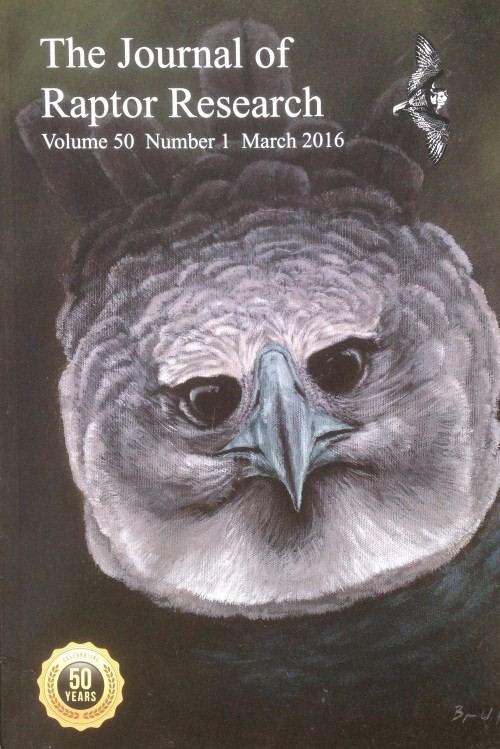 I’m honored and thankful for the opportunity to have painted the cover art for issue 1 of the 50th anniversary of the RRF’s Journal of Raptor Research. The issue features an article from The Peregrine Fund’s Harpy Eagle work, along with an article detailing a friend’s master’s work on Burrowing Owls, an excellent article on Gyrfalcon movement’s, and a lot more. I’m so happy for the opportunity to add to an organization that does such incredible work and carries the tradition of raptor studies forward.

 ornithologi.com