A studio for bird study

Tag: birding

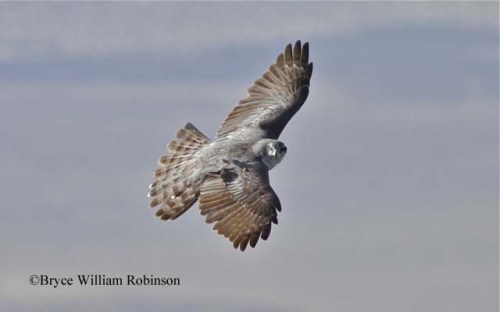
A “Meridionalis” Turkey Vulture

by Bryce W. Robinson

IMG_4268

I gave my Turkey Vulture warts, for a reason. As I’ve stated in previous posts, I’ve began pursuing a degree in Raptor Biology at Boise State University, under the direction of David Anderson at the Peregrine Fund, and Marc Bechard, who has been with BSU since the 1980’s. Dr. Anderson is a great man himself, and I’m sure I’ll have plenty to tell about him later, but for this post, I’d like to mention some things about Dr. Bechard.

Last week Dr. Bechard accompanied me and a few of my peers, along with Greg Kaltenecker of Idaho Bird Observatory to attempt to capture migrating Turkey Vultures. Ultimately we failed, but I feel like I learned some things about Dr. Bechard and his interest with Cathartes aura, commonly called the Turkey Vulture. While trapping hawks in the blind at Lucky Peak, I picked his brain for insights into the life histories of the Turkey Vulture. He told me many things, but one aspect that stuck was his discussion of the subspecies of the Turkey Vulture, their regional distribution, and their migratory habits.

We in the west see what is called subspecies meridionalis, which is the subspecies I’ve illustrated above. Those in the east see septentrionalis. In Arizona, you find the nominate aura at its northern extent. These three sub groups comprise the Turkey Vultures found in North America. Of course in S. America, there are others. It is not often that you find a man who specializes on vultures. I find myself lucky to be working under such a man. At the moment, he is in Gambia, trapping Hooded Vultures with Keith Bildstein of Hawk Mountain Sanctuary. Lucky him, as he is off chasing exotic vultures while I teach his classes. I’m perfectly fine filling in while he’s gone, so long as he teaches me all that he knows!

Juvenile "Western" Turkey Vulture- Cathartes aura meridionalis

Juvenile “Western” Turkey Vulture- Cathartes aura meridionalis


The “Lifer” Great Grey Owl

by Bryce W. Robinson

IMG_9716 copyI still have a massive collection of experiences to share from the past year of my beatnik travels across the continent in search of birds. At the top of the list is seeing my first Great Grey Owl in the Yukon Terrritory. 

Caitlin Davis and I stopped in a small town, a village really, called Haines Junction, to meet with our friend Bill Clark, who was in the Yukon chasing and banding Harlan’s Hawks. Bill and I share a passion for the Harlan’s, and I couldn’t pass up the opportunity to spend the day with him chasing the enigmatic hawk. In the morning we set out with Bill and a young graduate student, Megan Mayo, who is doing her thesis on the genetics of pigmentation (broad description) in the Red-tailed Hawk. It was a very damp day, raining regularly, but the Harlan’s were plentiful.

IMG_9709 copy


While Traveling down the highway, scanning for Harlan’s, Megan spotted a large dark creature perched on a snag. Indeed the large figure was the Great Grey Owl, watching the roadside in the rain, hoping for a meal. 

This Great Grey was my first, and Caitlin’s first, and Megan’s first as well. The bird had six eyes entranced on its behaviors. While Megan and Caitlin approached the owl to experience it in more detail, I set up my video equipment and chatted with Bill. He had seen many in his day of course, but I could tell the bird still brought him some joy. I was rushing as the girls approached the bird. I felt some anxiety at the possibility of setting up and having the bird retreat before I could take a clip. Bill reassured me that the bird wouldn’t mind the intrusion, as in his experience, they are very tame in temperament. Of course he was correct. The bird tolerated our presence.

IMG_9355 copyBoth Caitlin and I took many photos. I’d love to share everything, but at the moment I’ve settle on the three. Notice the feather structure of the bird. It is fascinating, as the rain dampened the birds feathers, creating incredible textures. Caitlin’s photo shows the birds face at an angle that displays the deep inset eyes, showing the extent of which the birds mass is comprised of feathers. I really can’t describe what it was like to be so close to such a creature. There is a reason people talk about this bird as if it were the top of their list, the bird they seek most. I encourage bird lovers to make the Great Grey Owl a priority. It is one of the birds that lives up to the hype, one that will surely not let you down.


It’s the Most Wonderful Time of the Year- Fall Migration

by Bryce W. Robinson

IMG_2503 copy

Adult Northern Goshawk- Accipiter gentilis

I’ve landed myself in Boise, Idaho where I’ll be starting graduate school. I wanted to share a photo from last year at the Goshutes, as a reminder that fall migration is beginning. I’ve already spent a few days at Lucky Peak in the trapping blind, and helping with passerine banding. I plan to spend as much time as I can up there this fall, but it is likely that I won’t be able to watch much of the migration. The idea that I won’t be counting raptors at the Goshutes migration sight in eastern Nevada has been very difficult for me to swallow. Especially when my girlfriend is up there trapping and giving me daily updates about the flights. Lucky Peak will help, but it just isn’t the same. I hope all bird people are able to spend loads of time this fall experiencing this phenomenon at their favorite spots. It truly is one of the greatest wonders in life, happening all around us. Lets all pay homage by acknowledging the mass fall movement of the avian world.


An Arctic Ocean Alcid: The Black Guillemot

by Bryce W. Robinson

photo-6 copy

I’ve seen little of the worlds Alcids. Perhaps my lack of exposure is the reason for my heightened fascination with this bird group. While on the shores of the Arctic Ocean this summer, I knew I had one bird to see, Cepphus grylle, the Black Guillemot. Guillemots are not uncommon in coastal ecosystems, but they are delightful birds in my opinion. Their red flesh, in the mouth especially, is what really draws me to them. The common and very close relative the the Black Guillemot is the Pigeon Guillemot. Superficially the birds are identical, except for a few key features. My task was not only to find the Black Guillemot and get some great photos, but to document the differences that separate the bird from the Pigeon Guilly. In doing so, I would learn the difference for myself.

The area around Prudhoe Bay lacks any coastal cliffs, so I knew I’d be out of luck finding a nest colony. I  had to muster my patience for the guillemots to show up when the sea ice had melted sufficiently. Luckily, the intense nesting season of the shorebirds kept me busy and entertained enough to keep the itch to see the Black Guilly at bay. In early July, the ice was gone, and I began to look for the bird.

There is a drill pad sitting in the middle of the bay, accessible by road. They call the pad Endicott. Imagine a monstrous monolith sitting in the Arctic Ocean. A large steel structure, an emblem of the beauty of human advancement and industry, entirely appropriate of the name ENDICOTT. Lucky for me, the shores of Endicott are gravel covered, and in some areas the shore is comprised of concrete barrier blocks. I believe this adequately imitates coastal cliff regions, which draw in alcids such as the Black Guillemot. One afternoon I finally found the birds at Endicott, very close to shore, chasing snow buntings and feeding on the shore bottoms. At the time, I could only look, but resolved to return.

When I finally did return, I was escorting a bird man named Richard Crossley around the oilfields ( A story in and of itself). I remember walking along the slanted concrete blocks with a few friends, rediscovering the black and white alcids, and sitting patiently, waiting for them to wander closer to our lenses.

There I sat with my friends, Crossley, Jie Kim, and Caitlin Davis, watching the Arctic Ocean and the Black Guillemots. Finally a bird came near, and we let our shutters fly. I was certainly pleased with the experience. After a few minutes of shutter clicks and giggles, the bird became wise to the human admires, and fled. While it fled, I photographed, and caught one telling feature that separates the Black from the Pigeon Guillemot, the white underwing.

IMG_7313_original copyThe white underwing of the Black Guillemot separates it from the gray or dark underwing of the Pigeon. Of course, at this point I would love to supplement the photo with a photo of the Pigeon’s underwing, but I didn’t do my duty of photographing the bird extensively when I was watching hoards of them along the pacific, earlier this year. Jerry Liguori has told me countless times that I should photograph everything all the time, just in case, and I’m just starting to see the negative impacts of not heeding his advice. Well, I’m learning…. I’m beginning to think I’ll always say that.